JLR SDD
For earlier model architecture and guided symptom-driven diagnostics.

Generic OBD scanners often clear a warning light without explaining why it came on. On Land Rover, Range Rover and Jaguar models, that can miss manufacturer-specific codes, live data patterns and communication faults that point to the real cause.
We use JLR-specific diagnostic workflows, model-aware testing and physical inspection to separate symptoms from root cause. That helps you avoid replacing the wrong part or driving until a manageable issue becomes a full engine failure.
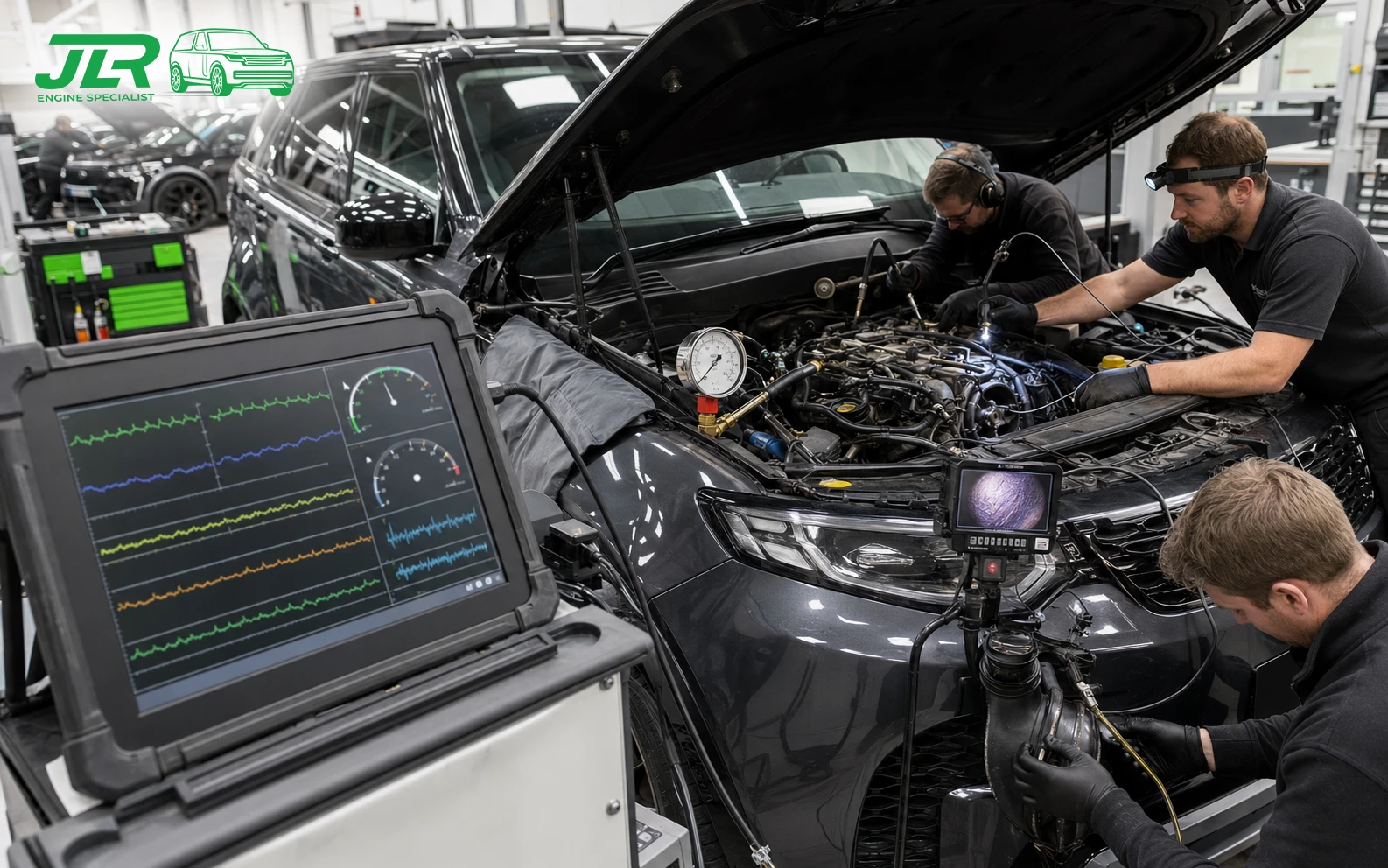
Our IMI-certified technicians use JLR-specific software, live data analysis, pressure testing, borescope inspection and workshop fault-finding methods to produce an accurate report before any repair is approved.
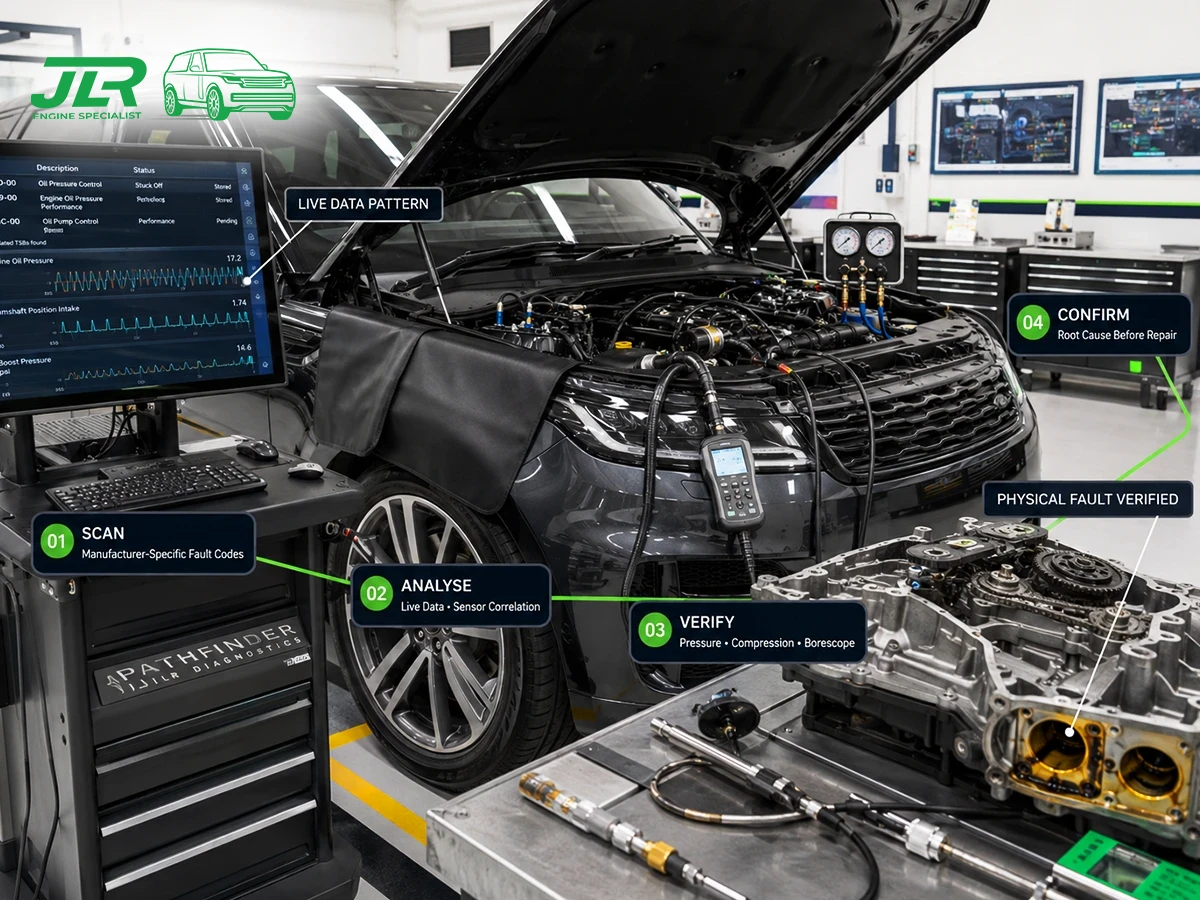
Fuel trims, boost, rail pressure, cam/crank correlation and adaptation checks.
Written findings, supporting visuals and a fixed repair quote before work starts.
A warning light is only the start. We diagnose the underlying mechanical, fuelling, turbo, emissions, ECU and communication issues behind the symptom so your repair plan is based on evidence.
The right software and hardware matter. Generic readers can miss manufacturer-specific data, while JLR-focused systems and guided workflows allow far more accurate diagnosis before parts are ordered.
For earlier model architecture and guided symptom-driven diagnostics.
For newer JLR platforms with deeper fault tracing, configuration and live diagnostic support.
Technical information, procedures and model-specific reference data where required.
Supplementary live data capture, system scans and test plan support across modules.
Used for signal verification, CAN bus checks and intermittent electrical fault tracing.
We combine scan-tool data with physical testing because a fault code alone is rarely enough. That means borescope inspection, pressure testing, smoke testing, injector checks and mechanical verification where the symptom demands it.
This section gives customers a quick way to recognise likely patterns by vehicle. It is not a substitute for testing, but it helps frame the most common fault pathways we inspect.
| Model | Common Fault | Typical Fix |
|---|---|---|
| Range Rover Sport (L320 / L494) | Turbo actuator faults, boost deviation, smoke or limp mode. | Turbo diagnosis, actuator testing, turbo refurb or replacement. |
| Discovery 4 (TDV6 / SDV6) | Timing chain rattle on cold start, cam/crank correlation faults. | Full timing kit, tensioners and related inspection. |
| Range Rover Evoque (Ingenium) | Oil dilution, DPF regeneration complaints, injector imbalance. | Injector test, oil service, software checks and emissions diagnosis. |
| Jaguar XF (2.2D / 3.0) | DPF blocked, EGR sticking, intake contamination, misfire complaints. | Forced regen path, EGR testing, intake cleaning and deeper diagnosis if needed. |
| Discovery Sport | AdBlue warnings, NOx sensor faults, restricted performance messages. | AdBlue system diagnosis, sensor checks and guided repair plan. |
| Range Rover Velar | Intermittent warning lights, communication errors, emissions faults. | Module scan, network testing and software-led fault tracing. |
| Jaguar F-Pace | Boost leaks, turbo efficiency faults, oil leaks and drivability issues. | Pressure test, intake tract inspection and turbo system diagnostics. |
| Defender (TD5 / newer platforms) | Injector, harness, fuel pressure or mechanical noise complaints. | Fuel system checks, compression testing and engine fault isolation. |
Every diagnostic booking follows a structured path so you get a consistent result, not a rushed scan-and-guess service.
We document the warning lights, recent work, intermittent symptoms and when the issue appears.
All relevant modules are scanned, not only the engine ECU, so hidden supporting faults are not missed.
We review rail pressure, boost, air mass, fuel trims, cam/crank sync and adaptation values where relevant.
Borescope checks, smoke testing, compression testing, coolant pressure tests and leak tracing are added when needed.
You receive a practical summary of findings, likely cause, urgency and recommended next step.
If repair is required, we quote before proceeding. No-obligation diagnosis first, then repair approval.
Your diagnostic fee is based on the vehicle, the systems being tested and the depth of investigation required. We confirm the fixed fee before the booking starts, so you know the diagnostic scope in advance.
Suitable for straightforward warning light checks and symptom triage on known fault patterns.
For timing noise, smoke, boost, injector, oil dilution, overheating and mechanical symptom investigation.
For communication faults, intermittent warnings and faults that require deeper network or signal testing.
The full diagnostic fee is deducted if the vehicle is repaired by us within the same visit. If the vehicle leaves and returns days or weeks later, diagnostics must be carried out again and the original diagnostic fee cannot be refunded or re-used.
Repair work, replacement parts, software programming requiring separate authorisation, and any labour beyond the booked diagnostic scope are quoted separately.
The value of a diagnostic booking is accuracy. A cheaper scan is expensive if it points you to the wrong repair.
We diagnose the cause, not only the warning code.
Clear evidence means faster approval and less wasted labour.
Catching timing, turbo and lubrication issues early can save an engine.
Specialist workshop methods for JLR engines and related systems.
You get a documented result, not vague verbal guesswork.
These internal links are structured as SEO-focused problem-diagnosis URLs so you can create the target pages later without changing this page’s link intent.
Cold-start rattle, correlation faults and why delay increases risk.
What underboost, smoke and oil contamination usually mean.
Knock, vibration and when a rebuild path is still possible.
Why rising oil level and failed regens need proper testing.
A diagnostic page should channel visitors into the most relevant repair pages once the likely failure path is understood.
These reviews are selected for diagnostic and fault-finding relevance, especially where other garages failed to isolate the issue properly.
Good diagnostic pages answer the practical concerns that stop customers from booking.
Yes. Intermittent faults often require live data review, freeze-frame analysis and repeat testing rather than a simple scan and clear.
We confirm the booked diagnostic scope and fee before we start. If a deeper level of testing is needed beyond that scope, we contact you before any extra charge is agreed.
We can clear codes during testing, but if the underlying fault remains the light will usually return. The goal is correct diagnosis, not temporary code clearing.
Yes. That is one of the main reasons customers book diagnostics first. We assess whether the issue points to timing, turbo, injector, emissions, sealing, cooling or deeper mechanical damage.
Yes, in full if the vehicle is repaired by us within the same visit. If the vehicle leaves and returns later, diagnostics must be repeated and the earlier fee cannot be credited back.
Yes, where the symptoms involve ECU communication, emissions systems, sensors, modules or related drivability systems. We focus especially on faults that overlap with engine or performance complaints.
Often, yes. We regularly see vehicles where parts were fitted before the underlying fault was confirmed. A structured JLR-focused diagnostic process is usually what was missing.
Yes. We provide a report-led outcome so you understand the diagnosis, the next step and the recommended repair path.
Call 0203 488 4649 or WhatsApp 07975 827 396 to book your diagnostic. We will inspect the fault properly, explain what is actually wrong and quote the right repair before work begins.