If you own a Jaguar XJ (X351) with either the 5.0-litre AJ133 V8 or the 3.0-litre TDV6 diesel, you are managing one of the most sophisticated luxury saloons of the modern era. However, the reality of out-of-warranty ownership is that the aluminium-intensive chassis and tightly packaged engine bays turn minor deferred maintenance into major mechanical liabilities. The X351 represents a significant leap forward in thermal efficiency and performance over its predecessors, but that engineering complexity demands an uncompromising approach to preventative care.
The X351 Jaguar XJ offers unparalleled luxury, but its complex 5.0-litre AJ133 V8 and 3.0-litre TDV6 powertrains demand exact, proactive maintenance. When cooling or timing systems fail out of warranty, the repair costs can quickly eclipse the vehicle’s market value.
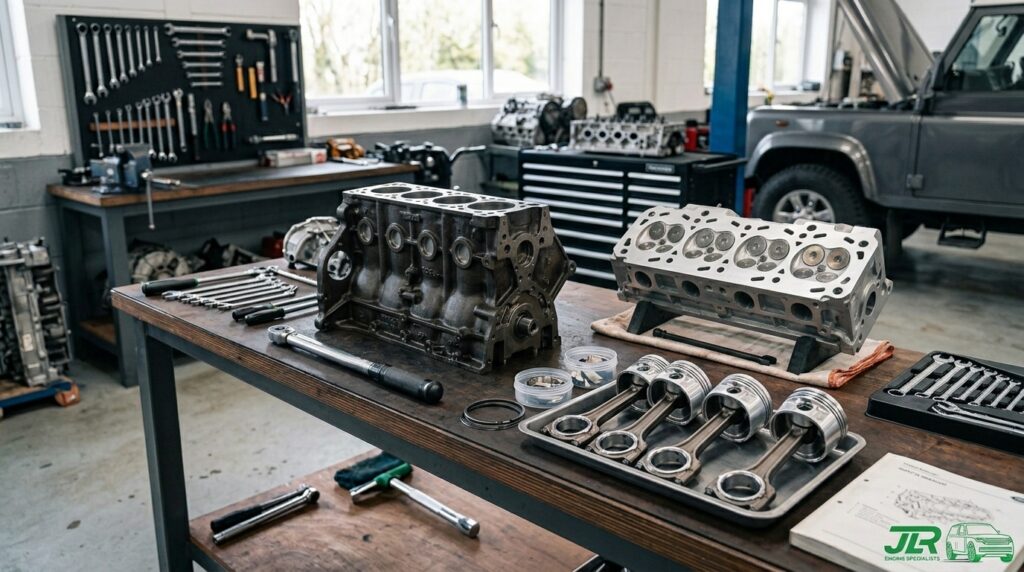
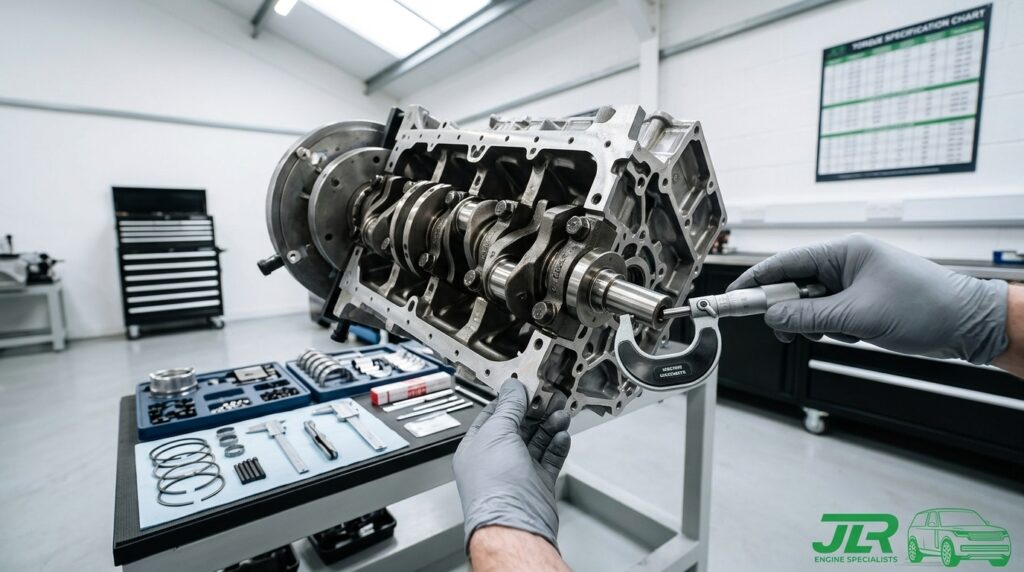
At JLR Engines, our approach is to recondition and rebuild your original engine wherever possible. Engine replacement is only recommended when the engine core is beyond economical repair, which represents a small minority of the work we carry out. A specialist rebuild typically saves 40 to 50 percent compared to main dealer replacement costs while maintaining OEM-standard quality. For the X351 owner, understanding the precise failure points of these premium powertrains is the first step toward protecting your investment and avoiding the severe depreciation that accompanies a neglected engine history.
What This Engine Is (and Isn’t)
The X351 generation of the Jaguar XJ engines lineup, produced from 2010 to 2019, marked a radical departure for the marque. Built on an aluminium monocoque chassis, the vehicle is exceptionally light for its class, placing a premium on powertrain efficiency and packaging. To meet these demands, Jaguar relied on two primary engine families: the 5.0-litre AJ133 V8 (available in both naturally aspirated and supercharged configurations) and the 3.0-litre TDV6 diesel (the 306DT engine code, derived from the PSA/Ford partnership).
These are not engines designed for driveway servicing or generalized mechanical intervention. The AJ133 V8 utilizes direct injection, variable cam timing on all four camshafts, and an incredibly dense wiring harness that leaves little room for error during disassembly. The supercharged variants integrate an Eaton TVS (Twin Vortices Series) blower directly into the intake manifold, complete with its own dedicated liquid-to-air intercooling circuit. Meanwhile, the 3.0 TDV6 utilizes a Compacted Graphite Iron (CGI) block and a complex sequential turbocharger setup that requires precise vacuum and electronic management to operate seamlessly.
It is vital to understand that the X351 is a flagship luxury vehicle, and its mechanical architecture reflects that status. The engine bay is tightly packed, meaning that tasks which are trivial on smaller vehicles – such as replacing a water pump, accessing the rear timing chain covers, or diagnosing a high-pressure fuel leak – often require significant ancillary removal, subframe manipulation, or complete engine extraction. Treating this vehicle with a standard independent garage’s approach to maintenance frequently results in misdiagnoses, broken plastic retaining clips, and unresolved thermal management faults.
Red Flag Years & Known Issues
While the core architecture of the AJ133 and 306DT remained relatively stable throughout the X351 production run, revisions to emissions hardware, engine mapping, and supplier components created distinct reliability profiles across the model years.
| Model Years | Risk Level | Known Issues |
|---|---|---|
| 2010–2012 (Early) | High / Moderate | AJ133 V8 plastic coolant crossover pipe degradation and early timing chain tensioner bleed-down. |
| 2013–2015 (Mid) | Moderate | 3.0 TDV6 sequential turbo actuator seizure and EGR cooler internal matrix failures. |
| 2016–2019 (Late) | Lower / Moderate | Supercharged AJ133 intercooler brick O-ring leaks and piezo injector copper seal degradation. |
The early 2010–2012 models are the most vulnerable to catastrophic cooling system failures. Jaguar initially utilized a specific grade of plastic for the coolant crossover pipes located in the ‘V’ of the AJ133 V8. Subjected to immense thermal cycling, these pipes become brittle and crack, often dumping coolant directly onto the alternator or into the bellhousing before the driver notices a significant drop in the expansion tank.
By the 2013–2015 era, the focus of failures shifted slightly toward the diesel variants, as stricter Euro 5 and Euro 6 emissions standards forced the 3.0 TDV6 to run hotter EGR cycles, accelerating soot buildup and turbo actuator wear. The late 2016–2019 models benefited from revised coolant pipes and updated engine software, but the physical stresses of the supercharged V8 and the high-pressure diesel injection systems remained constant variables requiring vigilant oversight.
Common Jaguar XJ Engine Faults & Symptoms
Cooling System & Thermal Management (5.0 AJ133 V8)
The most pervasive issue affecting the naturally aspirated and supercharged 5.0-litre V8 engines is cooling system degradation. Beyond the aforementioned plastic crossover pipes, the water pump housing and the thermostat assembly are prone to weeping. In our workshop, we regularly see 5.0 AJ133 engines arrive with alternator failures that were actually caused by slow-burping coolant leaks from the crossover pipes dripping directly onto the charging system. Because the X351 engine bay is so tightly packaged, these leaks rarely manifest as visible puddles on the garage floor; instead, the coolant vaporizes on the hot exhaust manifolds or runs down the rear of the block, making diagnosis difficult until secondary electrical or mechanical damage occurs, often necessitating professional coolant leak and overheating repair.
Timing Chain Architecture & Wear (AJ133 & 3.0 TDV6)
The AJ133 V8 utilizes a four-chain timing system: one primary chain driving the high-pressure fuel pumps, and three secondary chains driving the camshafts. The hydraulic tensioners rely on immediate oil pressure upon start-up to maintain chain tension. If the engine is subjected to extended oil service intervals, the oil becomes saturated with carbon, clogging the micro-filters inside the tensioners. This leads to hydraulic bleed-down, presenting as a harsh, metallic rattle for 2 to 3 seconds on a cold start. If ignored, the chains stretch and the timing jumps, resulting in valve-to-piston interference and requiring urgent timing chain replacement.
The 3.0 TDV6 diesel suffers from a similar issue, specifically concerning the lower primary chain that drives the oil pump, which can stretch and cause catastrophic oil starvation if the rattle is dismissed as normal diesel clatter. We have documented the severe consequences of this in our TDV6 crankshaft failure case study.
Supercharger Isolator & Intercooler Faults (5.0 SC)
For owners of the Supercharged XJ, the Eaton TVS blower introduces two specific failure points. First, the snout isolator – a composite coupling designed to absorb torsional vibration between the crankshaft and the supercharger – wears out, producing a distinct rattling noise at idle that owners frequently mistake for timing chain failure. Second, the liquid-to-air intercooler bricks mounted beneath the supercharger rely on small rubber O-rings to seal the coolant circuit. These O-rings flatten and degrade over time, allowing coolant to leak directly into the intake tract. We documented a similar issue in our AJ133 supercharger coolant case study, highlighting how quickly hydro-lock can occur if the engine ingests this fluid.
Diesel Specifics: Turbos & Injectors (3.0 TDV6)
The 3.0 TDV6 utilizes a sequential turbo setup. The primary turbo features a variable geometry vane system controlled by an electronic actuator. The actuator rods and linkages are exposed to extreme exhaust heat and road salt, frequently seizing and causing the engine to default to limp mode, which may eventually require turbo repair and replacement. Additionally, the piezoelectric fuel injectors are sealed to the cylinder head by copper washers. If these washers are not replaced during routine maintenance, combustion gases blow past the injector body, baking carbon into the surrounding aluminium. This phenomenon, commonly known as ‘black death’, can ruin the cylinder head if the injectors eventually become fused to the head and cannot be extracted.
What This Isn’t
A common mistake we see is assuming a minor coolant top-up on the 5.0 AJ133 V8 is just a loose hose clip. In our workshop, we regularly find that the primary leak originates from the plastic coolant crossover pipes buried deep in the engine ‘V’, requiring significant upper engine dismantling to access and replace properly.
Repair Routes & UK Cost Expectations
Typical UK repair and rebuild costs for the Jaguar XJ X351 generally range between £950 for targeted ancillary replacements and £11,500 for a full engine rebuild following catastrophic timing or hydro-lock failure. The X351 commands a premium in the repair sector due to the book-time allowances for engine extraction, the cost of OEM Jaguar Land Rover components, and the necessity for manufacturer-level diagnostic software to recalibrate the engine control modules. For a detailed breakdown of how we calculate these figures, please refer to our pricing disclaimer.
Targeted Ancillary & Cooling Repairs (£950 – £2,800)
At the lower end of the spectrum, addressing the cooling system proactively is highly recommended. A complete overhaul of the upper cooling system – including the replacement of the plastic crossover pipes with revised OEM or upgraded aluminium components, a new water pump, and a thermostat housing – typically ranges from £1,400 to £2,200. This requires draining the system, removing the supercharger (on SC models) or the intake manifold, and pressure testing the system post-repair. If a supercharger snout isolator is the source of a rattle, replacing the isolator and tensioner without removing the engine typically costs between £950 and £1,400.
Timing Chain & Internal Intervention (£3,500 – £6,500)
If the timing chains have stretched but no internal valve or piston damage has occurred, a full timing chain kit replacement is required. On the AJ133 V8, this is a labour-intensive process. While some front-chain components can be accessed with the engine in situ, a proper overhaul of the rear chains and primary drive chain usually requires engine extraction to ensure correct locking and timing alignment. This procedure, including OEM chains, tensioners, guides, and an oil system flush, generally falls between £4,200 and £5,800. For the 3.0 TDV6, addressing a stretched lower oil pump chain requires sump removal and oil pump replacement, costing approximately £3,500 to £4,500.
Full Engine Rebuild (£7,500 – £11,500)
If a timing chain failure results in dropped valves, or if a supercharger intercooler leak causes hydro-lock and bent connecting rods, a full strip-down and rebuild is mandatory. The lower end of this bracket assumes the aluminium cylinder heads can be skimmed, the valve seats recut, and the original block honed for new piston rings. The upper end reflects scenarios where the cylinder heads are cracked, the pistons are damaged, and the engine requires a complete overhaul with new OEM bearings, pistons, and potentially a replacement supercharger or turbocharger unit. All our major rebuilds are backed by a comprehensive 12-month unlimited mileage warranty.
We have received X351 diesel engines that were previously misdiagnosed elsewhere as injector knock, when a bore-scope inspection revealed the timing chains had stretched and altered the injection pump phasing. This highlights why accurate, specialist engine diagnostics are critical before authorizing any major mechanical spend on the X351 platform.
Which XJ Engines Are Safest for Long-Term Ownership?
When evaluating the X351 lineup for long-term ownership, the definition of ‘safe’ relies heavily on the owner’s willingness to perform proactive, rather than reactive, maintenance.
- The 5.0-litre Naturally Aspirated AJ133: Mechanically the most robust engine in the range. Lacking the extreme thermal loads of the supercharger and the complex emissions hardware of the diesel, the NA V8 is exceptionally reliable provided the cooling system is completely overhauled at 80,000 miles. It is the ideal choice for owners who want the refinement of a V8 without the premium insurance and maintenance costs associated with forced induction.
- The 3.0-litre TDV6: The safest choice for high-mileage motorway drivers. The CGI block is incredibly strong, and the engine offers immense low-end torque that suits the heavy aluminium chassis perfectly. However, it is entirely unsuited for urban, stop-start ownership. Short journeys prevent the diesel particulate filter (DPF) from regenerating and allow soot to accumulate in the EGR system and intake manifold. If your driving profile is predominantly urban, the TDV6 will become a financial liability.
- The 5.0-litre Supercharged AJ133: Offers breathtaking performance but carries the highest maintenance burden. The Eaton supercharger generates immense heat, placing severe stress on the cooling system and the engine oil. While the bottom end of the engine is forged and highly capable, the ancillary systems require constant vigilance. It is the most desirable engine in the range, but it demands an owner who views maintenance as a non-negotiable operational cost rather than an unexpected repair bill.
Preventative Maintenance Strategies
Preserving the X351 requires abandoning the manufacturer’s ‘long-life’ service schedules in favour of a severe-duty maintenance regimen. The thermal stresses placed on these engines in real-world driving conditions far exceed the laboratory conditions under which the factory intervals were established.
Proactive Cooling System Overhaul
Do not wait for a low coolant warning or a sweet smell in the cabin. If your X351 has the original plastic coolant crossover pipes and is approaching 80,000 miles or 8 years of age, they must be replaced. We strongly recommend utilizing revised OEM parts or aftermarket aluminium upgrade kits where available. Simultaneously, the coolant must be flushed and replaced with the exact OAT (Organic Acid Technology) specification required by Jaguar to prevent internal galvanic corrosion of the aluminium block and heater matrix.
Oil Specification & Interval Correction
The factory recommendation for oil change intervals on the X351 can extend up to 16,000 miles or 24 months. This is detrimental to the timing chain tensioners and the variable cam timing (VCT) solenoids. We mandate an oil and filter change every 8,000 miles or 12 months as part of a strict routine servicing schedule. You must use only premium 5W-20 or 5W-30 synthetic oil that meets the specific Jaguar Land Rover STJLR.06.5003 (or equivalent) specification. This prevents the formation of the carbon sludge that blocks the tensioner micro-filters and initiates chain stretch.
Supercharger & Intercooler Servicing (SC Models)
The Eaton TVS supercharger contains its own internal oil reservoir, separate from the engine oil. This fluid degrades over time due to extreme heat, leading to bearing wear and snout isolator failure. This oil should be extracted and replaced every 50,000 miles. Furthermore, during any major service, the intercooler coolant reservoir should be inspected for drops in level, and a pressure test of the intake tract should be performed to ensure the intercooler brick O-rings are not weeping into the engine.
Diesel Fuel System Care (TDV6 Models)
For the 3.0 TDV6, fuel quality is paramount. The piezoelectric injectors operate at pressures exceeding 2,000 bar, and the high-pressure fuel pump (HPFP) is lubricated entirely by the diesel fuel. Using premium diesel with higher detergent levels, and replacing the fuel filter every 20,000 miles, prevents the internal scuffing of the HPFP that leads to metallic swarf contaminating the entire fuel rail. For a complete overview of our specialist JLR services, including how we handle severe carbon buildup and timing wear, we also offer comprehensive DPF, EGR, and AdBlue cleaning to keep your emissions system functioning perfectly.
Frequently Asked Questions
Can I keep driving my XJ if the low coolant warning keeps appearing?
We strongly advise against driving the vehicle any further than is strictly necessary to reach a specialist workshop. The 5.0 AJ133 V8 is highly sensitive to overheating, and the aluminium cylinder heads will warp rapidly if subjected to thermal shock or localized hot spots. Continuing to drive with a hidden coolant leak – especially one originating from the crossover pipes – risks coolant entering the cylinders or severely damaging the alternator and auxiliary drive belts, turning a manageable repair into a catastrophic engine failure.
Is the 5.0 AJ133 timing chain job an engine-out repair?
It depends on which chains have failed, but a comprehensive overhaul usually requires engine extraction. While the front secondary chains and tensioners can sometimes be accessed with the engine in the car, the primary chain that drives the high-pressure fuel pumps and the rear camshaft chains are located at the flywheel end of the engine. To safely lock the timing mechanisms and guarantee correct alignment without risking valve-to-piston contact, dropping the engine and separating the gearbox is the only method we recommend for a guaranteed, long-term repair.
How much does a supercharger rebuild or isolator replacement cost?
Replacing the supercharger snout isolator and tensioner on a 5.0 SC XJ typically costs between £950 and £1,400. This addresses the common idle rattle caused by the composite coupling wearing out. However, if the supercharger internal bearings have failed, or if the intercooler bricks are leaking coolant into the intake, the supercharger must be removed, dismantled, and rebuilt or replaced. A full supercharger rebuild and intercooler reseal generally ranges from £2,800 to £3,600, depending on the condition of the internal rotors.
Will an early cooling system overhaul prevent catastrophic engine failure?
Yes, proactive cooling system intervention is the single most effective way to protect the AJ133 V8. The majority of catastrophic engine failures we see on the X351 – such as hydro-lock from supercharger intercooler leaks, or seized engines from water pump failures – are preceded by weeks or months of minor coolant loss. By replacing the plastic crossover pipes, water pump, and thermostat housing before they fail, you eliminate the primary vectors for sudden coolant loss and protect the engine’s internal architecture.
Are the 3.0 TDV6 diesel XJ models reliable for high-mileage motorway use?
The 3.0 TDV6 is exceptionally reliable and well-suited for high-mileage motorway use, provided the maintenance schedule is respected. The constant exhaust flow on long journeys keeps the diesel particulate filter (DPF) clear and prevents the EGR valves from becoming clogged with soot. The primary risk factor for high-mileage TDV6 engines is the timing chain stretch and turbo actuator wear. If the oil is changed every 8,000 miles and the turbo linkages are periodically inspected and lubricated, the 306DT engine block is easily capable of exceeding 200,000 miles without requiring a bottom-end rebuild.
Conclusion
The Jaguar XJ (X351) remains a masterpiece of luxury saloon engineering, offering a blend of aluminium chassis dynamics and powertrain refinement that is increasingly rare in the modern automotive landscape. However, the sophistication of the 5.0 AJ133 V8 and the 3.0 TDV6 diesel demands an ownership approach rooted in proactive, technical maintenance. The margin for error is exceptionally small; a neglected coolant pipe or an ignored cold-start rattle can rapidly escalate into a repair bill that defies the vehicle’s current market valuation.
By understanding the specific failure points of your engine, correcting the optimistic factory service intervals, and partnering with a specialist workshop that understands the intricacies of JLR engineering, you can preserve the X351 as a reliable, usable flagship vehicle. When internal failures do occur, a precision-engineered specialist rebuild remains the most logical and economically sound route to restoring the vehicle’s integrity, ensuring it continues to deliver the performance and comfort it was designed for.
If you are seeing a cold-start rattle or unexplained coolant loss, an early diagnostic inspection is the most cost-effective next step. Get a quote online, call us on +44 203 488 4649, or contact our Billericay workshop directly. We also provide national collection and delivery across the UK to make the process completely hassle-free.