When an amber or red warning light illuminates on the dashboard of your Range Rover, Defender, or Discovery, it is rarely telling you the full story. Modern Jaguar Land Rover powertrains are incredibly complex networks of mechanical precision, high pressure hydraulics, and sophisticated software logic. A single fault code can be the symptom of a minor sensor glitch, or it can be the final warning before a catastrophic internal mechanical failure.
At JLR Engines, we specialise in reconditioning and rebuilding your original engine rather than replacing it. This rebuild first approach typically saves 40 to 50 percent compared to main dealer replacement costs. However, before any spanners touch a bolt, a rigorous specialist engine diagnostic inspection is absolutely mandatory. Understanding this process is the first step in protecting your vehicle and your wallet.
The Difference Between Code Scanning and True Mechanical Diagnosis
A common mistake we see is the assumption that a generic code reader can accurately diagnose a complex JLR powertrain. Many owners equate reading a fault code with diagnosing a fault. In reality, a code reader only tells you that a parameter has fallen outside of its expected software threshold. It does not tell you why the issue occurred in the first place.
For example, if your Range Rover Sport logs a crankshaft position correlation fault, a basic scanner simply confirms the timing is out of sync. It cannot tell you if the timing chain has physically stretched, if the hydraulic tensioner has collapsed, or if the variable valve timing solenoid is blocked by carbon debris.
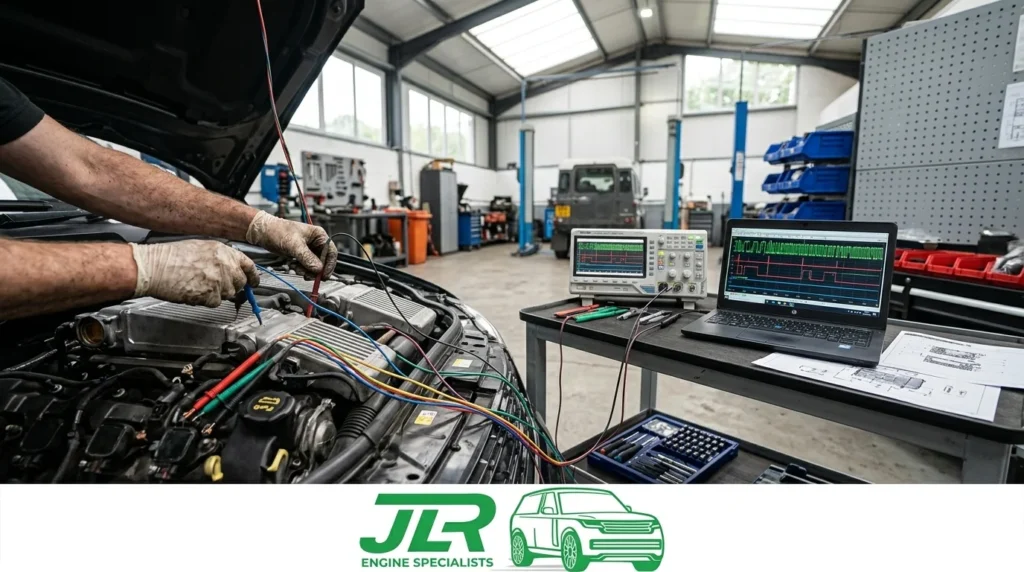
A true mechanical diagnosis requires moving beyond the software and into the physical realm. It involves using specialist oscilloscopes to read electrical waveforms and borescopes to inspect the inside of the combustion chamber. At a workshop providing dedicated specialist JLR services, the diagnostic process is an exercise in forensic engineering. This isolates the root cause before it escalates into a scenario requiring full engine rebuilding and reconditioning.
Step by Step: Inside the Professional JLR Diagnostic Process
When you entrust your vehicle to a specialist, the diagnostic process follows a strict and methodical sequence. This is designed to eliminate guesswork and prevent unnecessary mechanical repairs further down the line.
Step 1: The Initial Interview and Symptom Verification
The process begins long before the bonnet is opened. A specialist technician will conduct a detailed interview to understand the exact conditions under which the fault occurs. Does the rattle only happen on a cold start? Does the power loss occur only when the engine is under heavy load? Replicating the customer complaint is vital, as intermittent faults are often the most destructive if left unchecked.
Step 2: Factory Level Software Interrogation
Using factory diagnostic software, the technician will connect to the vehicle network. Unlike generic scanners, factory software allows the technician to view live data streams. They will monitor real time fuel rail pressures, exhaust gas temperatures, and oil pressure switch states while the engine is running. They will also check for shadow codes that the engine control unit has logged internally but has not deemed severe enough to trigger a dashboard warning light yet.
Step 3: Fluid Analysis and Physical Inspection
Software cannot see physical degradation, so the technician will extract samples of the engine oil and coolant. Oil analysis checks for the presence of metallic glitter indicating bearing wear, diesel fuel contamination, or a milky emulsion indicating coolant ingress. A coolant system pressure test is also performed to check for microscopic leaks in the EGR cooler, water pump, or cylinder head gasket that only manifest under thermal expansion and might eventually require coolant leak and overheating repair.
Step 4: Invasive Mechanical Testing
If the live data and fluid analysis suggest internal mechanical compromise, non destructive invasive testing begins. This often involves removing the oil filter and cutting it open to inspect the pleated paper for brass or steel particulates. It may also involve inserting a high definition borescope through the injector holes to visually inspect the cylinder walls for scoring, piston crown damage, or evidence of coolant entering the combustion chamber.
Identifying the Big Five JLR Engine Failures
Through our advanced fault finding protocols, we routinely isolate five primary failure categories across the Land Rover and Range Rover engine families. This includes the 3.0 litre SDV6, the 4.4 litre TDV8, and the Ingenium units.
1. Timing Chain Stretch and Tensioner Fatigue
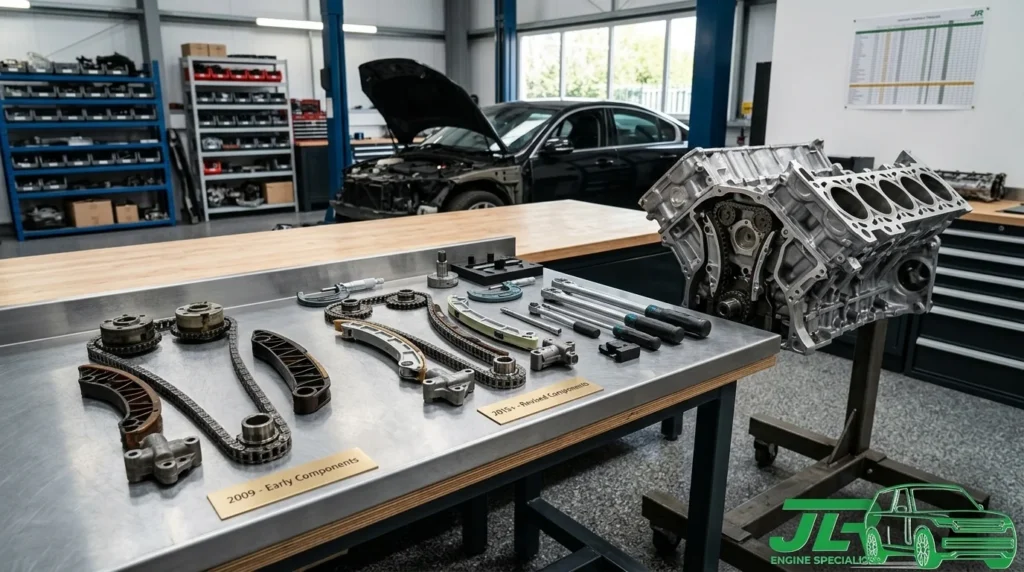
Particularly prevalent on the 3.0 litre V6 diesels and the 2.0 litre Ingenium units, timing chain wear is a critical threat. Specialists diagnose this by analysing the live adaptation data. If the engine control unit is constantly commanding the camshafts to compensate for chain slack, the chain is critically stretched. Catching this early allows for a targeted timing chain replacement before the chain jumps teeth and destroys the valvetrain. You can see a real world example of this in our SDV6 timing chain case study.
2. Crankshaft and Main Bearing Wear
The SDV6 and TDV6 engines are highly sensitive to oil pressure drops. We have received engines that were previously misdiagnosed elsewhere as needing a simple sensor swap, when the root cause was actually severe oil starvation scoring the main bearings. By performing an oil pressure test with a mechanical master gauge, we can identify bearing wear long before the crankshaft snaps. We recently documented the catastrophic end stage of this exact issue in our TDV6 crankshaft failure case study.
When crankshaft damage occurs, our specialist crankshaft repair protocols are enacted. This involves installing new original equipment manufacturer bearings and potentially line boring the main caps to restore perfect alignment and prevent future failures.
3. Turbocharger Degradation and Actuator Faults
Turbo failures on JLR diesels often begin with the variable geometry vanes sticking due to carbon buildup, or the electronic actuator rod developing play. A specialist diagnostic involves mapping the requested boost pressure against the actual manifold pressure under load. Addressing a failing turbo early through our turbo repair and replacement service prevents the turbo from disintegrating and sending metallic shrapnel into the engine intake.
4. Injector Seal and Fuel System Leaks
The copper seals at the base of the fuel injectors are a known wear item. When they fail, combustion gases blow past the injector, creating a hard black tar like substance in the injector bays. Diagnostics involve a physical inspection of the injector bays and a leak off test to measure the internal return flow of each injector. This identifies units that are mechanically worn and over fuelling, which can lead to piston melt.
5. Oil Pump Drive and Lubrication Starvation
On several JLR engine families, the physical drive mechanism that connects the crankshaft to the oil pump can degrade or shear. The engine control unit may not register a fault code until the oil pressure drops catastrophically at high RPM. Specialists diagnose the early stages of this by listening for specific harmonic frequencies from the lower sump and analysing the oil pressure switch voltage drop times during cranking.
The Financial Reality: Early Diagnosis vs Catastrophic Failure
The most significant value of a professional diagnostic inspection is financial preservation. There is a stark contrast between the cost of identifying a fault in its infancy and the cost of ignoring it until it causes secondary damage. For a full breakdown of how workshop variables affect repair invoices, please review our pricing disclaimer.
- The Timing Chain Scenario: A comprehensive diagnostic identifies chain stretch via software adaptation limits. The repair involves replacing the chains, guides, and tensioners for £1,200 to £2,500. If ignored, the chain snaps, the pistons strike the valves, and the cylinder head is destroyed. This results in a cost of £5,500 or more for a full top end and bottom end rebuild.
- The Turbo Scenario: Diagnostics identify a failing turbo wastegate actuator causing intermittent over boost. The turbo is replaced for £1,500 to £2,200. If ignored, the turbo bearings fail, the turbine wheel shatters, and the engine ingests the metal fragments. This destroys the pistons and scores the cylinder bores, costing £7,000 or more for a full engine reconditioning.
- The Coolant Leak Scenario: A pressure test identifies a weeping EGR cooler, which is replaced for £600 to £900. If ignored, the cooler fails entirely, dumping litres of coolant into the cylinders. The engine hydro locks, bending the connecting rods and cracking the aluminium block. This often leads to a complete engine replacement, effectively writing off the vehicle.
What to Expect Before Receiving a Rebuild Quotation
If the diagnostic process reveals that your engine has suffered internal mechanical damage that cannot be rectified with a bolt on repair, you will require an engine rebuild. However, a reputable specialist will never provide a fixed and guaranteed rebuild quotation based solely on a diagnostic scan.
Because the internal state of the engine dictates the final cost, an accurate rebuild quotation requires a teardown inspection. This involves removing the engine from the vehicle, dropping the oil sump, and removing the cylinder heads to physically measure the crankshaft journals. We also inspect the cylinder bores for liner slip and assess the mating surfaces for thermal warping.
Once the teardown is complete, the workshop will provide you with a comprehensive metrology report. This report will detail exactly which components are within original equipment manufacturer tolerances and can be reused. Only at this stage can a precise and transparent quotation be issued for the reconditioning process. This transparency ensures you are only paying for the repairs your specific engine actually requires, backed by a comprehensive 12 month unlimited mileage warranty.
To make the process completely hassle free, we also offer national collection and delivery so you do not have to worry about transporting a non running vehicle to our facility.
Frequently Asked Questions
How long does a proper Land Rover engine diagnostic take?
A thorough and specialist level diagnostic is not a quick plug and play exercise. It typically requires the vehicle to be in the workshop for 1 to 2 days. This allows time for the engine to be cold soaked to replicate cold start rattles, for live data logging to be performed under various load conditions, and for physical inspections such as borescope examinations and fluid sampling to be conducted meticulously.
Can a main dealer diagnostic miss internal mechanical faults?
Yes, frequently. Main dealership service departments are heavily driven by time efficiency and modular replacement protocols. If a dealer sees a timing related fault code, their standard procedure may be to quote for a complete engine replacement. They rarely invest the technician hours required to perform invasive mechanical testing, oil analysis, and oscilloscope readings to isolate the specific failing component.
Will I have to pay for a diagnostic if I proceed with the rebuild?
Diagnostic time is highly skilled labour and requires expensive specialised equipment. Therefore, the diagnostic fee is generally a standalone charge that covers the forensic investigation of your vehicle. However, many specialist workshops will deduct a portion of the initial diagnostic fee from the final labour invoice if the diagnosis leads directly to a major mechanical repair or engine rebuild being carried out in house.
What equipment is required to diagnose modern Range Rover engines?
Proper diagnosis requires far more than a standard scanner. A specialist JLR workshop will utilise factory level software, automotive oscilloscopes to read camshaft and crankshaft sensor waveforms, and high definition industrial borescopes. We also use mechanical master oil pressure gauges, cooling system pressure testers, and ultrasonic cleaning equipment for analysing fuel injector spray patterns and leak off rates.
Conclusion
The complexity of modern Land Rover and Range Rover engines demands a diagnostic approach that goes far beyond simply reading a fault code. True mechanical diagnosis is a methodical and forensic process that bridges the gap between software logic and physical metallurgy. By identifying the subtle early warning signs of timing chain stretch, oil starvation, or turbo degradation, a specialist diagnostic inspection is the single most effective tool an owner has to prevent minor faults from escalating into catastrophic failures.
When your dashboard warns you of an issue, or when you hear an unfamiliar mechanical noise, the most cost effective decision you can make is to seek a comprehensive evaluation. Precision in diagnosis leads to precision in repair, ensuring your vehicle returns to the road with the reliability and refinement it was designed to deliver.
Not sure if a rebuild is right for your engine? Contact our Billericay workshop on +44 203 488 4649 for a diagnostic inspection or get a quote online today.