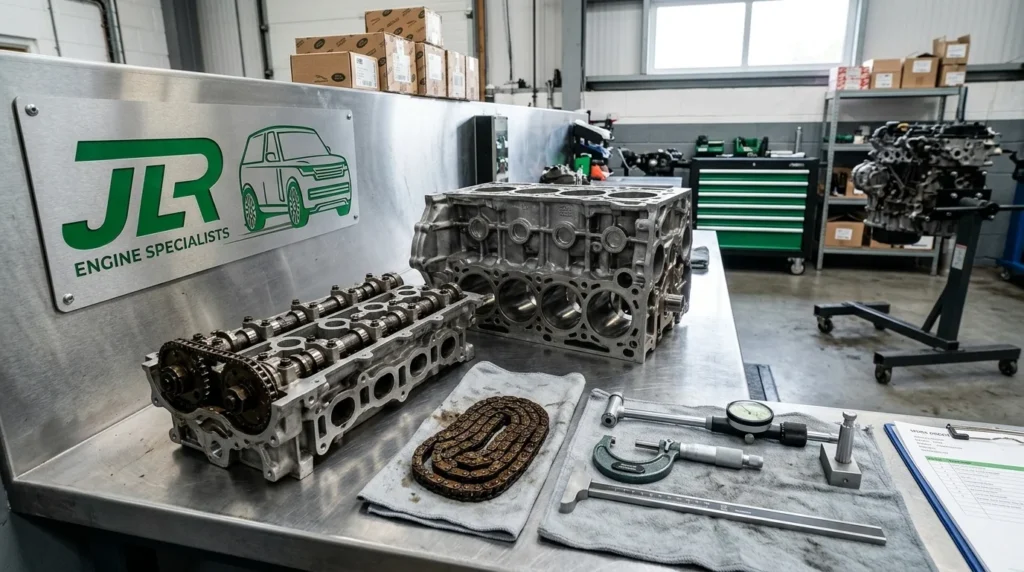
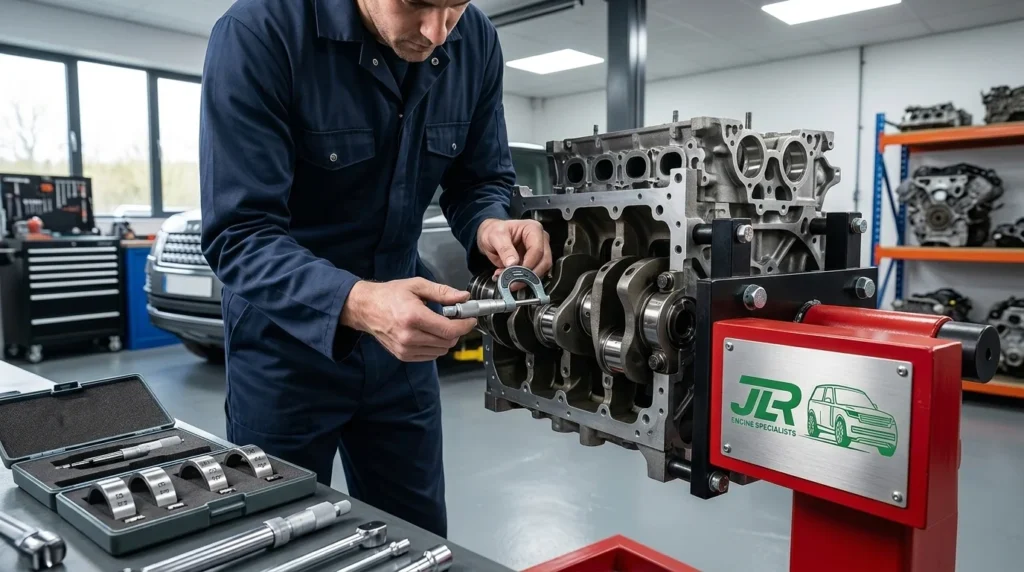
When a Land Rover Discovery 4 (L319) arrives at our workshop with a low oil pressure warning or a metallic knock from the bottom end, the first question we ask is about the vehicle’s oil change intervals – and the answer almost always dictates whether we are looking at a simple sensor fault or a catastrophic bottom-end failure. The 3.0-litre SDV6 (306DT) is a remarkably torquey and refined powerplant, but it is entirely unforgiving of deferred maintenance.
Thesis: The 3.0 SDV6 in the 2010–2016 Discovery 4 is a highly capable and robust engine when maintained to specialist standards, but its reputation for fragility is almost entirely self-inflicted by owners adhering to extended manufacturer service schedules.
At JLR Engines, our approach is to recondition and rebuild your original engine wherever possible. Engine replacement is only recommended when the engine core is beyond economical repair – which represents a small minority of the work we carry out. A specialist rebuild typically saves 40–50% compared to main dealer replacement costs while maintaining OEM-standard quality. Understanding the specific engineering quirks of the 306DT is the first step in keeping these exceptional vehicles on the road.
Red Flag Years: Identifying Your Discovery 4’s Risk Profile
Not all L319 Discovery 4 models left the Solihull production line with the same reliability profile. JLR made significant running changes to the engine management software, turbocharger actuation, and internal oiling systems between the SDV6’s introduction in 2010 and the model’s final year in 2016.
| Model Years | Risk Level | Known Issues |
|---|---|---|
| 2010–2012 | High / Moderate | Crankshaft snapping & main bearing failure due to oil shear |
| 2013–2014 | Moderate | Turbo actuator seizure & EGR cooler internal leaks |
| 2015–2016 | Lower / Moderate | Timing chain stretch & oil pump pickup strainer blockage |
The Early Adoption Phase (2010–2012)
The earliest Discovery 4 SDV6 models bear the brunt of the engine family’s bottom-end reliability issues. During these years, the engine calibration prioritised performance and emissions compliance, leading to aggressive Diesel Particulate Filter (DPF) regeneration cycles. This resulted in severe heat soak, which degraded the engine oil faster than the 16,000-mile service intervals accounted for, leading to widespread main bearing wear and subsequent crankshaft failure.
The Emissions Complexity Era (2013–2014)
As Euro 5 emissions standards tightened, JLR introduced more complex Exhaust Gas Recirculation (EGR) and sequential turbocharger setups. While the bottom-end metallurgy was slightly improved, the ancillary systems became a primary failure point. Vacuum lines controlling the secondary turbo perished, and the EGR coolers began to crack internally, drawing coolant into the inlet manifold and causing severe carbon sludge buildup.
The Refined Facelift Era (2015–2016)
The final iteration of the Discovery 4 benefited from revised oil pump designs, updated timing chain tensioners, and vastly superior engine management software. While the fundamental architecture remains highly maintenance-sensitive, the catastrophic crankshaft failure rates seen in the 2010–2012 era were largely engineered out, provided the vehicle is subjected to strict, shortened oil service intervals.
Common SDV6 Symptoms & Diagnostic Reality
Diagnosing a 306DT engine requires separating normal diesel operational characteristics from the early warning signs of imminent failure. Many owners only discover the oil pressure issue when the red warning light illuminates on the dashboard – by which point the big end bearings are already scored and the crankshaft journals are damaged. Early intervention based on specific symptoms is the only way to preserve the engine core.
Oil Pressure Warnings and Bottom-End Knock
The most critical symptom on the SDV6 is a flickering red oil pressure warning light, particularly when the engine is hot and idling. This is rarely a faulty sensor; it is almost always an indication that the main and big-end bearing shells have worn, increasing the internal clearances and allowing oil pressure to bleed off. If this is accompanied by a deep, rhythmic metallic knock from the lower engine block, the crankshaft is undergoing torsional flex and is at immediate risk of snapping.
Turbo Whistle and Limp-Home Modes
In our workshop, we regularly see 306DT turbo failures develop after 90,000 miles, almost exclusively driven by carbon-blocked oil feed pipes rather than inherent mechanical weakness in the turbocharger itself. The primary (right-hand) turbo operates constantly and is subjected to immense heat. When the oil feed pipe carbonises, the turbo bearings are starved of lubrication, resulting in a high-pitched whistle, blue smoke under acceleration, and eventual limp-home mode. Addressing this early through our turbo repair and replacement service is critical to preventing metal debris from entering the engine.
Coolant Loss and White Exhaust Smoke
The SDV6 utilises a complex network of coolant pipes, most notably the EGR coolers located at the rear of the engine valley. A dropping coolant header tank level, combined with sweet-smelling white smoke from the exhaust, almost always points to an internal fracture in the EGR cooler. This allows coolant to be drawn directly into the combustion chamber, which can lead to hydro-lock if the vehicle is left parked for an extended period. If caught early, a dedicated coolant leak and overheating repair can save the engine from total destruction.
What This Isn’t
A common mistake we see is assuming all SDV6 bottom-end knocks are instantly fatal crankshaft failures. In our workshop, we regularly find that early-stage ticking is often caused by failing hydraulic tappets or incorrect oil viscosity, which can be rectified without a full engine strip-down. Comprehensive engine diagnostics are required to separate these minor issues from catastrophic internal damage.
The Core Failures: Crankshafts, Turbos, and EGR Systems
When evaluating Discovery 4 engines for long-term ownership, it is vital to understand the mechanical reality of the 306DT. It is a masterpiece of compacted graphite iron (CGI) block engineering, but its ancillary systems require meticulous oversight.
The Crankshaft and Bearing Vulnerability
The 3.0 SDV6 produces immense low-down torque, placing incredible stress on the bottom-end rotating assembly. The crankshaft is supported by main bearings that rely on a precise film of high-quality oil. When the manufacturer’s extended service intervals are followed, the 5W-30 oil loses its shear stability. The resulting metal-on-metal wear increases bearing clearance, dropping the oil pressure. Ultimately, the crankshaft snaps – usually at the #3 or #4 main journal – punching a hole through the CGI block. We have documented the severe consequences of this in our TDV6 crankshaft failure case study. When caught before total block failure, our specialist crankshaft repair protocols can often salvage the engine.
Sequential Turbocharger Complexities
The SDV6 utilises a sequential turbo setup to eliminate lag. The primary turbo spools immediately, while the secondary turbo is brought online via a vacuum-actuated flap at higher RPMs. The vacuum lines controlling this system are routed near the hot side of the engine bay and become brittle, splitting and causing the secondary turbo to fail to engage. Furthermore, the oil scavenge pipes from the turbos back to the sump can become blocked with carbon, forcing oil past the turbo seals and into the intercooler.
EGR and Inlet Manifold Sludge
The sheer volume of soot recirculated through the SDV6’s EGR system combines with oil vapour from the crankcase breather to form a thick, tar-like sludge in the inlet manifold. Over time, this restricts the swirl flaps, chokes the engine of air, and causes the EGR valves to stick open. If an EGR cooler fails internally, this sludge turns into a highly abrasive, wet paste that accelerates cylinder bore and piston ring wear. Regular DPF, EGR and AdBlue cleaning is highly recommended to prevent this carbon buildup from choking the engine.
The Servicing History Factor: Prevention vs. Cure
The narrative that the Discovery 4 SDV6 is an unreliable engine is largely perpetuated by owners who treat the manufacturer’s 16,000-mile or 24-month oil service intervals as gospel. To ensure longevity, you must adopt a preventative maintenance strategy that reflects the reality of UK driving conditions and the thermal loads placed on a 2.5-tonne SUV.
The 8,000-Mile Oil Rule
For the 306DT, you must ignore the dashboard service indicator. Oil and OEM filters must be changed every 8,000 miles or 12 months, whichever comes first. Crucially, you must use oil that meets the exact JLR OEM specification (typically STJLR.06.5007 or the correct C1/C4 5W-30 formulation). Adhering to a strict routine servicing schedule using the correct oil is the single most effective way to prevent bearing wear and turbo failure.
Preventative Turbo and Vacuum Remediation
At every major service, the turbocharger oil feed and scavenge pipes should be inspected for carbon buildup. Many specialists recommend proactively replacing the primary turbo oil feed pipe and the associated vacuum lines every 80,000 miles. This relatively minor expenditure prevents the catastrophic turbo failure that frequently sends metal debris into the engine’s oiling system.
Inlet Manifold and EGR Decarbonisation
To prevent the inlet manifold from choking the engine, a physical decarbonisation (often referred to as a ‘carbon clean’ or manual strip-and-clean) is highly recommended between 90,000 and 110,000 miles. This involves removing the inlet manifold, manually scraping the baked-on carbon from the swirl flaps and runners, and testing the EGR coolers for internal leaks before they fail and introduce coolant into the engine.
Repair Routes & UK Cost Expectations
When an SDV6 engine presents with significant mechanical faults, owners face a critical decision matrix. Understanding the true cost of repair versus the market value of the vehicle is essential. All pricing below reflects UK specialist JLR services workshop rates and is subject to variables such as crankshaft condition, oil contamination, and ancillary damage. Please refer to our pricing disclaimer for full terms.
Turbocharger & Oil Feed Remediation
If caught early, turbo issues can be resolved without replacing the entire unit.
- Typical UK Cost Range: £1,500 – £2,800
- Variables: The lower end covers the replacement of the turbo oil feed and scavenge pipes, a full oil system flush, and a new set of silicone vacuum lines. The upper end reflects a scenario where the primary turbo has suffered bearing wear and requires a full turbocharger replacement and intercooler flush.
Timing Chain Replacement
Because the timing chains are located at the rear of the engine (the gearbox end), this is a major undertaking that requires engine removal.
- Typical UK Cost Range: £2,500 – £3,800
- Variables: This includes a full engine-out timing chain replacement, updated tensioners, and guides. If the chains have already jumped a tooth and bent valves, the cylinder heads will require removal and reconditioning, pushing costs toward the £5,000 mark. You can see a real-world example of this in our SDV6 timing chain case study.
Full 306DT Engine Rebuild (Crank & Bearing Failure)
If the engine has suffered oil starvation or a snapping crankshaft, a full rebuild is the only viable route, assuming the block has not been breached.
- Typical UK Cost Range: £5,500 – £7,800
- Variables: This includes crankshaft regrinding or replacement, oversized bearing shells, piston ring replacement, head reconditioning, and a full complement of OEM gaskets and seals. This route requires extensive mechanical repairs and machining. Our engine reconditioning process ensures all tolerances are restored to factory specifications, backed by a comprehensive 12-month unlimited mileage warranty.
Frequently Asked Questions
Can I keep driving my Discovery 4 if the oil pressure light flickers only at idle?
Driving a Discovery 4 with a flickering oil pressure light is highly discouraged and represents a severe mechanical risk. The flickering indicates that the oil pressure is dropping below the safe threshold when the engine is hot and the oil is at its thinnest, which almost always points to worn main or big-end bearings. Continuing to drive the vehicle will rapidly accelerate crankshaft wear and dramatically increase the risk of the crankshaft snapping under load.
Will an early oil change reverse carbon buildup in the turbo feed pipes?
An early oil change will remove the degraded, shear-thinned oil from the sump and restore immediate lubrication to the bearings and turbocharger, but it will not reverse existing carbon blockages. Once the turbo oil feed pipes have become restricted by baked-on carbon from heat soak, they must be physically removed and replaced. Relying on an oil flush to clear these narrow passages is ineffective and risks starving the turbo of oil.
Are the later 2015–2016 SDV6 engines immune to crankshaft failure?
The 2015–2016 SDV6 engines benefit from revised oil pump designs and slightly improved bearing materials, making them significantly less prone to sudden crankshaft failure than the 2010–2012 models. However, they are not entirely immune; if subjected to extended 16,000-mile oil service intervals or if the engine has suffered from severe oil dilution due to aborted DPF regeneration cycles, the bottom-end bearings will still wear prematurely.
Is a 306DT engine rebuild covered by a standard extended warranty?
Almost all aftermarket warranty providers classify crankshaft and bearing failure on the SDV6 as a ‘wear and tear’ item or a consequence of extended oil service intervals, rather than a sudden mechanical defect. Unless you can provide stamped evidence of strict 8,000-mile oil changes using the exact OEM specification, your claim for a £6,000 engine rebuild will likely be rejected on the grounds of inadequate maintenance.
How do I know if my Discovery 4 has the updated oil pump and sump?
Visually confirming the presence of the updated oil pump and sump baffling without dropping the sump pan is virtually impossible. The only definitive way to verify this is through a detailed service history showing a preventative sump drop and oil pump upgrade performed by a recognised JLR specialist, or by having a specialist perform a borescope inspection through the oil filler or sump plug, though this is not always conclusive.
Conclusion
The Land Rover Discovery 4 SDV6 remains one of the most capable and comfortable SUVs ever built, but its complex 306DT powertrain demands an owner who is willing to look past the manufacturer’s service brochure and treat the machinery with mechanical sympathy. The engine is not inherently flawed; rather, it is highly sensitive to the thermal loads and oil degradation caused by modern emissions systems.
By understanding the specific failure points of the crankshaft, turbos, and EGR systems, and by adhering to strict 8,000-mile oil intervals, you can secure hundreds of thousands of miles of reliable, refined motoring. If the worst does happen, a specialist rebuild remains a highly viable and cost-effective alternative to scrapping the vehicle.
Contact our Billericay workshop on +44 203 488 4649 for a diagnostic inspection, arrange national collection and delivery for your vehicle, or get a quote online today.