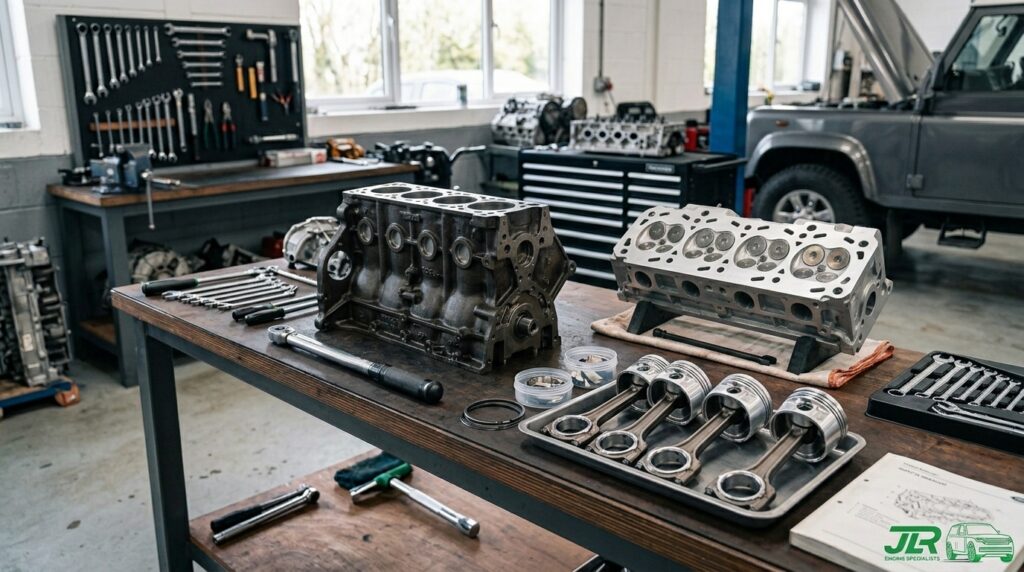
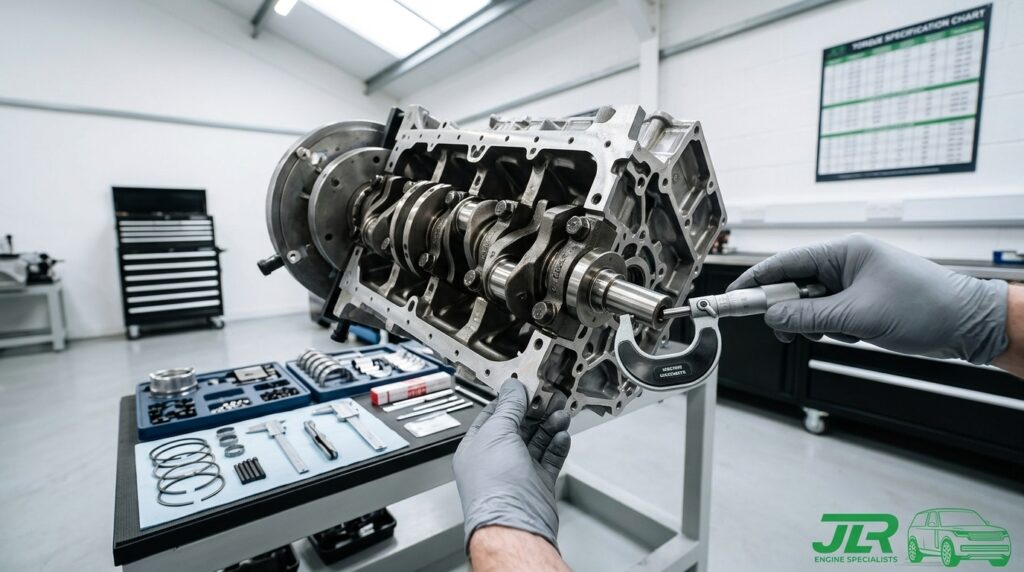
When a Range Rover Sport (L494) or Discovery 4 (L319) arrives at our workshop on a recovery truck with a seized 3.0 SDV6 306DT engine, the first question we ask is rarely about the vehicle’s mileage or the driver’s habits. It is about the oil change sticker in the window.
The 306DT is an engineering marvel capable of immense longevity and torque. However, adhering to the factory’s extended oil service intervals is a guaranteed pathway to catastrophic crankshaft failure. This makes a strict, annual oil change the cheapest insurance policy a JLR owner can buy.
At JLR Engines, our approach is to recondition and rebuild your original engine wherever possible. Engine replacement is only recommended when the engine core is beyond economical repair, which represents a small minority of the work we carry out. A specialist rebuild typically saves 40 to 50 percent compared to main dealer replacement costs while maintaining OEM-standard quality. However, when it comes to the SDV6, our primary goal as technicians is to help you avoid the rebuild bay entirely through uncompromising, workshop-backed preventative maintenance.
The Engineering Reality of the 306DT Oiling System
To understand why oil intervals are the single most critical variable in SDV6 ownership, one must first understand the sheer complexity of the 306DT lubrication architecture. This is not a simple splash-lubricated engine. The 3.0-litre SDV6 utilises a sophisticated, multi-stage oiling system featuring a primary pressure pump and multiple scavenge pumps. These scavenge pumps are strategically located to pull oil back from the turbocharger drain galleries and the lower crankcase, preventing oil aeration and ensuring the sump never runs dry under heavy cornering or steep inclines.
The main and big-end bearing clearances within the 306DT are exceptionally tight. They are engineered to maintain a microscopic hydrodynamic film of oil between the forged steel crankshaft and the bearing shells, even under the immense cylinder pressures generated by the sequential turbochargers. Because the engine relies on this precise hydraulic pressure not just for physical lubrication, but to operate the hydraulic timing chain tensioners and the variable geometry turbocharger actuators, the physical condition of the oil is a critical structural component of the engine itself.
When the oil degrades, it ceases to be a protective lubricant and becomes an abrasive suspension. The 306DT generates a significant amount of soot as a byproduct of its high-pressure common-rail combustion and Exhaust Gas Recirculation (EGR) system. The oil’s chemical detergent package is designed to hold this soot in microscopic suspension until it is drained out. Once the oil exceeds its service life, the detergents deplete, the soot agglomerates into hard carbon particles, and the internal machining of your engine begins to wear at an accelerated, catastrophic rate.
The Myth of ‘Long-Life’ Extended Service Intervals
When the 306DT was first introduced across the Land Rover and Range Rover ranges, manufacturer guidelines frequently suggested oil change intervals of up to 20,000 miles or 24 months under ‘normal’ driving conditions. In the context of UK ownership, ‘normal’ is a dangerous misnomer. The reality of British driving involves stop-start traffic, short urban journeys where the engine rarely reaches optimal operating temperature, and frequent heavy loads from towing or carrying passengers.
Furthermore, the 306DT is equipped with a Diesel Particulate Filter (DPF) to meet Euro 5 and Euro 6 emissions standards. When the DPF requires active regeneration, the Engine Control Unit (ECU) injects additional fuel into the exhaust stroke to raise exhaust gas temperatures and burn off accumulated soot. An unavoidable byproduct of this process is fuel dilution: unburnt diesel washes past the piston rings and enters the sump.
Over an extended 20,000-mile interval, this diesel contamination severely reduces the oil’s viscosity. It effectively thins a 5W-30 oil down to the physical properties of a 0W-20 or worse. This degraded fluid simply cannot maintain the hydrodynamic bearing film at operating temperatures or under heavy throttle loads. Industry experts have long noted this fuel dilution phenomenon as a known characteristic of modern diesels in urban environments, consistent with our own workshop findings where we routinely measure high fuel content in ‘long-life’ oil samples during teardowns.
What Actually Happens Inside the Engine (The Rebuild Perspective)
To truly grasp the financial and mechanical stakes, one must look at the engine through the lens of a specialist teardown. When oil is left in the sump for too long, the Total Base Number (TBN) – the measure of the oil’s acid-neutralizing capacity – drops to zero. The combustion acids begin to etch the bearing surfaces, while the agglomerated soot turns into a lapping compound.
In our workshop, we regularly see 306DT crankshafts scored beyond recovery simply because the oil pickup strainer became choked with carbon sludge from extended intervals. Once the strainer is partially blocked by this sludge, the primary oil pump begins to cavitate, drawing in air instead of solid fluid. The first components to suffer from this localized starvation are the turbocharger journal bearings and the rear main crankshaft bearings.
The bearing shells wear through their microscopic overlay material, exposing the copper or lead underlayer. Without the hydrodynamic film, metal contacts metal. The bearing shell physically welds to the forged steel crankshaft, spinning in its housing and gouging deep grooves into the journals. This is the exact, irreversible sequence of events that turns a £180 annual oil service into a £6,500 engine rebuild. By the time the oil pressure warning light illuminates on the dashboard, the physical destruction of the bottom end has already occurred, often requiring extensive crankshaft repair for SDV6 and TDV6 engines.
Oil Specification and Filtration: Where Compromise Fails
The 306DT requires a very specific oil profile to survive: a 5W-30 low-SAPS (Sulphated Ash, Phosphorus, and Sulphur) synthetic oil that meets the exact Jaguar Land Rover specification (typically STJLR.06.5003 or the equivalent ACEA C2/C3 rating). Using a standard high-SAPS oil will rapidly poison the DPF matrix, forcing the ECU to initiate more frequent active regenerations, which in turn accelerates the fuel dilution problem. If your vehicle is already struggling with emissions components, professional DPF, EGR, and AdBlue cleaning may be required alongside your oil service.
Equally critical, and frequently overlooked, is the oil filter. The OEM Land Rover filter is engineered with a highly specific bypass valve pressure rating and a robust anti-drain-back valve. The bypass valve ensures that if the filter media becomes restricted, oil can still reach the engine, albeit unfiltered, to prevent immediate starvation. The anti-drain-back valve keeps the galleries pressurised when the engine is turned off.
We have received Range Rover Sport engines that were previously misdiagnosed elsewhere as timing chain failures, when the reality was that a cheap pattern oil filter’s anti-drain-back valve had failed. This allowed the galleries to drain overnight, causing severe dry-start wear to the chains and turbochargers. Cutting corners on the £25 difference between an OEM filter and a budget pattern alternative is a false economy that directly compromises the hydraulic systems keeping the engine alive, often leading to premature turbo repair and replacement.
Early Signs of Lubrication Breakdown
The 306DT does provide warnings before catastrophic mechanical failure occurs, provided the owner knows what to listen and look for. The most prominent early indicator of oil degradation and sludge formation is a harsh, diesel-like rattle lasting two to four seconds on a cold start. This is the sound of the hydraulic timing chain tensioners bleeding down because carbon sludge is restricting the micro-filters in their feed galleries. The chains slap against the guides until physical oil pressure finally forces the sludge through the restriction.
A secondary symptom is a high-frequency whine from the turbochargers under acceleration, or a slight, hesitating delay in throttle response. This indicates that the turbo journal bearings are starving for oil, or that the variable geometry vanes are sticking due to carbon contamination in the oil feed lines. Catching these symptoms early and performing an immediate oil system flush and service can sometimes save the engine from the rebuild bench. However, ignoring the cold-start rattle and continuing to drive for another 5,000 miles is the most common precursor to the spun bearings we see on our teardown bench, frequently necessitating a full timing chain replacement.
The True Cost of Prevention vs. The Reality of a Rebuild
The financial calculus of SDV6 ownership is stark, and understanding it is vital for making informed maintenance decisions. A proper, specialist oil and filter service using OEM components, correct low-SAPS fluid specifications, and a thorough physical inspection typically costs between £180 and £250. Performing this annually or every 10,000 miles represents a minor, predictable operational expense.
Conversely, when the main bearings fail and the crankshaft is destroyed, a full 306DT rebuild at a UK specialist generally ranges from £5,500 to £8,500 (as detailed in our pricing disclaimer). The lower end of this bracket assumes the block is salvageable and requires only honing and new bearings. The upper tier reflects severe scenarios requiring crankshaft regrinding or replacement, new OEM bearing shells, a full chemical flush of the oil cooler and galleries, and replacement turbochargers if they were starved of oil and ingested metallic debris.
Main dealer supply-and-fit of a replacement crate engine for the SDV6 easily exceeds £14,000, and often involves fitting a unit with an unknown internal history. The tradeoff is undeniable: proactive, shortened-interval fluid maintenance is the single most effective way to protect the structural integrity of the engine block and preserve the vehicle’s market value. All our preventative servicing and major rebuilds are backed by a comprehensive 12-month unlimited mileage warranty, reflecting our absolute confidence in OEM-standard assembly and maintenance protocols.
What JLR Engines Recommends for SDV6 Longevity
To maximise the lifespan of the 306DT in vehicles ranging from the Discovery 4 (L319) to the Range Rover Sport (L494), we advise completely discarding the factory long-life schedule in favour of a severe-duty maintenance regimen:
- The 10,000-Mile Rule: Change the oil and filter every 10,000 miles or 12 months, whichever comes first. If the vehicle is used for towing, frequent off-road driving, or predominantly urban stop-start journeys where DPF regenerations are frequent, reduce this interval to 8,000 miles. This ensures the detergent package is replenished before soot agglomeration can begin.
- The Warm-Up Protocol: The 306DT oiling system is under immense stress when cold. The oil is thick, and the hydraulic tensioners require time to pressurise. Never exceed 2,000 RPM until the engine oil temperature (not just the coolant temperature displayed on the dash) has reached at least 70°C. The oil needs time to circulate fully through the scavenge pumps and build optimal hydraulic pressure before the turbochargers demand maximum lubrication.
- Remedial System Flushing: If you have purchased an SDV6 with an unknown or suspicious service history, do not simply drain and refill the sump. A professional chemical engine flush, performed by a specialist, followed by a rapid oil change after 1,000 miles, is necessary to safely dissolve latent sludge in the scavenge pumps and oil cooler before it breaks loose in large chunks and blocks the pickup strainer.
For a complete overview of our engine reconditioning processes and how we remediate sludge-damaged blocks, visit our routine servicing page. If you suspect your engine is already suffering from lubrication breakdown, an initial engine diagnostic inspection is the safest first step.
Frequently Asked Questions
Does using premium supermarket diesel prevent SDV6 oil degradation?
While premium diesel contains better detergent packages that keep the injectors and combustion chamber cleaner, it does not prevent the physical reality of DPF active regeneration. During regeneration, unburnt fuel still washes past the piston rings into the sump, causing fuel dilution and viscosity loss. Therefore, premium fuel is beneficial for the fuel system, but it does not negate the absolute necessity of adhering to strict, shortened oil change intervals to protect the bottom end of the engine.
Can an aftermarket engine flush fix an existing cold-start timing rattle?
It depends entirely on the severity of the restriction. If the cold-start rattle is caused by mild sludge partially blocking the hydraulic tensioner feed galleries, a professional, carefully monitored chemical flush followed by an immediate oil and filter change can clear the restriction and silence the rattle. However, if the rattle is caused by physical wear to the timing chains, stretched guides, or a failing tensioner spring due to prolonged oil starvation, no chemical flush will repair the mechanical damage, and physical intervention will be required.
Why do you insist on OEM oil filters rather than premium aftermarket brands?
The internal architecture of an oil filter, specifically the bypass valve pressure rating and the anti-drain-back valve seal, is calibrated precisely to the flow rates and pressures of the 306DT oil pump. Many aftermarket filters use generic valve springs that either open too early (allowing unfiltered oil to circulate constantly) or fail to seal properly overnight (causing dry starts). We exclusively use OEM or OE-supplier filters to guarantee the hydraulic integrity of the timing and turbocharger systems.
How does a specialist workshop verify oil pump health during a rebuild?
During a full teardown, we do not simply inspect the oil pumps for visible wear; we measure the internal gear clearances and housing tolerances using precision micrometers against the factory PSA/Land Rover specifications. We also physically inspect the scavenge pump pickup tubes for internal carbon baking, which cannot be seen from the outside. If the clearances exceed the maximum wear limit, the pumps are replaced as a mandatory part of the rebuild to guarantee future oil pressure stability.
Conclusion
The 3.0 SDV6 306DT remains one of the most capable and refined diesel engines JLR has ever produced, offering a blend of torque and efficiency that perfectly suits the British driving landscape. However, its longevity is entirely conditional. It is an engine that demands respect, precise fluid specifications, and a complete rejection of the optimistic ‘long-life’ service schedules dictated by corporate fleet leasing models rather than mechanical reality.
By understanding the chemistry of oil degradation, recognising the early acoustic warnings of lubrication breakdown, and committing to a strict 10,000-mile service interval, owners can effectively eliminate the primary catalyst for catastrophic crankshaft failure. When you treat the oil not as a consumable fluid, but as a vital, load-bearing structural component of the engine, the 306DT will reward you with hundreds of thousands of miles of reliable, effortless performance.
Not sure if your engine is at risk? Contact our Billericay workshop on +44 203 488 4649 for a diagnostic inspection, or get a quote online today to discuss your vehicle’s specific needs.