If you own a Land Rover Discovery, the specific engine code under the bonnet dictates not just your daily running costs, but your entire long-term relationship with the vehicle. Over the last three decades, the Discovery has evolved from a utilitarian agricultural implement into a highly refined, aluminium-intensive luxury estate.
This evolution forced JLR engineers into a continuous series of compromises: shrinking the engine bay to accommodate crumple zones and pedestrian safety, while simultaneously demanding more torque, lower emissions, and greater refinement from the powerplant.
The Reality: The ‘best’ Land Rover Discovery engine does not exist in a vacuum. The bulletproof mechanical simplicity of the 300Tdi is entirely useless if you need to tow a 3-tonne caravan on the M25, while the refined torque of the 3.0 SDV6 demands an owner willing to budget for its complex timing and crankshaft vulnerabilities.
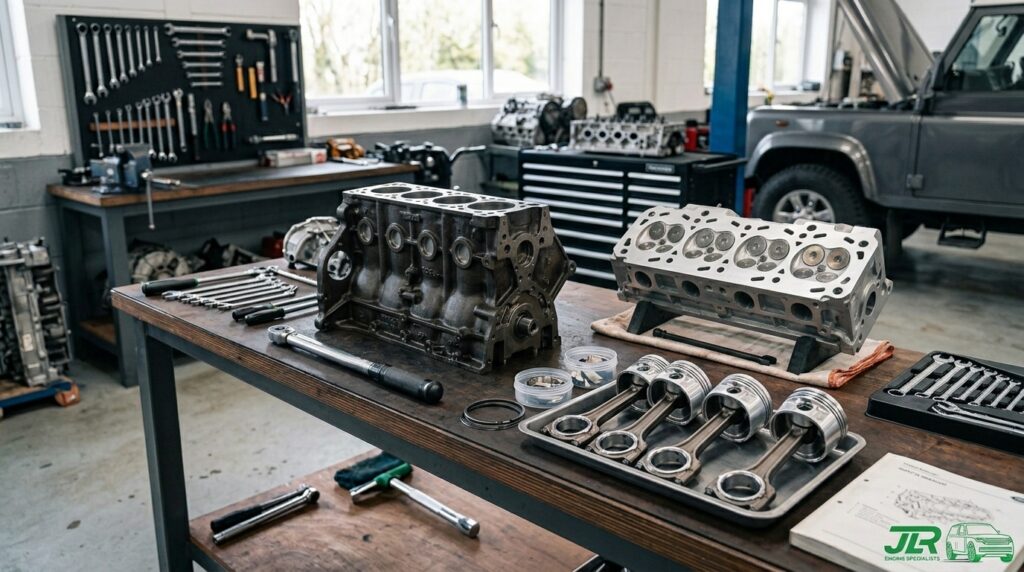
At JLR Engines, our approach is to recondition and rebuild your original engine wherever possible. Engine replacement is only recommended when the engine core is beyond economical repair – which represents a small minority of the work we carry out. A specialist rebuild typically saves 40–50% compared to main dealer replacement costs while maintaining OEM-standard quality.
However, choosing the right Discovery for your needs means understanding exactly what you are signing up for when the warranty expires, and recognising that every engine family carries a specific, documented architectural trade-off.
What the Discovery Engine Lineup Actually Is
To evaluate the powerplants that have propelled the Discovery from the LJ chassis (Discovery 1) through to the L462 (Discovery 5), you must first understand the physical and regulatory constraints JLR engineers were working against.
The early Discovery models utilised longitudinal engine layouts with vast amounts of physical space in the engine bay. This allowed for heavy, cast-iron blocks, external mechanical fuel pumps, and simple, easily accessible coolant routing.
As the vehicle transitioned into the L319 chassis (Discovery 3 and 4) and eventually the L462, the engine bay was aggressively compacted to improve pedestrian impact safety and accommodate complex all-wheel-drive transfer cases and air suspension compressors. Simultaneously, Euro emissions mandates forced the transition from mechanical indirect injection to high-pressure common rail, and eventually to complex forced-induction and hybrid systems.
The result is a lineage of engines that range from over-engineered mechanical tractors to highly sensitive, thermally stressed precision instruments. Evaluating them requires stripping away nostalgia and looking purely at metallurgy, packaging, repairability, and the financial reality of keeping them on the road past 150,000 miles.
Engine Comparison: Reliability, Repairability & Trade-Offs
There is no universally perfect Discovery engine. There is only the right engine for your specific usage profile, and your willingness to maintain it according to its specific engineering weaknesses.
300Tdi (1994–1998): The Mechanical Baseline
The 2.5-litre 300Tdi is legendary in the off-road community, and for good reason. It is a mechanically injected, indirect-injection four-cylinder diesel utilising a Bosch VE rotary pump. There are no ECUs, no high-pressure fuel rails, and no complex emissions systems to fail. The cast-iron block is incredibly robust, and the engine produces its modest 111 bhp in a highly accessible, low-stress manner.
However, the 300Tdi is fundamentally an agricultural engine. It is noisy, vibrates heavily through the chassis, and lacks the thermal efficiency required for modern motorway cruising. Its primary weaknesses are entirely ancillary: the external coolant hoses degrade and burst, the plastic thermostat housings crack, and the cylinder head gaskets are prone to failure if the engine is ever allowed to overheat. From a repairability standpoint, it is unmatched. A full engine rebuilding and reconditioning job on a 300Tdi is straightforward, requiring no specialist electronic coding or complex timing locks.
TD5 (1998–2004): The Electronic Transition
Introduced in the LT chassis (Discovery 2), the 2.5-litre TD5 five-cylinder engine bridged the gap between mechanical simplicity and modern refinement. It utilised a Lucas E3 ECU and Electronic Unit Injectors (EUI), which provided vastly improved torque delivery and cabin quietness compared to the 300Tdi. For many owners, the TD5 represents the sweet spot of Discovery ownership: enough electronic control for daily usability, but mechanical enough to be worked on without a dealer-level diagnostic laptop.
The TD5’s fatal flaw lies in its oil pump drive and its wiring harness. The early TD5 oil pump was driven by a 10-spline shaft that was prone to shearing under heavy load or high mileage, resulting in instant oil starvation and total engine seizure. We documented this specific vulnerability in our Defender TD5 oil pump case study. JLR later upgraded this to a 16-spline shaft, but many early engines remain on the road. Furthermore, the injector wiring harness runs inside the engine block, submerged in oil. Over time, the insulation degrades, and oil wicks through the capillary action of the wiring loom directly into the ECU, destroying the electronics.
2.7 TDV6 (2004–2009): The Compact V6 Compromise
The transition to the L319 chassis brought the 2.7-litre TDV6 (engine code 276DT), a PSA/Ford-derived Lion V6. This engine was a masterclass in compact packaging, utilising a Compacted Graphite Iron (CGI) block to save weight while maintaining immense structural rigidity. It offered the refinement and towing capability that the Discovery 3 desperately needed.
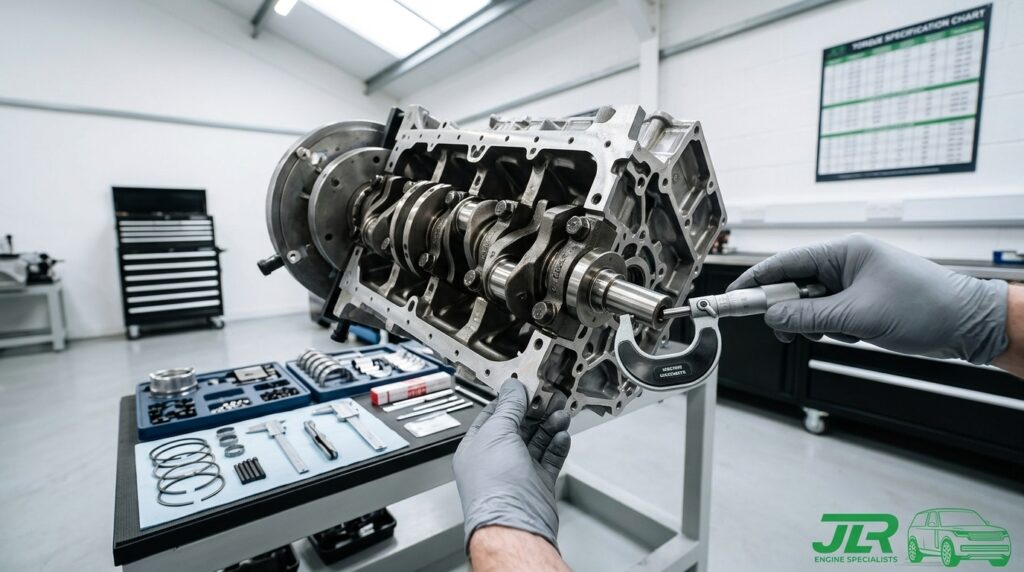
Unfortunately, the 2.7 TDV6 introduced two catastrophic vulnerabilities to the Discovery lineage. The first is the timing chain system, which JLR located at the rear of the engine (gearbox end) to save space. Replacing a stretched chain requires either dropping the gearbox or removing the engine entirely, making timing chain replacement a labour-intensive procedure. The second, and more severe issue, is the crankshaft design. The oil feed drillings intersect directly at the main bearing journals, creating natural stress points. When combined with extended oil service intervals, the oil degrades and starves the bearings, causing the crankshaft to snap cleanly behind the rear main bearing. We documented a similar issue in our TDV6 crankshaft failure case study, highlighting how quickly oil starvation escalates into a total write-off.
3.0 SDV6 (2010–2018): The Torque Monster
The 3.0-litre SDV6 (engine code 306DT) was introduced to address the power deficits of the 2.7, featuring parallel sequential turbochargers and a vastly improved torque curve. It is arguably the most capable towing engine ever fitted to the Land Rover Discovery 3 and Discovery 4.
However, the 306DT inherited the rear-mounted timing chains and the crankshaft vulnerabilities of its predecessor, while adding new cooling system complexities. The plastic coolant crossover pipes located in the ‘V’ of the engine valley are subjected to immense heat cycles, becoming brittle and fracturing. When they fail, they dump pressurised coolant directly into the engine valley, often drowning the starter motor and wiring before the driver even notices a temperature spike, frequently necessitating coolant leak and overheating repair. In our workshop, we regularly see 3.0 SDV6 engines develop accelerated timing chain wear after 90,000 miles, almost entirely due to owners adhering to the factory extended oil intervals.
2.0 Ingenium (2018–Present): The Efficiency Mandate
To meet Euro 6 emissions and improve fuel economy in the heavy L462 chassis (Discovery 5), JLR introduced the 2.0-litre four-cylinder Ingenium diesel (204DTD). It features an offset crankshaft to reduce friction and a highly sophisticated high-pressure fuel system.
The Ingenium’s primary enemy is the urban environment. To clean the Diesel Particulate Filter (DPF), the engine initiates regeneration cycles, injecting excess fuel. In stop-start traffic, these cycles are aborted, and the raw diesel washes past the piston rings into the oil sump. This oil dilution destroys the lubricating properties of the oil, leading to rapid wear of the turbocharger bearings and the crankshaft journals. It is a highly capable engine for high-mileage motorway users, but a catastrophic liability for low-mileage urban owners who may eventually require DPF, EGR & AdBlue cleaning or face severe bottom-end damage.
Ownership Concerns & Rebuild Cost Expectations
When evaluating the ‘best’ engine, you must factor in the financial reality of the inevitable repairs. The architecture of these engines means that labour hours often exceed the cost of the parts themselves. All pricing below represents typical UK specialist workshop ranges and is subject to diagnostic findings, as outlined in our pricing disclaimer.
- 300Tdi Full Rebuild: £2,500 – £3,500. The simplicity of the mechanical injection pump and the lack of complex timing locks keep labour hours low. The block is easily machined, and parts remain cheap and abundant.
- TD5 Reconditioning: £3,000 – £4,500. Costs rise slightly due to the need to clean or replace the ECU, test the electronic unit injectors, and upgrade the oil pump drive spline to the later 16-spline design.
- 2.7 TDV6 Rebuild (Crank Failure): £4,500 – £6,500. This requires a new or reground forged crankshaft, oversized bearings, and a full rear-mounted timing kit. The block must be line-bored to ensure main bearing alignment.
- 3.0 SDV6 Rebuild: £5,500 – £8,500. The complexity of the 3.0 SDV6 engine, combined with the need to rebuild or replace the sequential turbochargers and address the plastic coolant pipes, drives the cost upward.
- 2.0 Ingenium Rebuild: £5,500 – £7,500. Required when oil dilution destroys the turbo bearings and scores the crankshaft journals, necessitating a full strip-down and balancer shaft module inspection.
When comparing a specialist rebuild to a main dealer replacement, the dealer route for a modern Discovery engine frequently exceeds £14,000 and often involves a factory-remanufactured unit with a limited warranty. A specialist rebuild retains your original, matched engine block and is backed by our comprehensive 12-month unlimited mileage warranty, offering vastly superior financial sense for a vehicle that is otherwise in good mechanical and cosmetic condition.
Matching the Engine to Your Ownership Goals
Declaring one engine universally ‘better’ ignores the reality of how these vehicles are actually used. The correct choice depends entirely on your towing requirements, your annual mileage, and your tolerance for maintenance.
- The Heavy Towing & Off-Road Enthusiast (3.0 SDV6): If your primary use case involves towing a 3,000kg caravan across the country or navigating steep, low-speed off-road terrain, the 3.0 SDV6 is the undisputed king. The parallel sequential turbos provide a massive, linear wave of torque from barely above idle. The Trade-off: You must budget for the eventual failure of the plastic coolant pipes and adhere to a strict 10,000-mile oil change interval to protect the crankshaft and timing chains.
- The Budget-Conscious Off-Roader (TD5): For those who want a capable off-road vehicle without the financial terror of a £7,000 crankshaft failure, the Discovery 2 TD5 is the ideal compromise. It offers significantly more refinement and torque than the 300Tdi, but lacks the catastrophic bottom-end vulnerabilities of the V6 diesels. The Trade-off: You must proactively inspect the injector harness for oil wicking and ensure the oil pump drive has been upgraded to the 16-spline variant.
- The High-Mileage Motorway Commuter (2.0 Ingenium): If you cover 20,000+ miles a year, predominantly on motorways, the 2.0 Ingenium in the Discovery 5 is a highly logical choice. The long, sustained runs allow the DPF to regenerate passively, preventing oil dilution, and the fuel economy is vastly superior to the V6 alternatives. The Trade-off: This engine is entirely unsuited for urban, stop-start driving, where it will rapidly destroy its own bottom end through aborted regeneration cycles.
- The Classic / Expedition Builder (300Tdi): For overland expeditions into remote areas where diagnostic laptops and high-pressure fuel seals are unavailable, the 300Tdi remains the only logical choice. Its mechanical nature means it can often be kept running with basic hand tools. The Trade-off: It is slow, loud, and lacks the safety and comfort features expected of a modern daily driver.
What JLR Engines Recommends
The Land Rover Discovery is a phenomenal vehicle, offering a blend of luxury, practicality, and capability that few competitors can match. However, its engine bay houses some of the most complex and maintenance-sensitive powerplants in the automotive industry. The narrative that these engines are inherently unreliable is largely a symptom of poor maintenance practices dictated by outdated leasing company service schedules.
If you are in the market for a Discovery, or looking to maximise the lifespan of your current vehicle, you must align your expectations with the engineering reality of the specific engine code under the bonnet. The financial divide between a reliable ownership experience and a catastrophic repair bill is entirely determined by your willingness to abandon extended service intervals, proactively address plastic cooling components, and react immediately to cold-start acoustics.
When intervention is required, relying on a specialist who provides dedicated specialist JLR services and understands the unique rear-mounted architecture and metallurgy of these engines ensures the repair is executed correctly, preserving the vehicle for the long term.
Frequently Asked Questions
Is the TD5 more reliable than the SDV6 for off-road use?
For low-speed, high-load off-road use, the TD5 is generally more reliable and vastly cheaper to repair if something goes wrong in the field. The SDV6 offers superior torque and refinement, but its reliance on complex sequential turbos, high-pressure fuel systems, and rear-mounted timing chains makes it highly vulnerable to dust ingress, water contamination, and oil starvation. If you are driving remotely, the mechanical simplicity of the TD5 (or the 300Tdi) is a significant advantage.
Can the 3.0 SDV6 crankshaft failure be prevented?
Yes, the 306DT crankshaft failure is almost entirely preventable through strict adherence to a 10,000-mile or 12-month oil change interval. The failure is caused by oil degradation and soot contamination starving the main bearings, which allows the crankshaft to flex and snap at the intersecting oil drillings. By ignoring the factory 21,000-mile long-life service indicator and using high-quality, low-SAPS synthetic oil, you maintain the hydrodynamic film required to protect the bottom end well past 150,000 miles.
Why did JLR switch to the 2.0 Ingenium in the Discovery 5?
The transition to the 2.0-litre Ingenium in the L462 chassis was driven almost entirely by strict Euro 6 emissions mandates and the need to improve fleet fuel economy. While the engine is highly thermally efficient and technologically advanced, it is physically undersized for the heavy aluminium chassis of the Discovery 5 when subjected to heavy towing or off-road loads. This forces the engine to operate under high boost and high thermal stress, accelerating wear if the oil becomes diluted with diesel during urban driving.
Are parts still available for the 300Tdi and TD5?
Yes, the aftermarket and specialist support for the 300Tdi and TD5 remains incredibly strong in the UK. Because these engines were produced in high volumes and share architecture with the Defender and older Range Rovers, OEM and high-quality pattern parts for gaskets, injectors, and cooling components are readily available. Furthermore, the specialist knowledge required to rebuild these engines is widespread, keeping labour costs competitive.
What is the most expensive engine to rebuild in the Discovery range?
The 3.0 SDV6 (306DT) and the later 3.0 V6 diesel variants are consistently the most expensive to rebuild, typically ranging from £5,500 to £8,500. This is due to the sheer complexity of the parallel sequential turbo system, the high-pressure fuel components, and the immense labour hours required to access the rear-mounted timing chains and the plastic coolant crossover pipes buried deep in the engine valley. A catastrophic failure on these engines often requires line-boring the block and replacing the forged crankshaft, driving the machining costs significantly higher than the older four and five-cylinder engines.
Conclusion
Evaluating the ‘best’ Land Rover Discovery engine requires stripping away marketing brochures and looking directly at the metallurgy, the packaging constraints, and the financial reality of long-term ownership. The 300Tdi and TD5 offer unmatched repairability and mechanical empathy, making them ideal for enthusiasts and off-roaders. The 2.7 and 3.0 V6 diesels provide the immense torque required for modern towing and motorway cruising, but they demand an owner who treats oil changes as a critical survival metric rather than a suggested service.
Ultimately, the reliability of your Discovery is not determined by the badge on the tailgate, but by your willingness to understand the specific architectural vulnerabilities of the engine code under the bonnet, and to maintain it accordingly through consistent routine servicing.
Not sure which engine is right for your needs, or concerned about a warning light? Contact our Billericay workshop on +44 203 488 4649 for a diagnostic inspection, or get a quote online today.