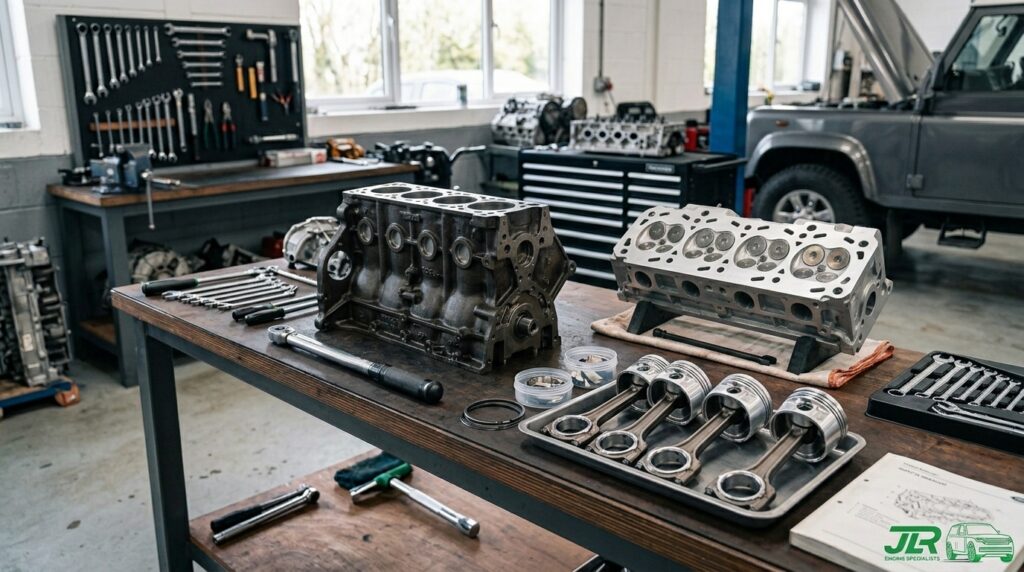
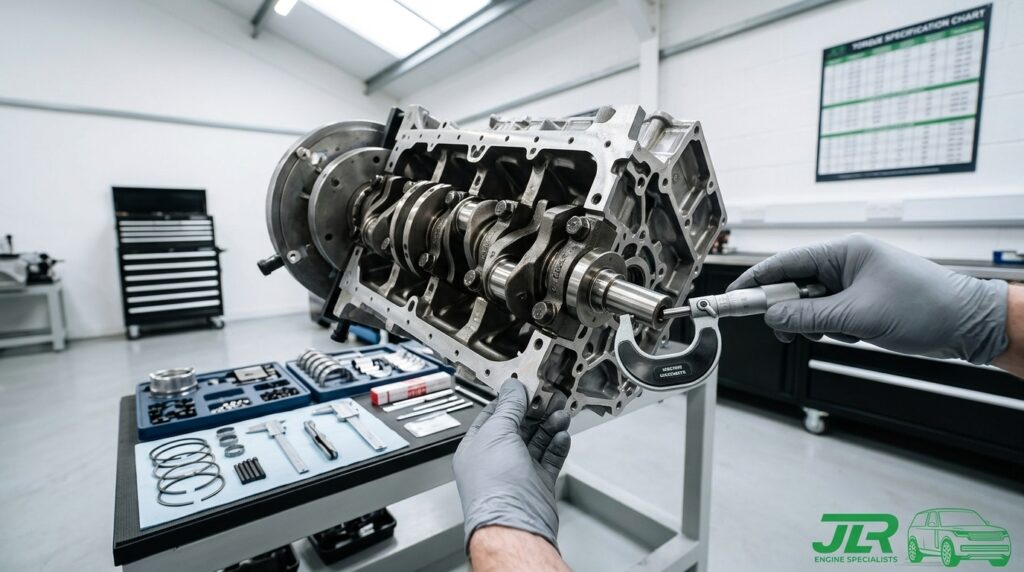
When a Discovery Sport or Range Rover Evoque arrives at our workshop with a metallic rattle on startup, the first question we ask is how long the noise has been present. The answer determines whether we are booking a scheduled timing chain replacement or a full engine rebuild. The 2.0 litre Ingenium diesel family represents a massive leap in thermal efficiency and emissions compliance for Jaguar Land Rover. However, this engineering sophistication has introduced new mechanical fragilities regarding the valvetrain and lubrication systems.
The 2.0 Ingenium 204DTD timing chain is hidden at the rear of the engine. This means a minor cold start rattle is often the only warning you will get before the chain stretches beyond its limits and causes catastrophic valve to piston contact. At JLR Engines, our approach is to recondition and rebuild your original engine wherever possible through our engine rebuilding and reconditioning service. A specialist rebuild typically saves 40 to 50 percent compared to main dealer replacement costs while maintaining OEM standard quality. Understanding the mechanical reality of this noise is the first step in protecting your vehicle from an entirely avoidable financial disaster.
Red Flag Years: Ingenium Timing Chain Vulnerability by Era
The 204DTD engine has undergone significant revisions since its introduction to meet increasingly strict Euro 6 emissions standards. Understanding where your vehicle falls in this timeline helps calibrate your diagnostic expectations and highlights specific secondary failures that contribute to timing chain noise.
- 2015 to 2017 (Early): High risk. Original hydraulic tensioner bleed down and single row chain stretch causing severe cold start rattle.
- 2018 to 2020 (Mid): Moderate risk. Updated tensioners improved chain life, but oil pump drive chain wear and balance shaft bearing failures emerged.
- 2021 to 2023 (Late): Lower to moderate risk. Mild hybrid wet belt degradation shedding rubber into the sump, blocking the tensioner oil feed gallery.
Symptoms: Identifying Ingenium Timing Chain Noise
Diagnosing a failing Ingenium timing chain requires listening to the engine under very specific conditions and interpreting ECU data correctly. Because the chain is located at the rear of the engine block, the acoustic signature is distinct from front mounted timing systems.
The Cold Start Metallic Rattle
The most definitive symptom of 204DTD timing chain wear is a harsh metallic slapping or rattling noise emanating from the rear of the engine bay immediately after pressing the start button. This rattle typically lasts between two and five seconds before the engine oil pump builds sufficient pressure to inflate the hydraulic tensioner and silence the chain. Many owners dismiss this as normal diesel clatter, but it is the sound of a slack chain whipping against worn plastic guides.
Intermittent Rattling and Hot Idle Noise
While the cold start rattle is the most common presentation, some owners report an intermittent rattle that occurs when the engine is fully warm. This occurs because hot thin oil struggles to maintain the hydraulic pressure required to keep the tensioner fully extended, especially if the oil has become diluted with diesel from frequent DPF regenerations. Intermittent noise is just as dangerous as constant noise because the chain is still striking the guides and stretching with every occurrence. You may also need to look into DPF and EGR cleaning if your regeneration cycles are causing excessive fuel dilution.
Timing Correlation Fault Codes
As the chain physically stretches, the rotational relationship between the crankshaft and the camshafts drifts. The ECU monitors this variance continuously. When the stretch exceeds the software tolerance threshold, it will log timing correlation fault codes. This is frequently accompanied by a restricted performance message, rough idling, and an illuminated amber engine management light.
What This Is Not: Misdiagnosing the Ingenium Rattle
A common mistake we see is assuming a brief metallic rattle on the 204DTD is just normal diesel injector clatter or heavy cold oil. In our workshop, we regularly find that this specific noise from the bulkhead is actually the timing chain striking a degraded plastic guide, requiring immediate mechanical intervention.
The Mechanical Reality: Why the 204DTD Chain Fails
To understand why the Ingenium timing chain generates noise and eventually fails, you must look at the packaging decisions and the ancillary systems implemented to meet modern emissions targets.
The Rear Mounted Architecture
Unlike older diesel engines where the timing chain is located at the front, JLR positioned the Ingenium timing chain at the rear of the block. This was done primarily to improve pedestrian crash safety packaging and to reduce noise, vibration, and harshness in the cabin. However, this rear mounted layout means the chain is entirely inaccessible without significant labour. Furthermore, the 204DTD uses a single row chain paired with a hydraulic tensioner that relies entirely on engine oil pressure to keep the chain taut.
Oil Dilution and DPF Regenerations
The 204DTD operates at incredibly high injection pressures. During active DPF regenerations, the ECU injects extra diesel to raise exhaust temperatures. A byproduct of this process is unburnt diesel washing past the piston rings and diluting the sump oil. This diesel contamination drastically lowers the oil viscosity. When the oil is too thin to maintain the hydrodynamic wedge in the tensioner, the component collapses slightly on startup, allowing the chain to slacken and generate that characteristic metallic rattle.
The Mild Hybrid Wet Belt Contamination
For the later models equipped with the mild hybrid system, a new and severe failure point emerged. The system uses a belt in oil setup to drive the starter generator. Over time, the rubber compound on these wet belts degrades due to heat and chemical exposure, shedding microscopic particles into the oil sump. While the oil filter catches larger debris, the finest rubber particles bypass the filter and accumulate in the narrow oil galleries that feed the timing chain tensioner. The tensioner starves for oil, collapses, and the chain stretches prematurely.
The Escalation: From Chain Noise to Catastrophic Engine Damage
The 2.0 Ingenium 204DTD is an interference engine. This means that the physical travel path of the pistons and the valves overlaps, kept separate only by the precise timing of the chain.
When the timing chain stretches and the plastic guides disintegrate, the chain becomes loose enough to jump a tooth on the camshaft or high pressure fuel pump sprockets. Many owners only discover the issue when the engine suddenly misfires and loses all power. By that point, the chain has jumped time and bent multiple valves, turning a preventative repair into a full cylinder head rebuild.
If the chain jumps by a single tooth, the engine will run poorly, emit heavy smoke, and trigger immediate fault codes. If it jumps by multiple teeth, or if the chain snaps entirely under load, the pistons will strike the open valves at thousands of RPM. This results in shattered valves, destroyed pistons, scored cylinder bores, and often a cracked cylinder head. We have received Ingenium engines that were previously misdiagnosed elsewhere as faulty glow plugs or injectors, when a simple live data cam correlation check would have immediately flagged severe timing chain stretch.
Repair Routes and Cost Expectations: Prevention vs Rebuild
Because the timing chain is located at the rear of the 204DTD, accessing it requires separating the gearbox from the engine. This usually necessitates dropping the entire powertrain and subframe assembly from the vehicle. This inherent labour intensity means there is no such thing as a quick fix for an Ingenium timing chain.
Below are the realistic UK specialist workshop cost bands for 2026. Please refer to our pricing disclaimer for full terms regarding variables and diagnostic findings.
Preventative Timing Chain and Tensioner Replacement
If the chain is noisy or showing early correlation codes, but the engine is still running smoothly and the valves have not made contact with the pistons, a preventative replacement is the only logical route.
- Typical Cost: £1600 to £2500
- What this includes: 14 to 18 hours of labour to remove the engine and gearbox assembly, a genuine OEM timing chain kit, the oil pump drive chain, a new rear main seal, and a full oil and filter service.
- Decision Logic: Spending this amount preserves the original engine block and cylinder head, maintaining the vehicle value and reliability.
Catastrophic Failure: Full Engine Rebuild
If the chain has jumped time and damaged the valvetrain, the engine must be completely stripped, machined, and reassembled.
- Typical Cost: £5000 to £7800 and above
- What this includes: Engine removal, full strip down, cylinder head removal and pressure testing, replacement of all bent valves and damaged rockers, head skimming, new head gasket and stretch bolts, block honing if piston damage occurred, and a complete specialist engine rebuild.
- Decision Logic: At this stage, you are facing a full rebuild. Main dealer supply and fit for a brand new Ingenium short engine frequently exceeds £13000, making a specialist reconditioning route the only financially viable option. All major structural rebuilds at JLR Engines are backed by a 12 month unlimited mileage warranty.
When to Stop Driving: The Decision Point
Understanding when to cease driving is critical to avoiding the escalation from a £2000 repair to a £7000 rebuild.
You must stop driving and recover the vehicle if:
- The cold start rattle lasts longer than five seconds.
- The rattle is present when the engine is fully warm.
- The engine management light is flashing, indicating an active severe misfire.
- You experience a sudden loss of power accompanied by a mechanical clattering from the engine bay.
You may drive cautiously to a specialist for immediate diagnosis if:
- The rattle is strictly limited to the first two seconds of a cold start.
- The engine runs perfectly smoothly once warm.
- There are no warning lights on the dashboard.
Caveat: You must avoid high RPMs, heavy acceleration, and motorway driving until the cam correlation data has been checked via an engine diagnostic inspection.
Frequently Asked Questions
Can I drive my Ingenium to the workshop if it only rattles for two seconds on startup?
If the rattle is strictly limited to the first two seconds of a cold start and the engine runs smoothly with no warning lights, you may drive cautiously to a specialist workshop. However, you must book this inspection immediately. The two second rattle indicates that the hydraulic tensioner is bleeding down overnight and the chain is already striking the guides, meaning physical stretch is actively occurring.
Will an oil change fix the Ingenium timing chain rattle?
An oil change will not fix a timing chain rattle if the chain has already physically stretched or if the plastic guides have degraded. However, if the rattle is caused purely by oil dilution from DPF regenerations causing the tensioner to collapse, a fresh oil change using the correct 0W20 or 0W30 OEM specification fluid may temporarily quiet the noise. The underlying cause of the dilution must still be addressed.
Is the 2.0 Ingenium petrol engine affected by the same rear timing chain noise?
The 2.0 Ingenium petrol engines utilise a different timing chain configuration and do not suffer from the same high rate of rear chain stretch and tensioner bleed down as the 204DTD diesel. However, the petrol variants are known to experience issues with the balance shaft chain and the oil pump drive chain located in the sump. This can also cause catastrophic oil starvation and rattling if they fail, making regular 10000 mile oil changes just as critical for petrol owners.
How long does it take for a stretched timing chain to cause valve damage?
There is no predictable timeline for when a stretched chain will jump time and cause valve damage. It can happen over tens of thousands of miles of gradual stretch, or it can snap instantly during a high RPM motorway overtake. Once the chain begins slapping against the bulkhead casing and generating audible noise, the engine is operating on borrowed time.
Are Ingenium timing chain repairs covered by JLR goodwill or extended warranties?
Most aftermarket extended warranties will cover sudden timing chain failure and subsequent engine damage, provided you can prove a strict documented maintenance history. However, JLR goodwill assistance for vehicles outside of the standard warranty period is increasingly rare for timing chain issues. The manufacturer frequently attributes the failure to the owner adherence to extended 21000 mile service intervals rather than a manufacturing defect.
Conclusion
The 2.0 Ingenium 204DTD is a highly capable and efficient diesel engine, but its rear mounted timing chain architecture leaves absolutely zero margin for error regarding oil quality and tensioner health. A cold start rattle is not a quirk of modern diesel ownership. It is a direct mechanical warning that the chain is stretching and the valvetrain is at risk. By abandoning extended oil intervals, monitoring mild hybrid belt health, and intervening the moment acoustic warnings appear, you can easily avoid the steep financial escalation from a preventative chain replacement to a full cylinder head rebuild.
If you are hearing a metallic rattle on your Ingenium cold start, an early diagnostic inspection is the most cost effective next step. Contact our Billericay workshop on +44 203 488 4649 or get a quote online today to discuss your specific requirements. We also provide national collection and delivery to ensure your vehicle arrives safely.