The Jaguar F-Type (chassis code X152) remains one of the most desirable British sports cars of the modern era, offering supercar aesthetics, visceral exhaust notes, and formidable performance. However, beneath the long aluminium bonnet lies a range of complex, high-stress powertrains that demand meticulous maintenance and specialist understanding.
Thesis: The Jaguar F-Type offers supercar thrills, but its AJ126 V6 and AJ133 V8 engines demand meticulous maintenance; ignoring early coolant or timing warnings can turn a £500 fix into a £7,000 rebuild.
At JLR Engines, we specialise in reconditioning and rebuilding your original engine rather than replacing it. Replacement is only recommended when the engine core is beyond economical repair – which represents a small minority of our work. This rebuild-first approach typically saves 40–50% compared to main dealer replacement costs while maintaining OEM-standard quality. Whether you are experiencing the dreaded coolant crossover leak, timing chain rattle, or supercharger drivability issues, understanding the mechanical realities of your F-Type is the first step toward protecting your investment.
Quick Answer: What You Need to Know About F-Type Reliability
The Jaguar F-Type is generally robust when serviced correctly, but it is not immune to specific, well-documented engineering flaws. The most critical issues across the 2013–2024 model years revolve around the cooling system, timing chain components, and supercharger drivetrain isolation.
The AJ126 (3.0L V6) and AJ133 (5.0L V8) engines share a common architecture that places vital plastic coolant pipes deep within the ‘V’ of the engine block, directly beneath the supercharger. Heat cycling causes these pipes to become brittle and fail, often leading to severe coolant loss and potential electrical damage. Furthermore, early production models suffer from timing chain tensioner wear, while the Eaton TVS superchargers are prone to isolator coupler degradation. Later four-cylinder Ingenium models introduce their own set of rear-mounted timing chain and turbocharger challenges.
Addressing these issues early through preventative replacement and specialist JLR services is vastly more cost-effective than waiting for catastrophic engine failure.
Red Flag Years: Model Year Risk Assessment
When evaluating an F-Type for purchase, or assessing the long-term reliability of your current vehicle, understanding the production year variations is critical. Jaguar Land Rover implemented several running changes to address early teething problems, making later models inherently more robust.
| Model Years | Risk Level | Known Issues & Engineering Focus |
|---|---|---|
| 2013–2015 | High | Early AJ126 timing chain tensioner failures; original specification plastic coolant crossover pipes highly prone to cracking; supercharger isolator wear. |
| 2016–2019 | Moderate | Facelift models introduced updated coolant pipe materials and revised timing chain guides; Ingenium 2.0L introduced with early turbo wastegate rattle concerns. |
| 2020–2024 | Low | Late-production models benefit from matured supply chains, updated PCV systems, and revised engine mapping; significantly lower incidence of catastrophic block failure. |
What This Engine Is: The X152 Chassis and Powertrain Lineup
To understand the failure points, it is essential to understand the engineering philosophy behind the X152 chassis. The F-Type was designed to be lightweight, utilizing aluminium-intensive construction. To keep the centre of gravity low and the weight distribution optimal, JLR engineers packaged the engines tightly. This compact packaging is the primary reason why labour times for seemingly simple repairs are exceptionally high.
The AJ126 3.0L V6 Supercharged
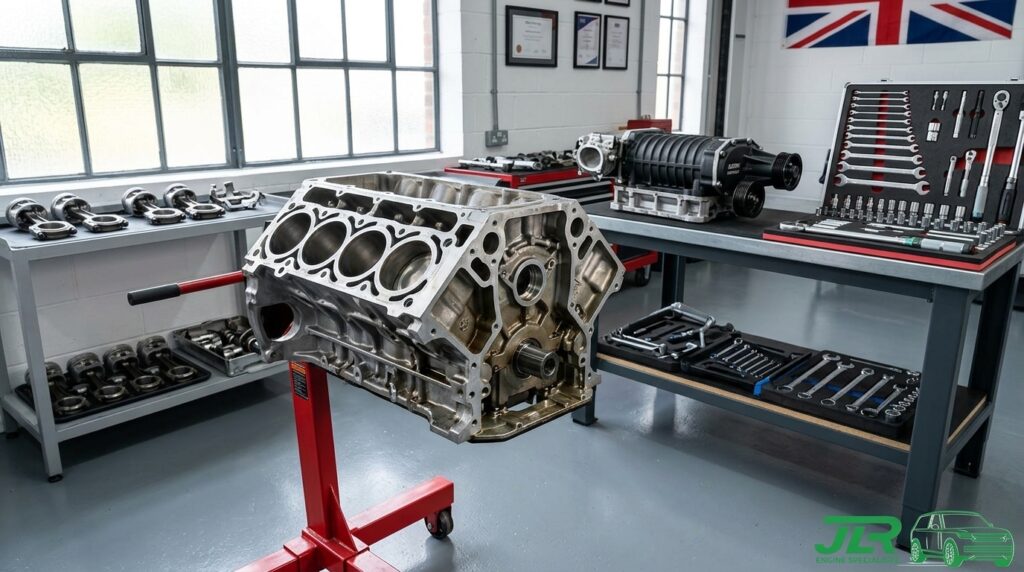
The AJ126 is essentially a 5.0L V8 with two cylinders removed, sharing the same fundamental block architecture, bore spacing, and timing chain layout. It utilizes an Eaton TVS (Twin Vortices Series) supercharger to produce between 340 and 400 horsepower. Because it shares the V8’s physical dimensions in many areas, the ancillary components are packed incredibly tightly against the bulkhead and subframe.
The AJ133 5.0L V8 Supercharged & Naturally Aspirated
The flagship powerplant of the F-Type range. Whether in naturally aspirated form (early base models) or supercharged (S, R, and SVR variants producing up to 575 horsepower), the AJ133 is a formidable engine. It features advanced variable valve timing, direct injection, and complex oil scavenging systems to handle high lateral G-forces. The high thermal output of the V8, particularly in supercharged R and SVR models, places immense stress on the cooling system and engine bay plastics.
The Ingenium 2.0L Four-Cylinder (204GT)
Introduced in the 2018 model year to meet stricter emissions regulations and lower the entry price point, the Ingenium 2.0L turbocharged four-cylinder engine is a completely different design. While lighter and more efficient, it features a rear-mounted timing chain (located between the engine and the gearbox) and an integrated exhaust manifold, presenting unique diagnostic and repair challenges compared to the V6 and V8 variants.
Common Jaguar F-Type Engine Problems & Symptoms
In our workshop, we commonly see specific failure patterns that recur across the F-Type range. Recognising these symptoms early is the difference between a scheduled preventative repair and an unexpected engine teardown.
1. Coolant Crossover Pipe Failures (The “Engine V” Leak)
This is arguably the most notorious issue affecting both the AJ126 V6 and AJ133 V8 engines, a failure mode we have documented extensively in our AJ126 coolant crossover case study. Jaguar Land Rover originally utilized a composite plastic for the coolant crossover pipes that route water through the ‘V’ of the engine block, directly beneath the supercharger. Over years of extreme heat cycling, this plastic becomes brittle and cracks.
- Symptoms: A sweet smell of burning coolant after hard driving, gradual coolant loss with no visible external drips, and occasionally a misfire or electrical fault if coolant pools in the engine valley and wicks into the main wiring harness.
- The Repair: This is a labour-intensive job. The supercharger, intake manifold, and associated plumbing must be completely removed to access the pipes. We strongly recommend replacing the original plastic pipes with upgraded aluminium or reinforced composite alternatives during any major top-end service.
2. Timing Chain Stretch and Tensioner Failure
Both the AJ126 and AJ133 feature timing chains located at the rear of the engine (the flywheel end). Early models (2013–2015) suffered from premature wear of the plastic chain guides and weak hydraulic tensioners. Furthermore, the chains themselves can stretch over time, particularly if oil change intervals are extended. We have documented similar timing failures in our Jaguar XJ AJ133 NA timing case study, which shares the exact same engine architecture.
- Symptoms: A distinct metallic rattling or ‘dieseling’ noise on a cold start that diminishes as oil pressure builds. In severe cases, a check engine light with cam/crank correlation fault codes.
- The Repair: Because the chains are at the rear of the engine, replacing them properly often requires separating the engine from the ZF 8-speed automatic gearbox. In an F-Type, this typically necessitates dropping the entire rear subframe and powertrain assembly, making labour the largest component of the timing chain replacement cost.
3. Supercharger Coupler and Isolator Wear
The Eaton TVS supercharger is connected to the engine via a rubber isolator coupler designed to absorb torsional vibrations and protect the supercharger’s internal bearings. Over time, the rubber degrades, and the metal splines can wear.
- Symptoms: A distinct clunking or rattling noise from the front of the engine at idle, which changes pitch or disappears when the RPM is raised.
- The Repair: The supercharger must be removed, and the isolator assembly replaced. This is a relatively inexpensive part, but the labour to safely remove and reinstall the supercharger, along with replacing the supercharger oil and gaskets, dictates the cost.
4. Oil Consumption and PCV System Degradation
High-performance engines naturally consume some oil, but excessive consumption in the AJ133 is often linked to a failing Positive Crankcase Ventilation (PCV) system or stuck piston rings caused by carbon buildup from direct injection.
- Symptoms: Blue smoke on heavy acceleration, frequent need to top up oil between services, and a rough idle.
- The Repair: A full engine flush, PCV diaphragm replacement, and potentially a piston ring cleaning procedure or honing during a full rebuild.
5. Ingenium Timing Chain and Turbo Wastegate Issues
The 2.0L Ingenium engine places its timing chain at the rear of the block, similar to the V8. The chain tensioners can fail, leading to chain stretch. Additionally, the turbocharger wastegate actuator pivot can wear, causing boost control issues that often necessitate a comprehensive turbo repair and replacement service.
- Symptoms: Rattling from the rear of the engine bay, hesitation under acceleration, and under-boost fault codes.
- The Repair: Gearbox removal to access the timing cover, followed by a full chain and tensioner kit replacement.
What This Isn’t: Avoiding Misdiagnosis
A common mistake we see is assuming all F-Type supercharger whine is normal. In our workshop, we regularly find that excessive whine or rattling is actually a failing supercharger coupler or isolator, not just ‘character’. Furthermore, we’ve received F-Type engines that were previously misdiagnosed elsewhere as having head gasket failures, when in fact it was the notorious coolant crossover pipe leaking into the engine valley. Accurate diagnosis using UV dye and pressure testing is essential before authorising major mechanical repairs.
Repair Routes, Rebuild Costs, and UK Pricing Variables
When dealing with F-Type engine problems, costs vary wildly depending on whether the issue is caught early or allowed to cause secondary damage. Typical UK rebuild costs generally range between £3,500 and £11,000, depending on crankshaft condition, timing damage, oil contamination, injector state, turbo condition, and whether the original block is reusable. All pricing is subject to our standard pricing disclaimer.
Minor Repairs and Preventative Replacements
- Coolant Crossover Pipe Upgrade (AJ126/AJ133): £800 – £1,500. (Includes supercharger removal, new aluminium pipes, gaskets, and coolant).
- Supercharger Isolator/Coupler Replacement: £600 – £950. (Includes supercharger oil and seals).
- Ingenium Turbo Wastegate Actuator Repair: £400 – £700. (Often requires turbo removal).
- PCV System / Oil Separator Replacement: £350 – £600.
Major Engine Rebuild Scenarios
If a timing chain snaps, or if coolant enters the cylinders causing hydrolock, a full engine reconditioning is required.
- AJ126 3.0L V6 Full Rebuild: £4,500 – £7,500. The lower end assumes the crankshaft is reusable and no turbo contamination. The upper end includes crank replacement, new injectors, and full oil system flush.
- AJ133 5.0L V8 Full Rebuild: £6,500 – £11,000. The V8 requires more machining, higher-capacity fluid fills, and more expensive OEM components. Severe coolant contamination can push costs toward the upper limit due to the need to replace the entire engine wiring harness.
- Ingenium 2.0L Full Rebuild: £3,500 – £6,000. Balancing the lower cost of four-cylinder components against the high labour cost of gearbox removal for timing access.
All major rebuilds performed at our facility include a comprehensive 12-month unlimited mileage warranty, providing total peace of mind.
Engine Comparison Table: Reliability vs. Repair Complexity
| Engine Code | Configuration | Reliability Rating | Rebuild Complexity | Typical Repair Cost Range |
|---|---|---|---|---|
| AJ126 | 3.0L V6 SC | Moderate (High maintenance needs) | High (Tight packaging, rear chains) | £4,500 – £7,500 |
| AJ133 | 5.0L V8 SC | Moderate (Thermal stress issues) | Very High (Heavy, complex ancillaries) | £6,500 – £11,000 |
| Ingenium 204GT | 2.0L I4 Turbo | High (If oil is changed frequently) | High (Gearbox-out timing access) | £3,500 – £6,000 |
The JLR Engines Rebuild Process for the F-Type
When preventative maintenance fails and a rebuild is necessary, our approach is methodical and transparent. We do not simply swap out parts; we restore the engine to OEM tolerances or better.
Step 1: Extraction, Teardown, and Chemical Cleaning
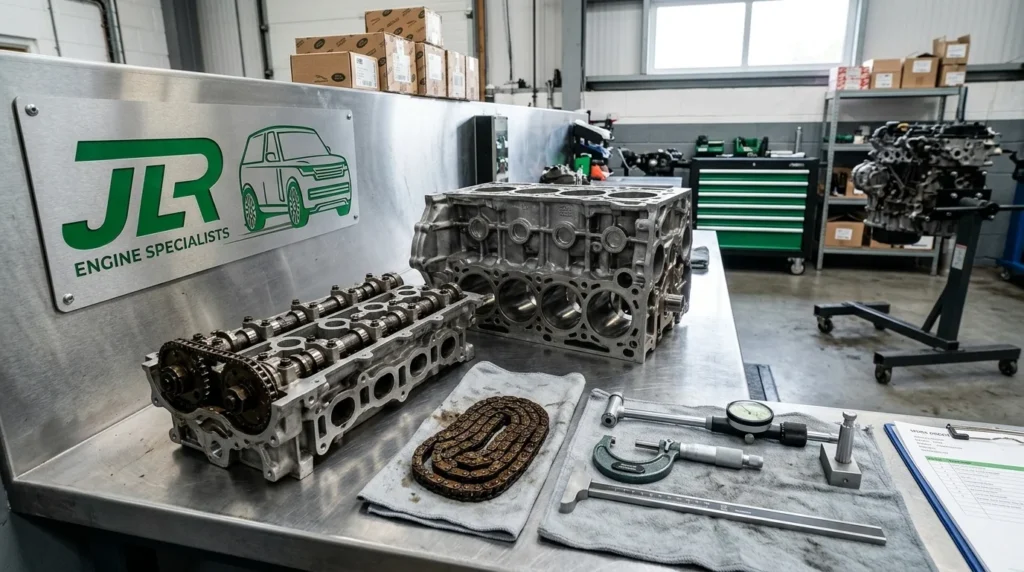
The F-Type powertrain is dropped as a complete unit. The engine is separated from the ZF gearbox and mounted on a rotary stand. It is then completely stripped down to the bare block and cylinder heads. All components undergo chemical and ultrasonic cleaning to remove decades of carbon, sludge, and coolant residue.
Step 2: Metrology and Precision Machining
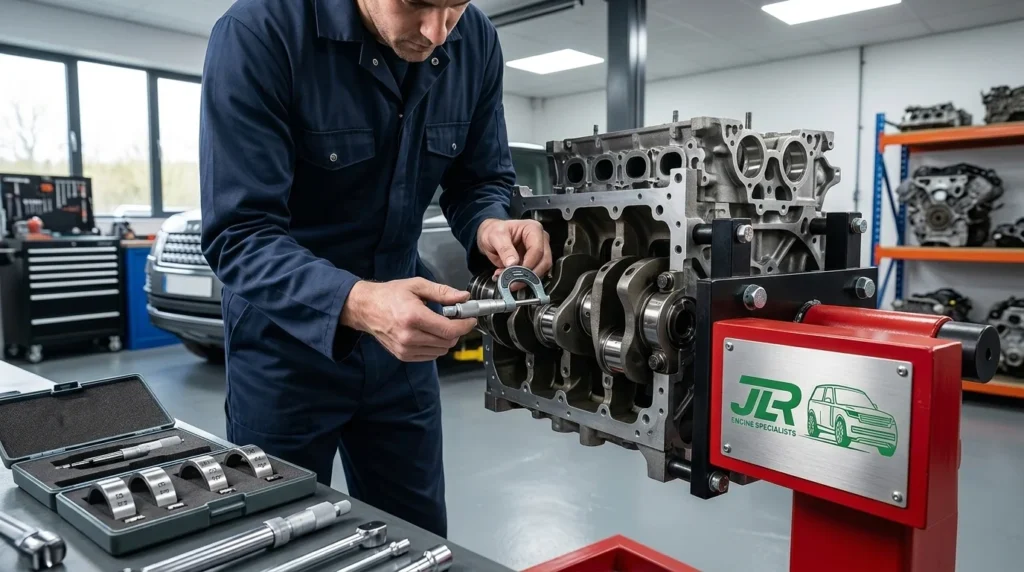
Every critical dimension is measured. The cylinder bores are checked for ovality and taper; if they are out of spec, the block is honed or sleeved. The cylinder heads are pressure tested for micro-fractures (common after overheating events) and the valve seats are recut to ensure a perfect seal. The crankshaft is micrometre-measured and polished or ground to undersize if necessary.
Step 3: Reassembly with OEM-Spec Components
We use only OEM or superior aftermarket components (such as upgraded metal coolant pipes and revised timing chain tensioners). Bearings are selected based on precise plastigauge measurements to ensure exact oil clearances. The rear-mounted timing chains are installed using specialized locking tools to guarantee perfect valve timing.
Step 4: Dyno Verification and Fluid Bedding
Before the engine is reunited with the F-Type chassis, it is primed with oil and coolant. Once installed, the engine undergoes a strict bedding-in procedure. We monitor live data for oil pressure, coolant temperatures, and fuel trims to ensure the reconditioned engine performs exactly as it did on the showroom floor.
Preventative Servicing: How to Avoid a Full Rebuild
The vast majority of F-Type engines that arrive in our workshop for major rebuilds were subjected to the manufacturer’s extended service intervals (often up to 16,000 miles or 24 months). For a high-performance, supercharged engine, this is inadequate.
To protect your engine, we recommend the following preventative routine servicing schedule:
- Oil and Filter Changes: Every 5,000 to 7,000 miles, or annually. Use only the exact specification of fully synthetic oil required for the VVT and supercharger systems.
- Coolant System Inspection: Every 20,000 miles. Pressure test the system and visually inspect the engine valley for early signs of crusty coolant residue.
- Supercharger Oil: Check and replace the supercharger nose-cone oil every 40,000 miles.
- Spark Plugs: Replace every 30,000 miles on supercharged models to prevent misfires that can damage the catalytic converters and oxygen sensors.
When Repair Makes Sense vs. When Replacement is Necessary
A common question we face is whether to repair a failing component or replace the entire engine.
Repair makes sense when the core architecture (the block, crank, and cylinder heads) is undamaged. For example, if a coolant pipe fails and is caught before coolant enters the cylinders, a top-end strip-down and pipe replacement is the logical, cost-effective route.
Replacement is only considered when the engine has suffered catastrophic internal failure – such as a spun main bearing that has gouged the engine block, or severe hydrolock that has bent connecting rods and cracked the block casting. In these rare cases, the cost of machining and replacing the damaged core components exceeds the value of the original unit. However, as stated in our rebuild-first philosophy, replacement remains a last resort.
What JLR Engines Recommends for F-Type Owners
If you own an X152 chassis F-Type, do not wait for a warning light to dictate your maintenance schedule. The most expensive F-Type engine repair is the one you ignore. We strongly advise an annual health check that includes an endoscopic inspection of the engine valley to check for coolant weeping, alongside an oil analysis to detect microscopic bearing wear before it becomes audible. If you hear a new rattle, smell coolant, or notice a change in performance, cease driving the vehicle immediately and arrange for engine diagnostics.
Frequently Asked Questions
How long do Jaguar F-Type engines last?
With strict adherence to 5,000-mile oil change intervals and proactive replacement of the plastic coolant pipes, an AJ126 or AJ133 engine can easily exceed 120,000 miles. Neglecting these specific maintenance items can lead to premature failure before 60,000 miles.
Is the Jaguar F-Type 5.0 V8 reliable?
The AJ133 5.0L V8 is fundamentally a strong, durable engine block. Its reliability is heavily dependent on cooling system maintenance and oil quality. The primary threats to the V8 are overheating caused by coolant leaks and timing chain wear caused by extended oil drain intervals.
Why is my F-Type losing coolant but not leaking on the floor?
This is the classic symptom of a failing coolant crossover pipe in the engine ‘V’. The coolant leaks onto the hot engine block and evaporates, or pools deep in the engine valley where it is hidden from view. A pressure test and boroscope inspection are required to confirm this.
How much does it cost to replace a timing chain on a Jaguar F-Type?
Because the timing chains are located at the rear of the engine, the gearbox and subframe must often be removed to access them safely. Consequently, a full timing chain and tensioner replacement typically costs between £1,800 and £2,800 in the UK, heavily weighted toward labour time.
Do F-Type Ingenium engines have timing chain problems?
Yes, the 2.0L Ingenium engines can suffer from timing chain stretch and tensioner failure, particularly if oil changes are delayed. Because the chain is at the rear of the engine, replacing it is a complex, labour-intensive job requiring gearbox removal.
Conclusion
The Jaguar F-Type is a modern classic that delivers an unparalleled driving experience, but it requires an owner who is willing to look past the manufacturer’s optimistic service schedules. Whether you are dealing with the fragile coolant pipes of the AJ133 V8, the timing chain nuances of the AJ126 V6, or the rear-mounted chains of the Ingenium four-cylinder, early intervention is the key to keeping your sports car on the road and out of the scrapyard. By choosing specialist reconditioning over hasty replacement, you preserve the soul of your vehicle while ensuring it performs reliably for years to come.
Speak to a JLR specialist about your F-Type by calling +44 203 488 4649. You can also contact our Billericay workshop online, arrange national collection and delivery for your vehicle, or get a quote for a comprehensive assessment.