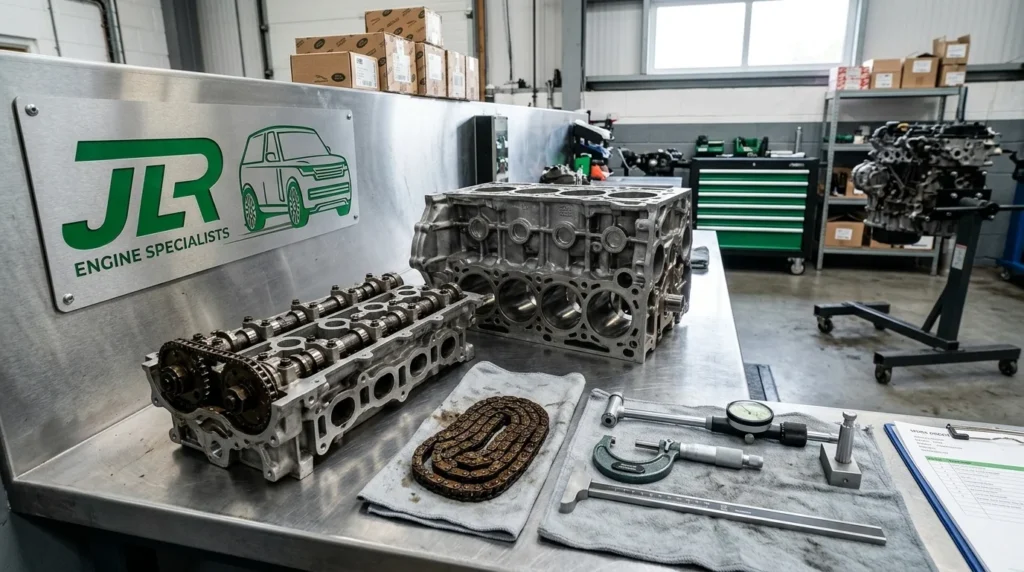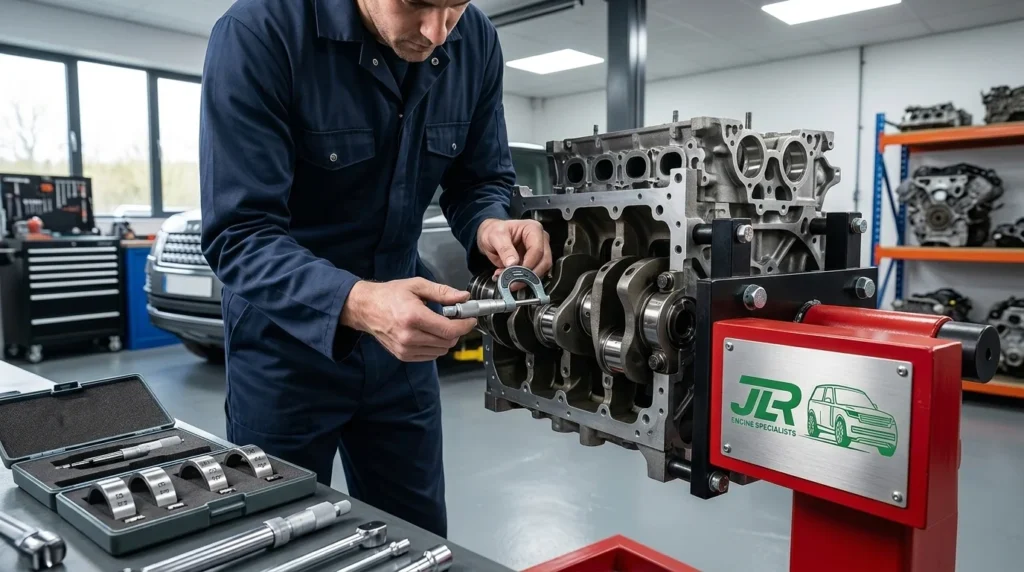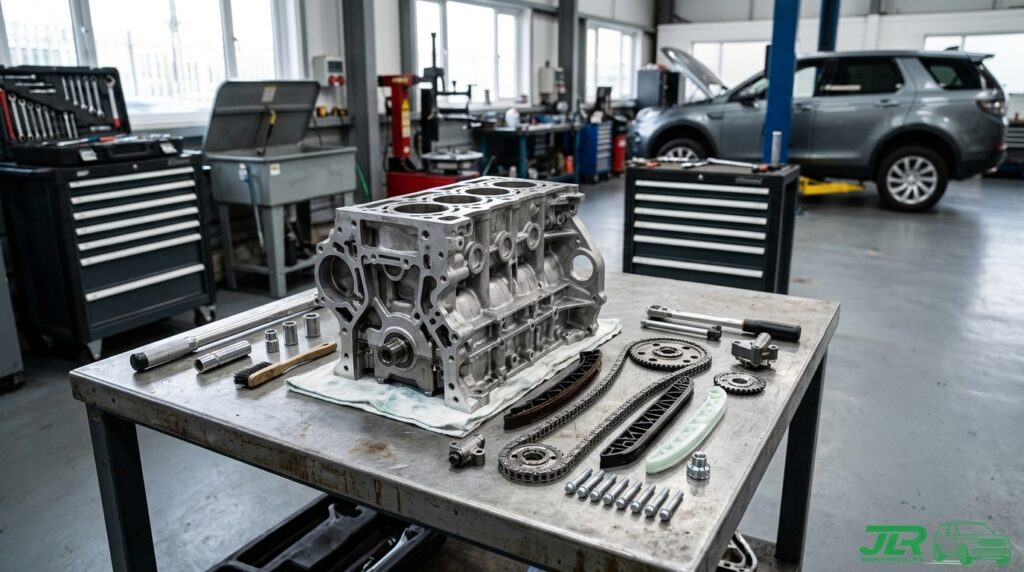
If you own a 2.0 diesel Range Rover Evoque, you may be wondering about the widely reported timing chain issues. When a vehicle arrives at our workshop with a rattling noise on cold start, the first question is always whether the chain has stretched or the tensioner has failed.
At JLR Engines, we specialise in reconditioning and rebuilding your original engine rather than replacing it. This rebuild first approach typically saves 40 to 50 percent compared to main dealer replacement costs while maintaining strict OEM standard quality.
In this guide, we break down the symptoms, root causes, and realistic UK repair costs for the Ingenium timing chain fault. This will help you make an informed decision before a minor noise turns into a major mechanical catastrophe through our expert engine rebuilding and reconditioning service.
What Causes the Range Rover Evoque Timing Chain Problem
The Range Rover Evoque is a highly capable compact SUV, but its diesel powertrains have specific engineering vulnerabilities that owners must monitor. To understand the timing chain problem, we must first look at the engine architecture and the maintenance schedules that exacerbate wear.
The Ingenium 2.0 Diesel Architecture
Introduced to replace the older 2.2 litre engines, the 2.0 litre Ingenium diesel was designed for improved efficiency and lower emissions. However, JLR made a distinct design choice with this engine family regarding the timing chain location.
The timing chain is located at the rear of the engine, between the engine block and the transmission bell housing, rather than at the front. This rear mounted configuration means the chain drives the high pressure fuel pump and the camshafts, creating significant challenges for maintenance and cooling.
The Role of Extended Service Intervals
A primary catalyst for timing chain wear in the UK is the original extended service schedule. Many Evoques left the factory with recommended oil change intervals of 21,000 miles or 24 months, which is far too long for this specific engine design.
Modern diesel engines generate significant soot and carbon particulates, which are suspended in the engine oil. Over 20,000 miles, the oil degrades, losing its viscosity and its ability to protect metal components, acting as a mild abrasive on the timing chain links and plastic guide rails.
Tensioner and Guide Rail Degradation
The timing chain itself is made of hardened steel, but it runs against plastic guide rails and is kept under tension by a hydraulic piston. Over time, the plastic guides become brittle from repeated heat cycling and begin to crack or break off.
When a guide fails, the chain whips against the alloy cylinder head or engine block, accelerating stretch and generating metallic debris. This debris circulates through the oil pickup strainer, potentially starving the main bearings and turbocharger of oil.
Symptoms of a Failing Timing Chain
Recognising the early warning signs is the difference between a scheduled repair and a destroyed engine. Many owners only discover the issue when the check engine light illuminates, but auditory clues usually present themselves much earlier.
Rattling Noise on Cold Start
The most universal symptom of a failing Ingenium timing chain is a distinct metallic rattling or clattering noise immediately after pressing the start button. This rattle typically lasts for two to three seconds before fading as the oil pressure builds and the hydraulic tensioner pumps up.
This occurs because the tensioner has lost its prime or the chain has stretched beyond the physical travel limit. If you hear this noise, immediate engine diagnostics are crucial to prevent further internal damage.
Check Engine Light and Fault Codes
As the chain stretches, the precise synchronisation between the crankshaft and the camshafts drifts. The engine control unit monitors this relationship constantly and will trigger the check engine light if the correlation falls outside the acceptable tolerance.
You will typically see fault codes such as P0016 or P0017 logged in the system. These codes indicate a crankshaft to camshaft correlation issue, confirming that the timing components are no longer functioning within their designed parameters.
Reduced Power and Limp Mode
To protect the engine from potential valve to piston contact, the engine control unit may force the vehicle into a restricted performance mode. You will notice a severe lack of acceleration, inability to exceed certain RPM limits, and warning messages on the dashboard.
This limp mode is a protective measure, but driving the vehicle in this state for extended periods can cause additional stress on the drivetrain. It is a clear indicator that the timing system requires immediate professional attention.
Metallic Debris in the Oil Filter
During a routine service, a diligent technician will cut open the oil filter and inspect the pleats. Finding a fine metallic paste or small shards of black plastic from the guide rails is a definitive indicator that the timing chain assembly is actively destroying itself.
Driving with a rattling chain risks catastrophic engine failure. If the chain snaps, the pistons will strike the valves, bending them and potentially punching holes through the block. We frequently see Evoques where chain failure occurred because the owner ignored early rattling.
Repair Routes and UK Cost Bands
When a timing chain fault is diagnosed, the repair route depends entirely on how long the problem was left unaddressed. Costs vary based on the extent of the internal damage, regional labour rates, and whether genuine components are utilised.
Route 1 Timing Chain and Tensioner Replacement
If the vehicle is diagnosed early, meaning the chain has stretched but the timing has not skipped and no internal valve damage has occurred, the repair involves replacing the timing chain kit. Because the chain is located at the rear, this is a highly labour intensive job.
In most UK specialist workshops, the engine must be partially or fully removed from the vehicle to access the rear timing cover. Typical UK repair costs for timing chain replacement generally range between £1,200 and £2,200, depending on the extent of the disassembly required.
Route 2 Full Engine Rebuild
If the warning signs were ignored and the chain has snapped or skipped multiple teeth, the cylinder head must be removed and inspected. In the best case scenario, the valves are bent, requiring a full cylinder head rebuild and new head gasket.
In the worst case scenario, a piston crown has shattered or the block is scored by a broken chain. A full engine rebuild for a damaged 2.0 Ingenium diesel typically falls between £4,500 and £6,500. This extensive process includes full strip down, ultrasonic cleaning, machining, and a complete oil system flush.
Why Main Dealer Replacement is Rarely Necessary
Main dealers will almost always quote for a brand new crate engine from the manufacturer when faced with a timing chain failure, often quoting between £11,000 and £16,000 including fitting. At JLR Engines, we advocate for a thorough diagnostic assessment first.
A skipped chain rarely destroys the entire bottom end of the engine block immediately. By reconditioning your original engine using OEM specification parts, we restore factory tolerances at a fraction of the dealer replacement cost. Please review our pricing disclaimer for details on how variables affect your final invoice.
Model Years and Engine Variations Most Affected
It is crucial for owners to understand exactly which engine is in their vehicle, as the Evoque underwent a significant powertrain transition during its first generation. Knowing your specific engine code helps in sourcing the correct parts and understanding the exact failure risks.
The 2011 to 2015 Era
Early Range Rover Evoques were fitted with the 2.2 litre diesel engine developed in conjunction with the PSA Group. While this engine also suffered from valvetrain and timing component issues, it utilised a different configuration with a timing belt driving the camshafts.
If you own a 2012 to 2015 model, your primary concern should be the cambelt interval and the rear cam to cam chain tensioner. These engines are generally robust, but neglecting the belt change interval can lead to similar catastrophic interference engine damage.
The 2015 to 2019 Era
The specific timing chain stretch problem detailed in this guide primarily affects the 2.0 litre Ingenium diesel engines introduced in late 2015. These engines are the ones most prone to the rear mounted chain stretch, hydraulic tensioner bleed down, and plastic guide rail degradation.
If your Evoque is a 2.0 diesel registered from 2016 onwards, it falls squarely into the high risk category for this specific fault. You can explore more about the specific powertrains available for your vehicle on our Range Rover Evoque engines page to ensure you have the correct specifications.
Prevention and Maintenance Advice
While the rear mounted chain design is an inherent feature of the Ingenium engine, the rate at which it degrades is heavily influenced by ownership habits. You cannot change the engine architecture, but you can drastically extend the life of the timing components.
Drastically Reduce Oil Change Intervals
The single most effective preventative measure is ignoring the 21,000 mile extended service schedule. We strongly recommend changing the engine oil and filter every 8,000 to 10,000 miles, or every 12 months, whichever comes first, as part of your routine servicing.
This prevents the buildup of abrasive soot and ensures the hydraulic tensioner receives clean, high viscosity oil. Fresh oil maintains the correct hydraulic pressure required to keep the timing chain taut during those critical first seconds of a cold start.
Use the Correct Oil Specification
The Ingenium engine is highly sensitive to oil chemistry, particularly regarding the Diesel Particulate Filter and the turbocharger bearings. You must use a fully synthetic 5W30 oil that meets the specific Jaguar Land Rover specification for low SAPS applications.
Using incorrect, thicker, or non compliant oil will cause DPF blockages and alter the hydraulic flow rates to the timing tensioner. If your emissions systems are struggling, you may also benefit from our DPF and EGR cleaning services to restore optimal engine breathing.
Insist on Genuine OEM Tensioners and Filters
The aftermarket is flooded with cheap timing chain kits, but the hydraulic tolerances inside an OEM JLR tensioner are precise. We have rebuilt engines where aftermarket tensioners failed within 15,000 miles due to poor internal sealing rings and inferior materials.
Always insist that your specialist uses genuine OEM or Tier 1 supplier components. Furthermore, use only genuine oil filters to ensure the internal anti drain back valves function correctly, preventing oil starvation on startup and protecting the entire lubrication system.
When Repair Makes Sense vs When Replacement May Be Necessary
Deciding how to proceed after a timing chain diagnosis requires an objective look at the vehicle overall condition and the state of the engine core. Our philosophy is always to save the original engine whenever it is mechanically and financially viable to do so.
When Reconditioning and Repair Makes Sense
If the vehicle has a full service history and the fault was caught before the chain snapped, repairing the timing system or rebuilding the top end is highly cost effective. The bottom end of the Ingenium engine is generally robust if it has not been starved of oil.
Reconditioning your existing engine preserves the original matching numbers integrity of the vehicle. It also avoids the complex immobiliser and ECU coding nightmares associated with dropping in a replacement engine from a breaker yard, ensuring a seamless return to the road.
When Replacement May Be Necessary
Replacement is only considered when the engine core is beyond economical repair. This occurs if the timing chain snapped at high speed, resulting in a piston smashing through the cylinder wall, or if metallic debris has completely blocked the oil pickup strainer.
In these rare, catastrophic scenarios, the cost of machine shop work and new bottom end components exceeds the value of the engine core. However, this represents a small minority of the timing chain cases we see, and we always explore mechanical repairs to save the original block first.
What JLR Engines Recommends
If you suspect your Range Rover Evoque is developing a timing chain fault, time is of the essence. Do not clear the fault codes and continue driving, and do not assume the cold start rattle will simply go away once the engine is warm.
We recommend booking a comprehensive diagnostic inspection immediately. Using JLR specific software, we can read the live cam and crank correlation values to measure exactly how many degrees the chain has stretched before it ever throws a dashboard warning light.
Catching a minor stretch is a manageable repair, while waiting until it snaps is a massive financial burden. Our specialist JLR services ensure that your vehicle receives the precise attention it needs from technicians who understand the unique quirks of the Ingenium family.
Frequently Asked Questions
How long does a Range Rover Evoque timing chain last?
In theory, a timing chain is designed to last the lifetime of the engine. However, in the real world, the 2.0 Ingenium diesel timing chains commonly begin to stretch and show symptoms of wear between 70,000 and 100,000 miles. This is heavily dependent on whether the owner adhered to severe duty oil change intervals or the extended manufacturer schedules.
Can I just replace the tensioner and not the whole chain?
No. If the tensioner has failed or reached the end of its travel, it is because the chain has physically stretched or the plastic guides have worn down. Replacing only the tensioner will temporarily mask the noise, but the stretched chain will continue to whip and destroy the new guides.
Is the 2.0 Ingenium timing chain at the front or rear of the engine?
The 2.0 Ingenium diesel features a rear mounted timing chain. It is located at the flywheel end of the engine, between the block and the gearbox. This is why the repair is labour intensive, as it usually requires engine removal or significant subframe manipulation to access the rear timing cover safely.
Will my insurance or warranty cover a timing chain failure?
Standard manufacturer warranties will not cover a timing chain failure if the vehicle is out of its original term. They will almost certainly reject a claim if they can prove the extended oil service intervals caused premature wear. Standard motor insurance policies do not cover mechanical breakdown, but a separate mechanical breakdown policy might.
Conclusion
The timing chain issue in the 2.0 Ingenium diesel Range Rover Evoque is a well documented problem, but it is entirely manageable with the right approach. By understanding the symptoms and adhering to a strict maintenance schedule, you can protect your engine from catastrophic failure.
When the worst does happen, a professional reconditioning process offers a far more sensible and cost effective solution than main dealer replacement. By choosing to rebuild your original engine with OEM standard precision, you preserve the soul of your vehicle while ensuring it remains reliable for years to come.
Speak to a JLR specialist about your Range Rover Evoque by calling +44 203 488 4649. You can also contact our Billericay workshop to discuss your specific requirements, request our national collection and delivery for your vehicle, or get a quote online today.