The most common misconception we hear about the 2.0 Ingenium diesel timing system is that it is a ‘lifetime’ sealed unit requiring no maintenance or inspection. In practice, the reality is that the chain-driven valvetrain in the L560 Velar is highly sensitive to oil degradation, extended service intervals, and the specific thermal cycles of modern diesel emissions systems.
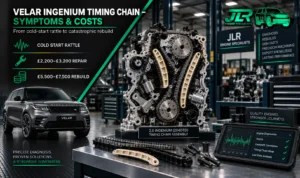
The 2.0 Ingenium diesel (204DTD) in the Velar can suffer premature timing chain stretch, but whether this results in a targeted preventative replacement or a catastrophic engine rebuild depends entirely on how quickly you react to a cold-start rattle.
At JLR Engines, our approach is to recondition and rebuild your original engine wherever possible. Engine replacement is only recommended when the engine core is beyond economical repair – which represents a small minority of the work we carry out. A specialist rebuild typically saves 40–50% compared to main dealer replacement costs while maintaining OEM-standard quality.
This guide examines the engineering realities of the 204DTD timing cassette, the specific acoustic and electronic warnings it provides before failure, and the realistic cost bands for intervention in the UK market. For a broader look at the powertrains available in this specific chassis, you can explore our dedicated Range Rover Velar engines hub.
The Reality of the 2.0 Ingenium (204DTD) Timing System
The 2.0-litre four-cylinder Ingenium diesel (engine code 204DTD) was introduced to the Range Rover Velar lineup to replace the older, heavier Ford-derived 2.2-litre units. It is a highly efficient, lightweight engine featuring an aluminium block and a sophisticated high-pressure common-rail fuel system. However, its packaging constraints dictated a design choice that has significant implications for long-term ownership and repair costs: the timing chain cassette is located at the rear of the engine, adjacent to the gearbox bell housing.
Unlike older JLR diesel engines where the timing components were mounted at the front of the engine and accessible by simply removing the radiator and ancillary belts, the rear-mounted Ingenium chain requires substantial labour to access. To replace the timing chain, guides, and tensioners, the engine must either be separated from the transmission or the entire front subframe and engine assembly must be lowered from the vehicle.
This engineering layout means that the chain itself is bathed in engine oil and relies entirely on the hydraulic tensioner to maintain correct valve timing. If oil pressure drops, or if the oil viscosity degrades due to fuel dilution or extended use, the tensioner collapses slightly. This allows the chain to slap against the plastic guides, accelerating wear on both the guide material and the chain links themselves, eventually necessitating a complex timing chain replacement.
Symptoms: How to Identify Chain Stretch Before It Jumps
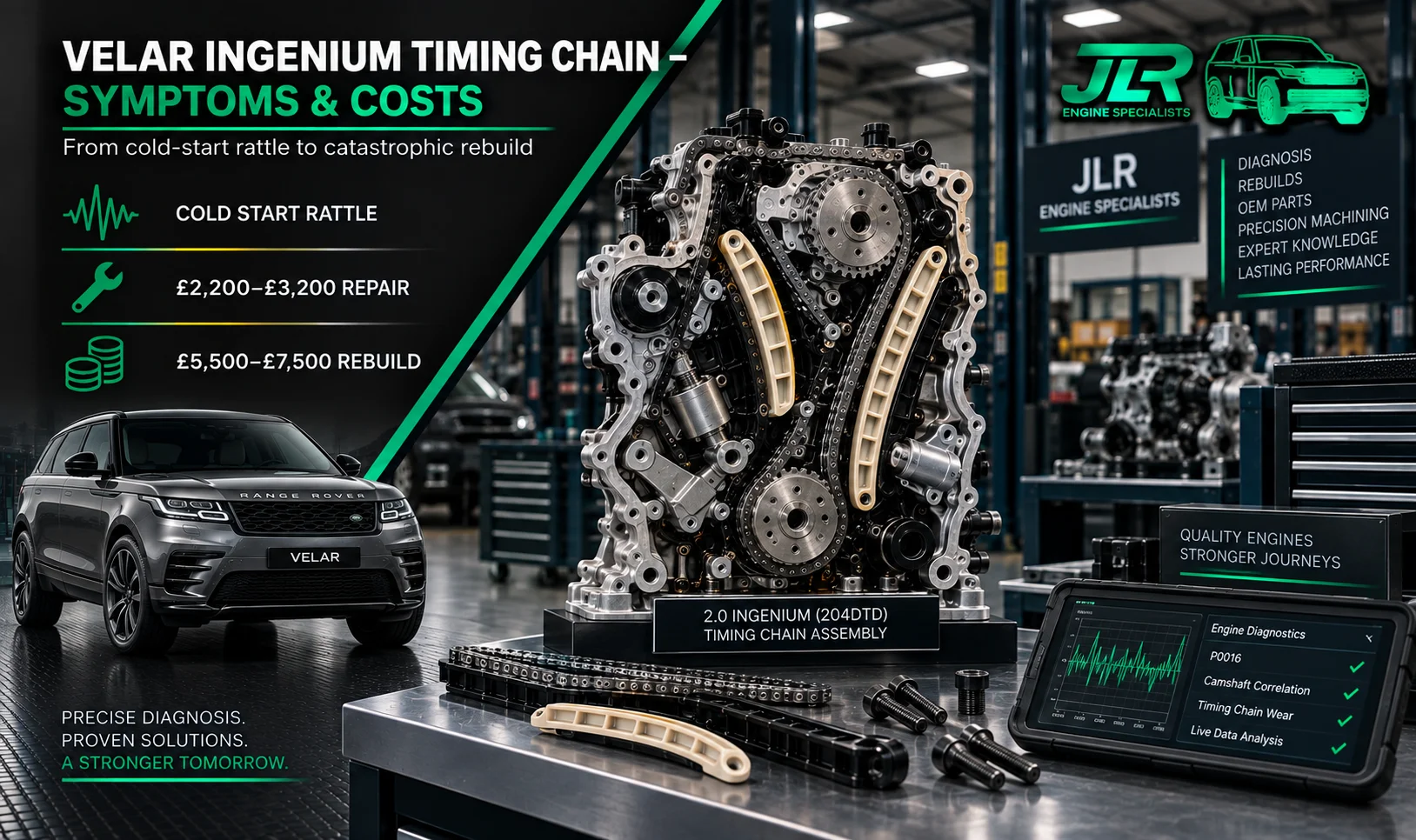
The earliest and most reliable indicator of timing chain wear on the 204DTD is an acoustic one. A cold-start metallic rattle – often described as sounding like marbles in a tin can – emanating from the rear of the engine bay or through the bulkhead is the primary warning sign. This noise typically lasts for two to four seconds after startup, fading only once the oil pump builds sufficient pressure to fully extend the hydraulic tensioner.
In our workshop, we regularly see 204DTD timing chains develop excessive slack after extended 20,000-mile oil service intervals, particularly in vehicles used predominantly for short urban journeys where the oil never reaches optimal operating temperature. As the chain physically stretches beyond the tolerance of the tensioner, the plastic guide rails begin to fracture. You may find small, dark plastic fragments in the oil sump during a routine drain, which is a definitive mechanical red flag.
Electronic symptoms usually appear later in the failure progression. As the chain stretches, the physical relationship between the crankshaft and the camshafts drifts. The engine control unit (ECU) monitors this via correlation sensors; when the deviation exceeds a specific threshold, it will trigger an engine management light and log faults such as P0016 (Crankshaft Position – Camshaft Position Correlation). At this stage, the vehicle may enter a restricted performance mode, exhibiting rough idling, hesitation under acceleration, and reduced power. A comprehensive engine diagnostic inspection is crucial at this stage to read live data camshaft correlation readings and confirm the extent of the stretch before committing to major labour.
What This Isn’t
A common mistake we see is assuming a brief cold-start rattle on the 2.0 Ingenium is just normal diesel character. In our workshop, we regularly find that a metallic clatter lasting more than two seconds is early timing chain stretch, not routine engine noise.
Red Flag Model Years: When Risk Increases
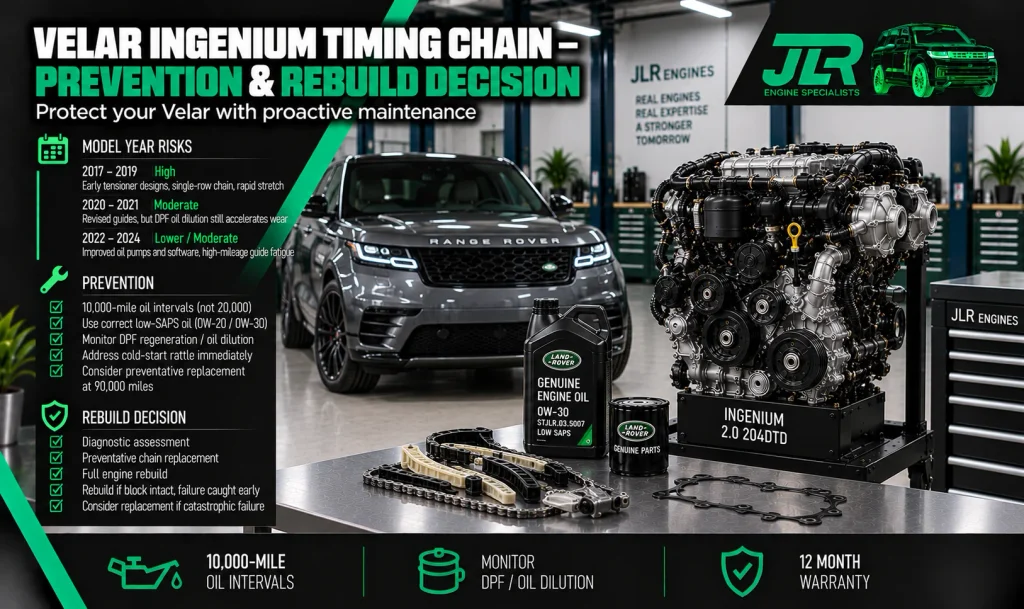
Splitting the L560 Velar Ingenium diesel production run (2017–2024) into thirds reveals how component revisions and software calibrations influence failure likelihood:
| Model Years | Risk Level | Known Issues |
|---|---|---|
| 2017–2019 | High | Early tensioner designs and single-row chain configurations prone to rapid stretch; high sensitivity to extended oil service intervals. |
| 2020–2021 | Moderate | Revised guides introduced, but aggressive DPF regeneration cycles causing oil dilution still accelerated chain and tensioner wear. |
| 2022–2024 | Lower/Moderate | Improved oil pumps and software calibrations reduce dilution, though high-mileage examples are now entering the critical wear window for guide fatigue. |
It is important to note that risk level reflects statistical likelihood based on workshop intake, not absolute certainty. A 2018 model with meticulous 10,000-mile oil change intervals may present with zero chain wear, while a 2021 model used exclusively for short, stop-start school runs may require a cassette replacement before reaching 60,000 miles.

Repair Routes and Cost Escalation
Because of the rear-mounted design of the 204DTD timing cassette, the labour time for access is the primary cost driver. A comprehensive diagnostic assessment (£150–£250) is the essential first step to confirm chain stretch via live data and physical oil inspection before committing to major labour.
For a preventative timing chain replacement where the engine has not jumped time and the cylinder head is undamaged, a full OEM kit (chains, tensioners, guides, and sprockets) typically ranges between £2,200 and £3,200 at a UK specialist. The lower end assumes the engine is removed and reinstalled with no secondary sealing or turbo issues, while the upper end accounts for ancillary components like rear main seals and gearbox oil that must be replaced during the separation process.
Many owners only discover the issue when the engine management light illuminates with a timing correlation fault – by which point the chain has often already jumped a tooth and damaged the valvetrain, turning a preventative repair into a full cylinder head and piston inspection. If the chain jumps and valves contact the pistons, the cost escalates significantly. A specialist engine rebuild to address bent valves, scored pistons, and a damaged cylinder head typically falls between £5,500 and £7,500. Main dealer supply-and-fit of a replacement crate engine for a jumped-time Ingenium frequently exceeds £11,000. All specialist pricing is subject to variables; please review our pricing disclaimer for full context.
Preventative Maintenance: Protecting the Valvetrain
The most critical factor in preserving the 204DTD timing chain is oil integrity. The Ingenium diesel requires a specific low-SAPS synthetic oil (typically 0W-20 or 0W-30 meeting JLR STJLR.03.5007 specifications). Using an incorrect viscosity will immediately compromise the hydraulic tensioner’s ability to maintain chain pressure, leading to accelerated guide wear. Adhering to a strict routine servicing schedule is non-negotiable for this powerplant.
Equally important is understanding the impact of the Diesel Particulate Filter (DPF) regeneration cycle. During active regeneration, the ECU injects additional fuel late in the combustion cycle to raise exhaust temperatures. In stop-start driving, this unburnt fuel can wash past the piston rings and dilute the engine oil in the sump. This oil dilution drastically reduces the oil’s viscosity and its ability to protect the timing chain and turbocharger bearings. If your filter is struggling to regenerate, professional DPF and EGR cleaning can help restore proper exhaust flow and reduce the frequency of aggressive active regens.
To mitigate this, we strongly recommend reducing the oil service interval from the manufacturer’s extended schedule to a maximum of 10,000 miles or 12 months, whichever comes first. Furthermore, specialist diagnostic tools can read the ‘Oil Dilution Level’ parameter in the ECU; if this calculated value approaches the warning threshold, an immediate oil change is required regardless of the mileage covered since the last service.
Enter Your REG to Get a Free Engine Quote

Frequently Asked Questions
Can I continue driving my Velar if it only rattles for a second on startup?
A rattle lasting less than a second may simply be the hydraulic tensioner pumping up, which is borderline acceptable on higher-mileage examples. However, if the metallic clatter persists for two seconds or more, or if it begins to occur on warm restarts, you should limit driving and arrange a diagnostic inspection. Continuing to drive with a confirmed slack chain risks the tensioner failing completely, allowing the chain to jump the sprockets and destroy the engine’s valves.
Why is the Ingenium timing chain replacement more expensive than older JLR diesels?
The primary cost driver is the physical location of the timing cassette. On older engines like the 2.2 TD4, the chain was at the front of the engine and accessible by removing the radiator and belts. On the 2.0 Ingenium (204DTD), the chain is at the rear, bolted to the gearbox bell housing. This requires separating the engine from the transmission or dropping the entire front subframe, significantly increasing the workshop labour hours required for the repair.
Will an extended warranty cover Ingenium timing chain failure?
Coverage depends entirely on the specific terms of your aftermarket warranty provider and how the failure is classified. Many policies exclude timing chains under the definition of ‘service items’ or ‘wear and tear’, unless the failure is caused by a warrantable component like a defective oil pump. It is vital to read your policy documentation and confirm coverage in writing with the provider before authorising any teardown or diagnostic work.
Does oil dilution from DPF regeneration really affect the timing chain?
Yes, oil dilution is a primary catalyst for premature timing chain wear on the 204DTD. When diesel fuel washes past the piston rings during failed or interrupted DPF regenerations, it thins the engine oil. This degraded oil cannot maintain the necessary hydraulic pressure at the timing chain tensioner, allowing the chain to slap against the guides and physically stretch the metal links far earlier than engineered.
Is it worth replacing the chain on a high-mileage Velar, or should I just monitor it?
If the engine is running smoothly, oil pressure is stable, and there is no cold-start rattle, immediate replacement is not necessary. However, if you are purchasing a high-mileage L560 Velar, or if your current vehicle is approaching 90,000 miles with the original chain, budgeting for a preventative replacement is a sound financial decision. A planned £2,500 preventative repair is vastly preferable to an unplanned £7,000 rebuild after a catastrophic valvetrain collision.
Conclusion
The 2.0 Ingenium diesel (204DTD) in the L560 Range Rover Velar is a refined and capable powerplant, but its rear-mounted timing chain design demands a proactive approach to maintenance. The acoustic and electronic warnings of chain stretch are clear and consistent; ignoring them transforms a manageable, scheduled repair into a severe mechanical failure.
By adhering to strict oil service intervals, monitoring for DPF-related oil dilution, and responding immediately to cold-start rattles, owners can reliably protect the valvetrain and preserve the longevity of the engine. When intervention is required, a specialist rebuild or preventative chain replacement using OEM-standard components offers a far more economical and reliable outcome than main dealer replacement routes, backed by a comprehensive 12-month unlimited mileage warranty.
Speak to a JLR engine specialist about your Range Rover Velar by calling +44 203 488 4649. We also offer national collection and delivery across the UK if your vehicle is no longer drivable. Contact our Billericay workshop today or get a quote online to discuss your engine’s specific needs.