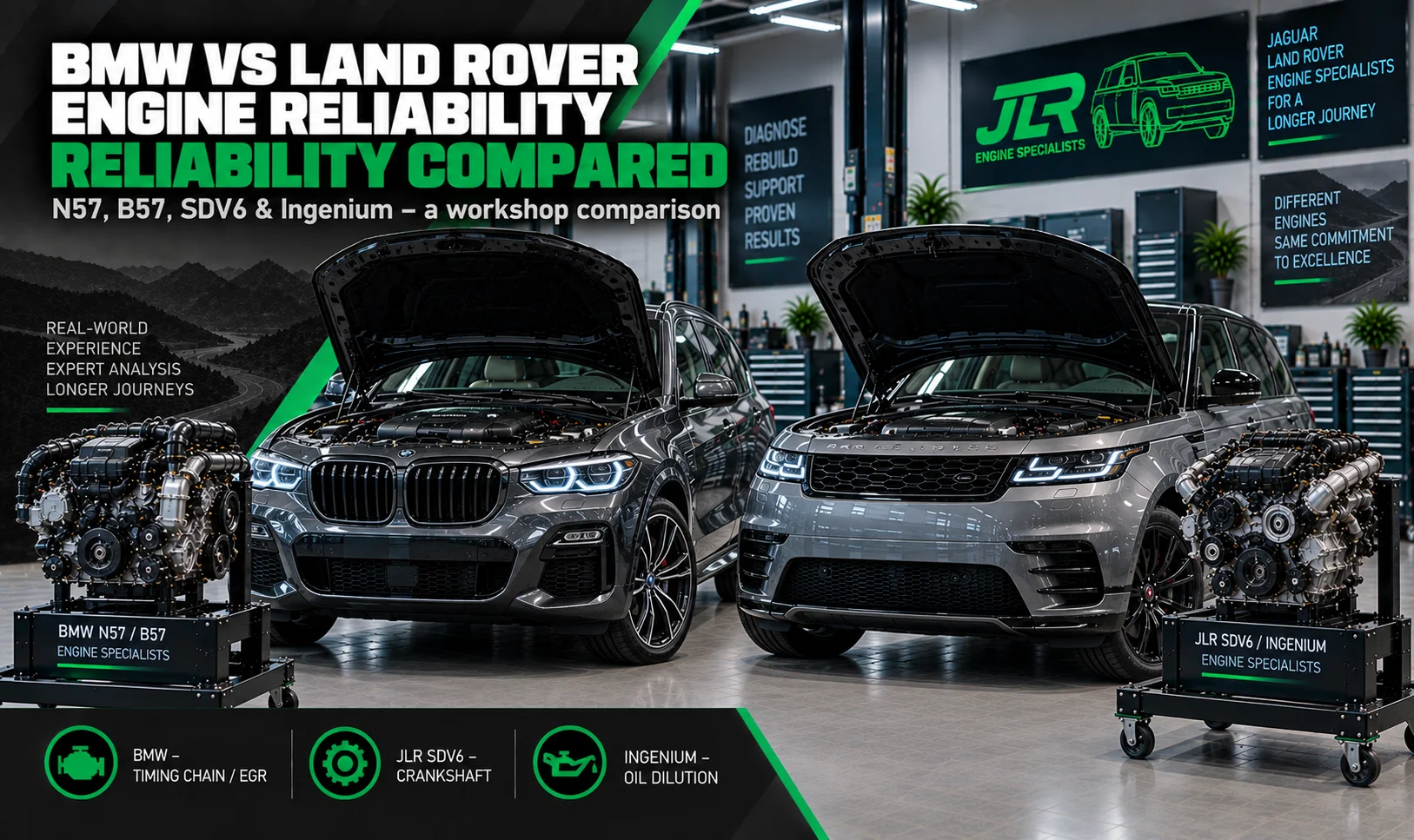
When a heavy luxury SUV arrives at our workshop with a catastrophic engine failure, the first question is always whether the vehicle is a BMW X5 or a Range Rover Sport. The answer determines whether we are looking at a snapped timing chain or a fractured crankshaft. The debate surrounding BMW vs Land Rover engine reliability is fiercely contested, often reduced to tribal badge loyalty rather than an objective analysis of engineering tolerances and metallurgy.
While the BMW N57 and B57 diesels suffer from timing chain vulnerabilities, the Land Rover SDV6 and Ingenium families battle crankshaft and oil dilution issues. The true determinant of reliability is the owner willingness to abandon factory extended service intervals in favour of preventative chemistry. At JLR Engines, our approach is to recondition and rebuild your original engine wherever possible through our engine rebuilding and reconditioning service.
The Engineering Divide: Modular Efficiency vs High Stress Torque
To understand the reliability differences, one must first understand their divergent engineering philosophies. The BMW B57 engine is rooted in modular efficiency, sharing its core architecture with other BMW engines. This allows for immense manufacturing consistency, but a design flaw in a shared component can cascade across an entire engine family.
Land Rover approach has historically been dictated by the need to move exceptionally heavy vehicles off road. The 3.0 litre Lion V6 utilises a Compacted Graphite Iron block, which is incredibly rigid and resistant to extreme cylinder pressures. The later 2.0 litre Ingenium family shifted towards lightweight aluminium architecture to meet emissions standards, prioritising friction reduction over structural over engineering.
Consequently, the failure modes reflect their design priorities. BMW engines tend to fail at the periphery and in the valvetrain, such as timing chains and EGR coolers. Land Rover engines tend to fail at the structural core when the chemical integrity of the engine oil is compromised.
The Timing Chain Crucible: N57 and B57 vs SDV6 and Ingenium
If there is a single component that unites the modern diesel ownership experience across both brands, it is the rear mounted timing chain. Both manufacturers made the decision to place the timing chain at the gearbox end of the engine. This isolates chain noise from the cabin but means that replacing a stretched chain requires the complete removal of the engine and transmission assembly.
BMW N57 and B57 Chain Architecture
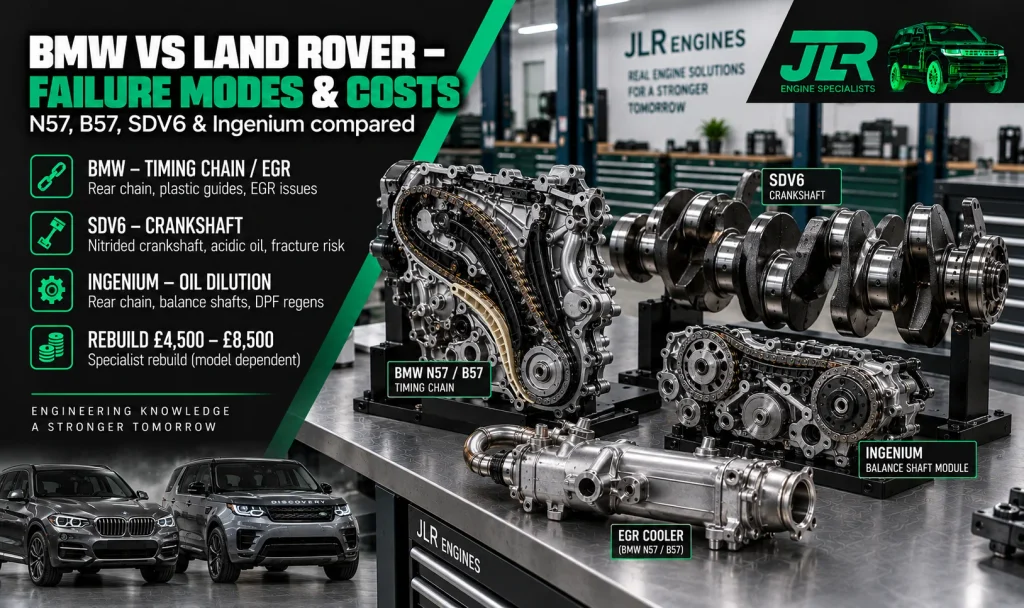
The BMW N57 is infamous for timing chain stretch and plastic guide disintegration. The chains operate under immense tension, and the original plastic guides are subjected to severe heat cycling. Over time, the plastic becomes brittle, fractures, and drops into the sump, potentially blocking the oil pump pickup screen and causing immediate oil starvation.
In our workshop, we regularly see rear mounted timing chains develop accelerated wear after 80,000 miles when owners strictly follow extended service intervals. The oil simply loses its viscosity and ability to protect the chain links. Catching this early allows for a targeted timing chain replacement before catastrophic valvetrain damage occurs. We have documented similar issues in our BMW N47 timing chain case study.
JLR SDV6 and Ingenium Chain Systems
The 3.0 SDV6 also utilises a rear mounted chain system, but the failure mechanism is subtly different. Rather than the plastic guides shattering, the chains tend to elongate due to wear on the pins and bushings, exacerbated by contaminated oil. Many owners only discover the issue when a cold start diesel rattle appears, by which point the chain is skipping teeth and leading to catastrophic valve contact.
The 2.0 litre Ingenium introduces an additional layer of complexity with a separate chain driving a balance shaft module. This module is highly susceptible to wear if the engine is subjected to frequent short trips, leading to fuel dilution in the sump. We have received engines that were previously misdiagnosed elsewhere as turbo failures, when the root cause was severe oil starvation. You can see a real world example in our SDV6 timing chain case study and our Ingenium slipped liner case study.
Bottom End Architecture: Crankshafts, Bearings, and Oil Chemistry
When comparing BMW vs Land Rover engine reliability, the bottom end of the engine reveals the most critical divergence in ownership risk.
The BMW N57 and B57 Bottom End
The bottom end of the BMW N57 and B57 is generally exceptionally robust. The crankshafts are forged, the main bearings are generously sized, and the block rigidity is excellent. Catastrophic bottom end failure in a BMW diesel is rare unless the engine has been run critically low on oil. When we rebuild a BMW diesel, it is usually because the timing chain has jumped or the cylinder head has suffered thermal damage.
The JLR SDV6 Crankshaft Vulnerability
The 3.0 SDV6 carries a well documented metallurgical vulnerability that defines its ownership profile. The crankshaft journals are nitrided to provide a hard surface, but this layer is highly susceptible to acidic attack. Modern diesel engines undergo frequent active regeneration cycles, and in urban driving, unburnt diesel fuel washes past the piston rings into the sump.
This fuel dilution drastically reduces the oil acidity resistance, causing the oil to become highly acidic. In the 306DT, this acidic oil attacks the nitrided surface of the crankshaft, initiating micro fractures. Under immense torsional load, these fractures propagate until the crankshaft snaps cleanly in half. Owners who change their oil every 10,000 miles rarely experience this failure, but those who follow the 20,000 mile factory schedule are playing Russian roulette. When this happens, our specialist crankshaft repair protocols are required, as detailed in our TDV6 crankshaft failure case study.
Peripheral Vulnerabilities: EGR, Turbos, and Cooling Systems
Reliability is rarely just about the block and the crank; it is equally about the systems bolted to the outside of the engine.
BMW EGR and Swirl Flap Complexities
BMW implementation of Exhaust Gas Recirculation has been a significant point of contention, culminating in widespread manufacturer recalls due to the risk of under bonnet fires. The EGR coolers can develop internal leaks, allowing coolant to mix with soot and create a highly combustible sludge. Additionally, older engines utilised plastic swirl flaps that can wear and be ingested by the engine, causing total destruction.
JLR Cooling Systems and Turbo Actuators
Land Rover peripheral failures are heavily concentrated in the cooling system and turbo actuation. The EGR coolers on the Ingenium are prone to internal blocking, leading to localised hot spots and cylinder head warping that often require a comprehensive coolant leak and overheating repair. Furthermore, the variable geometry turbochargers on the SDV6 rely on complex electronic actuator systems that seize due to carbon buildup.
While the turbo cartridge itself may be perfectly healthy, the seized actuator often leads to unnecessary full turbo replacements if the workshop lacks the diagnostic equipment. Proper DPF and EGR cleaning can often prevent this carbon buildup and save the original turbocharger from being replaced prematurely. If the turbo is indeed damaged, we provide expert turbo repair and replacement to restore full performance.
Rebuild Economics: Comparing the Workshop Invoice
When an engine reaches the end of its service life, the economic reality of the rebuild dictates whether the vehicle is repaired or scrapped. For full transparency on how variables affect final workshop estimates, please review our pricing disclaimer.
- BMW N57 and B57: The primary rebuild drivers are timing chain failure and EGR thermal damage. Labour intensity is very high due to engine removal for chains. Block salvageability is high, and the typical UK specialist rebuild range is £4,500 to £8,500.
- JLR SDV6 and Ingenium: The primary rebuild drivers are crankshaft fracture and oil dilution bearing wear. Labour intensity is very high due to engine removal and Compacted Graphite Iron block machining limits. Block salvageability is moderate, and the typical UK specialist rebuild range is £4,500 to £7,500.
A full specialist reconditioning of a BMW B57 typically falls between £4,500 and £8,500. The lower end assumes a preventative timing chain replacement before valvetrain damage occurs. Conversely, a JLR SDV6 rebuild ranges from £4,500 to £7,500, with the variance dictated almost entirely by the crankshaft condition. In both cases, main dealer replacement units routinely exceed £14,000, making specialist reconditioning the only economically viable route. All our major reconditioning work is backed by a 12 month unlimited mileage warranty.
The Ownership Reality: Maintenance History vs Badge Reputation
The most dangerous assumption a buyer can make is that a BMW is inherently more reliable than a Land Rover based solely on badge reputation. In our assessment of high mileage examples of both marques, the service history file is a far more accurate predictor of future reliability than the manufacturer logo.
Both the N57 and B57 and the SDV6 and Ingenium are highly stressed, maintenance sensitive powertrains. They rely on the precise chemical properties of their engine oils to maintain the boundary lubrication required to protect chains, bearings, and turbo cartridges. Using the incorrect oil, or leaving it in the sump for 20,000 miles, guarantees accelerated wear in both engines.
The owner who buys a 120,000 mile Range Rover Sport with a documented history of 8,000 mile oil changes has purchased a vastly more reliable vehicle than the owner who buys a 70,000 mile BMW X5 that has only ever seen the manufacturer long life service schedule. This is why we always recommend comprehensive engine diagnostics and a thorough review of the service history before purchasing any used vehicle.
What JLR Engines Recommends for Cross Brand Ownership
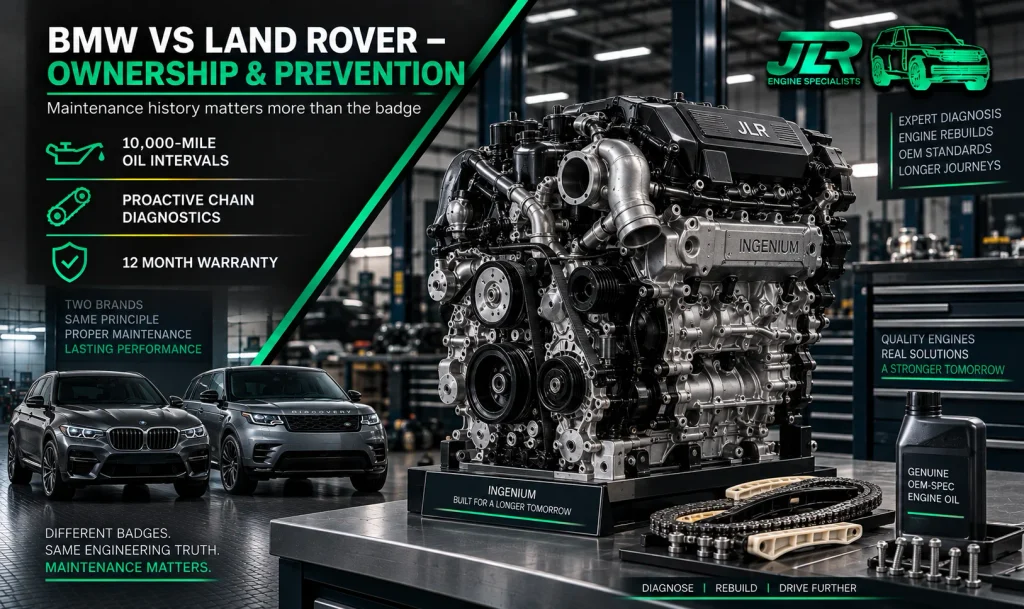
Whether you are committed to the Land Rover ecosystem or cross shopping with BMW, the following workshop protocols will fundamentally alter the longevity of your vehicle. We recommend adhering to a strict routine servicing schedule that prioritises engine health over manufacturer convenience.
- The 10,000 Mile Absolute: Ignore the vehicle onboard service indicator and change the engine oil and filter every 10,000 miles or 12 months using only the exact OEM specified lubricant. This single action mitigates 90 percent of the crankshaft and timing chain vulnerabilities inherent to both brands.
- Proactive Chain Diagnostics: Do not wait for a rattle and have your technician use an acoustic listener to inspect the timing chain guides at every major service. Catching a stretched chain early prevents a massive engine rebuild.
- EGR and Intake Carbon Cleaning: Both BMW and JLR diesels suffer from severe intake carbon buildup. A physical walnut blast or chemical induction clean every 60,000 miles prevents swirl flap seizure and actuator binding.
- Used Oil Analysis: For vehicles outside of warranty, a laboratory oil analysis every two services will reveal elevated copper and lead levels, warning you of bearing wear long before the crankshaft suffers terminal damage.
Enter Your REG to Get a Free Engine Quote

Frequently Asked Questions
Is the BMW B57 engine more reliable than the Land Rover Ingenium?
The BMW B57 and the Land Rover Ingenium represent different engineering compromises rather than a simple hierarchy of reliability. The B57 benefits from modular refinement and eliminated swirl flaps, but it remains highly susceptible to EGR cooler failures and rear mounted timing chain stretch. The Ingenium features a robust aluminium block but suffers from balance shaft module wear if subjected to frequent short trips and oil dilution.
Why do Land Rover SDV6 crankshafts snap while BMW N57 crankshafts do not?
The difference lies in the surface metallurgy and the engine reaction to acidic oil. The JLR 3.0 SDV6 utilises a nitrided crankshaft to handle extreme torque, but this layer is chemically vulnerable to the acidic oil created by frequent interrupted regeneration cycles in urban driving. The BMW N57 utilises a different bearing material specification that is less reactive to acidity depletion, meaning the JLR crankshaft is structurally compromised by it.
Are rebuild parts more expensive for BMW or Land Rover?
In our workshop experience, OEM replacement parts for the BMW N57 and B57 engines tend to carry a slight premium over their Land Rover counterparts, particularly for cylinder head components. However, the labour costs to access these components are remarkably similar, as both manufacturers placed the timing chains at the rear of the engine. Therefore, while the parts invoice may be slightly higher for a BMW, the total workshop labour time dictates the bulk of the rebuild cost for both marques.
Conclusion
The question of whether BMW engines are more reliable than Land Rover engines cannot be answered with a simple affirmative or negative. The BMW N57 and B57 offer exceptional refinement and bottom end strength, but they are perpetually haunted by rear mounted timing chains and complex EGR systems. The Land Rover SDV6 and Ingenium provide immense torque and lightweight efficiency, but they demand absolute respect for oil chemistry to prevent catastrophic crankshaft failures.
In the modern era of high pressure emissions compliant diesels, reliability is no longer a factory guarantee; it is a negotiated contract between the owner and the machine. The owner who understands the specific vulnerabilities of their chosen engine family and intervenes with preventative maintenance will find that both manufacturers are capable of building exceptional powertrains. When you need expert help, our specialist JLR services are here to assist.
Speak to a JLR engine specialist about your Land Rover or BMW by calling +44 203 488 4649. You can also contact our Billericay workshop online, request national collection and delivery across the UK, or get a quote for your specific requirements. We also provide comprehensive mechanical repairs to ensure your vehicle returns to the road perfectly.