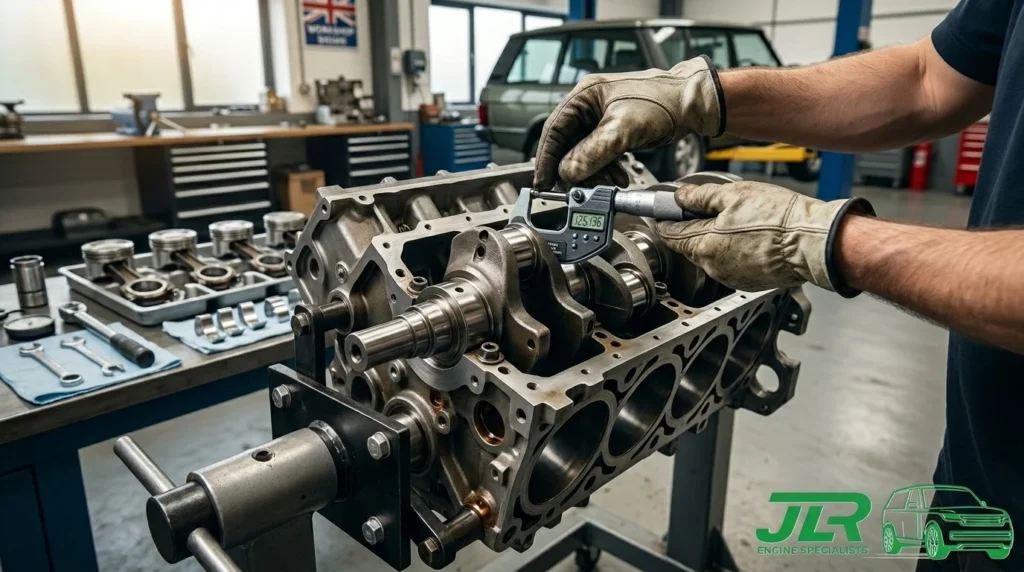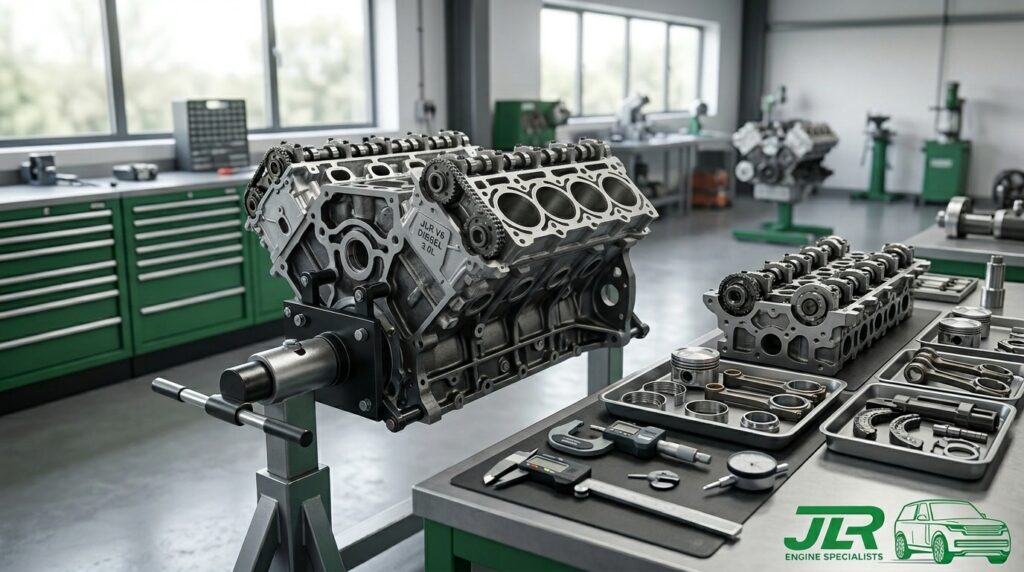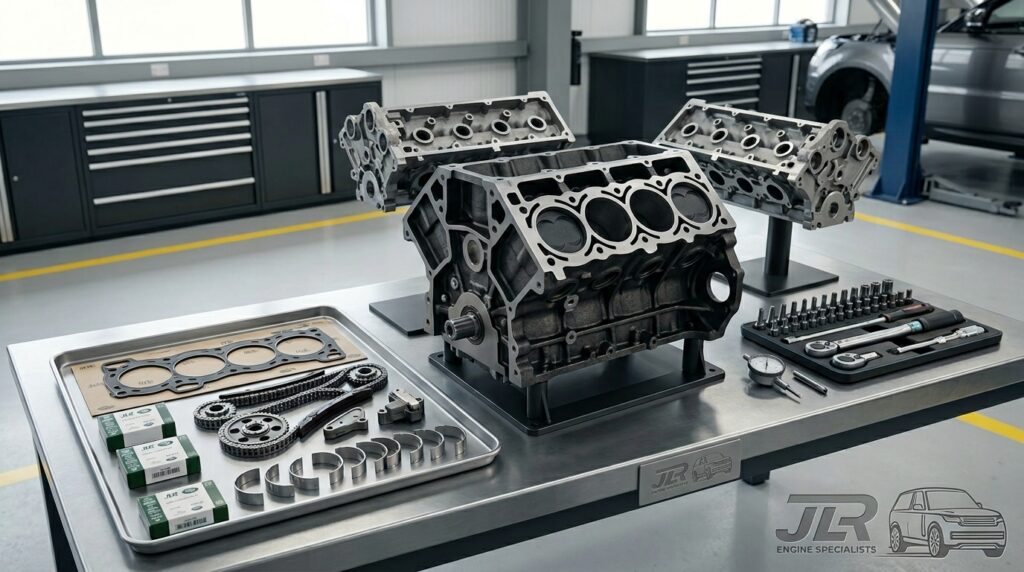
The 3.0 SDV6 (engine code 306DT) in the Land Rover Discovery 4 has a well-known characteristic: it offers immense torque and refinement, but harbours specific mechanical vulnerabilities that can escalate quickly if ignored. As a heavily used family SUV and capable off-roader, the Discovery 4 (L319) places significant thermal and mechanical stress on its powertrain.
At JLR Engines, we specialise in reconditioning and rebuilding your original engine rather than replacing it. Replacement is only recommended when the engine core is beyond economical repair, which represents a small minority of our work.
This rebuild-first approach typically saves 40–50% compared to main dealer replacement costs while maintaining OEM-standard quality. Understanding the early warning signs of the 3.0 SDV6 is critical to avoiding catastrophic failure and preserving the longevity of your vehicle.
Quick Answer: What Are the Most Common Discovery 4 SDV6 Engine Problems?
The most frequently diagnosed faults on the Land Rover Discovery 4 3.0 SDV6 include crankshaft and big end bearing failure, sequential turbocharger actuator seizures, EGR cooler blockages, oil cooler seal degradation in the engine vee, and rear-mounted timing chain stretch.
While the Compacted Graphite Iron (CGI) engine block is exceptionally robust, the ancillary systems and lubrication pathways are highly sensitive to extended oil intervals and carbon buildup. Repair costs vary significantly based on the point of diagnosis, ranging from £400 for minor EGR cleaning to £8,000 for a full engine reconditioning following oil starvation.
Understanding the 3.0 SDV6 (306DT) Engine Architecture
To understand why the Discovery 4 SDV6 fails in specific ways, it is necessary to understand its underlying engineering. The 306DT is part of the “Lion” V6 engine family, developed jointly by Jaguar Land Rover and PSA Group. It utilises a Compacted Graphite Iron (CGI) cylinder block, which provides immense structural rigidity and allows for higher cylinder pressures than traditional cast iron or aluminium blocks.
However, this strength is paired with extreme complexity. The 3.0 SDV6 uses a sequential twin-turbocharger system, a high-pressure common rail fuel system, and a complex wet-sump lubrication system featuring multiple oil scavenge pumps.
Furthermore, unlike many inline engines where the timing chain is located at the front behind the radiator, the 306DT features its timing chains and gears at the rear of the engine, mating directly to the transmission bell housing. This architectural decision means that any timing-related repair requires significant labour, often necessitating complete engine removal.
Common Discovery 4 SDV6 Faults: Symptoms, Causes, and Repair Routes
Crankshaft Failure and Bearing Wear
Crankshaft failure is arguably the most feared and expensive fault associated with the 306DT engine. In our workshop, we commonly see crankshaft bearing wear appear after 90,000 miles, particularly if oil intervals haven’t been shortened from the factory 20,000-mile schedule.
The root cause is rarely a weak crankshaft; rather, it is oil starvation. The SDV6 relies on oil scavenge pumps to pull oil back from the cylinder heads and turbochargers into the sump. If the Positive Crankcase Ventilation (PCV) system or the Exhaust Gas Recirculation (EGR) system introduces excessive soot into the oil, the oil thickens into a sludge. This sludge blocks the scavenge pump pickup strainer.
Consequently, oil pools in the top end of the engine, leaving the sump low, or the oil becomes aerated (frothy). Aerated oil cannot maintain the hydrodynamic film required to protect the big end bearings. Once the oil film collapses, the bearing spins, gouging the crankshaft journal and sending metallic swarf through the entire lubrication system. Many owners only discover the issue when a heavy metallic knocking develops under load, by which point the crankshaft journals are already scored and the engine requires a full strip-down. When this occurs, our specialist crankshaft repair protocols are enacted to save the block.
Turbocharger Wear and Oil Feed Contamination
The 3.0 SDV6 utilises a sequential turbo setup: a smaller high-pressure turbo for low-end response and a larger low-pressure turbo for top-end power. The changeover is controlled by vacuum actuators and pneumatic valves. Due to the intense heat generated in the engine bay and the accumulation of road grime, these vacuum actuators frequently seize. When they fail, the ECU detects a boost pressure discrepancy and immediately triggers “Restricted Performance” (limp mode).
More critically, if the turbocharger bearings fail internally, they leak oil directly into the exhaust or intake tract, resulting in thick blue smoke under acceleration. Worse still, a failing turbo sheds microscopic metallic particles into the oil return line. Because the SDV6 oil system is a closed loop, this contamination travels back to the sump, bypassing the main oil filter, and embeds itself into the big end bearings and oil cooler. We have received Discovery 4 engines that were previously misdiagnosed elsewhere as simple turbo failures, when the root cause was a blocked oil scavenge pump that starved the turbo of lubrication in the first place. Addressing this requires comprehensive turbo repair and replacement.
EGR Valve and Cooler Blockages
The 3.0 SDV6 recirculates a high volume of exhaust gas to reduce NOx emissions. Over time, the combination of exhaust soot and oil vapour from the crankcase breather creates a thick, tar-like carbon sludge. This sludge accumulates in the EGR cooler, the intake manifold, and around the swirl flaps.
Symptoms of severe EGR blockage include rough idling, hesitation under acceleration, excessive black smoke, and frequent DPF (Diesel Particulate Filter) regeneration cycles. If the swirl flap motors become choked with carbon, they can burn out or, in extreme cases, the physical flaps can detach and be ingested into the cylinder, causing catastrophic valve and piston damage. Proactive DPF, EGR, and AdBlue cleaning is highly recommended to prevent this buildup.
Oil Cooler Leaks and Seal Degradation
The engine oil cooler is situated deep in the “vee” (the valley) between the two cylinder banks. The original factory coolant and oil feed pipes leading to the cooler were manufactured from plastic and rubber composite materials. Subjected to the extreme thermal cycling of the twin-turbo V6 valley, these pipes become brittle, crack, and weep.
An oil cooler leak in the vee is a severe hazard. Oil drips directly onto the hot exhaust manifolds and turbocharger housings, creating a distinct smell of burning oil in the cabin and posing a genuine engine fire risk. Furthermore, because the leak is hidden beneath the plastic engine acoustic covers, the oil level can drop significantly before the owner notices, leading to low oil pressure warnings and accelerated engine wear. This often necessitates immediate oil leak repair.
Timing Chain and Tensioner Concerns
While the 3.0 SDV6 timing chains are generally more robust than those found on the earlier 2.7 TDV6, they are not immune to stretch and tensioner failure, especially if the engine has been run on degraded oil. The primary symptom is a distinct metallic rattle lasting for 3 to 5 seconds immediately after a cold start.
Because the timing chains are located at the rear of the engine, accessing them is a highly labour-intensive process. The gearbox must be unbolted and moved back, or the entire engine must be lifted out of the Discovery 4 chassis to remove the rear timing cover. We recently documented a similar failure in our SDV6 timing chain case study, highlighting how ignoring the cold-start rattle inevitably leads to the chains jumping teeth, resulting in piston-to-valve contact and total engine destruction. A timely timing chain replacement can prevent this catastrophic outcome.
Discovery 4 SDV6 Fault Severity and Repair Cost Table
The following table ranks common Discovery 4 engine faults by severity and provides average UK repair cost ranges. Please note that these figures assume the use of OEM-spec or high-quality aftermarket parts and specialist labour rates.
| Fault | Severity | Symptoms | Average Repair Cost |
|---|---|---|---|
| EGR Valve/Cooler Blockage | Moderate | Limp mode, black smoke, poor MPG | £400 – £900 |
| Oil Cooler / Vee Leak | High | Oil smell, low oil level, smoke from bonnet | £600 – £1,100 |
| Turbocharger Actuator/Failure | High | Whistling, blue smoke, limp mode | £1,200 – £2,500 |
| Timing Chain Stretch | Severe | Rattle on cold start, engine misfire | £1,500 – £2,200 |
| Crankshaft / Big End Failure | Critical | Heavy metallic knocking, seized engine | £5,000 – £8,000 (Full Rebuild) |
Typical UK rebuild costs for the 3.0 SDV6 (306DT) generally range between £5,000 and £8,000, depending on crankshaft condition, timing damage, oil contamination, injector state, turbo condition, and whether the original block is reusable. For a detailed breakdown of how these estimates are calculated, please review our pricing disclaimer.
Model-Year Differences: 2010–2012 vs. 2013–2016
While the fundamental 306DT architecture remained consistent throughout the Discovery 4’s lifecycle, JLR implemented several running changes that affect repair strategies.
- 2010–2012 (Early Models): Early SDV6 engines are most notorious for the plastic oil cooler pipes in the engine vee. These early revisions suffered from rapid thermal degradation. Furthermore, the early EGR cooler designs were highly susceptible to internal clogging, leading to higher rates of intake manifold carbon buildup. These models were paired with the ZF 6HP28 automatic transmission.
- 2013–2016 (Facelift Models): During the facelift era, JLR updated the oil cooler lines, introducing revised materials and metal-braided sections in some applications, though degradation remains a concern at high mileages. ECU mappings were refined to manage the sequential turbos more efficiently, slightly reducing the rate of soot generation. Crucially, the 2013+ models were paired with the ZF 8HP70 8-speed automatic gearbox. While this improves fuel economy, it alters the physical dimensions of the transmission bell housing. When performing rear-mounted timing chain replacements or engine removals on 2013–2016 models, specialist knowledge of the 8-speed subframe and propshaft alignment is mandatory.
Preventative Maintenance: How to Avoid Catastrophic Failure
The 3.0 SDV6 is a highly capable engine, but it will not tolerate neglect. The factory-recommended 20,000-mile or 24-month oil service intervals are entirely unsuitable for UK driving conditions, which involve frequent stop-start traffic and short journeys.
To preserve the engine and avoid the need for a full reconditioning, we strongly advise the following preventative maintenance schedule:
- Shortened Oil Intervals: Change the engine oil and filter every 10,000 miles or 12 months, using only the correct OEM-spec 5W-30 C1/C3 low-SAPS synthetic oil. This prevents soot loading and maintains the viscosity required to protect the big end bearings. Adhering to a strict routine servicing schedule is your best defence.
- Sump Drop and Scavenge Inspection: At approximately 80,000 miles, the oil sump should be dropped to physically inspect and clean the scavenge pump pickup strainers. This single procedure can prevent the oil starvation that leads to crankshaft failure.
- Intake and EGR Carbon Cleaning: Every 60,000 miles, the intake manifold, swirl flaps, and EGR coolers should be manually cleaned to restore airflow and prevent actuator burnout.
- Turbo Oil Feed Flush: If any turbo-related work is required, the oil feed and return lines must be flushed or replaced to prevent cross-contamination.
Immediate Attention vs. Monitored Maintenance
Not every warning sign requires an immediate engine strip-down, but some demand that you pull over instantly.
Symptoms Requiring Immediate Attention (Do Not Drive):
- Heavy, rhythmic metallic knocking from the lower engine block (indicates spun big end bearing).
- Sudden, massive loss of oil pressure accompanied by a red warning light.
- Thick, continuous blue smoke from the exhaust under all driving conditions (indicates severe turbo or bore failure).
- Coolant mixing with oil (milky residue on the dipstick), indicating a failed oil cooler core or head gasket breach.
Symptoms for Monitored Maintenance (Book a Diagnostic):
- Mild hesitation or “flat spots” during acceleration (likely EGR or swirl flap carbon buildup).
- A brief, 2-second rattle on a cold start that disappears as oil pressure builds (early timing chain or tensioner wear).
- Slight oil weeping around the sump seal or rocker covers.
- Intermittent “Restricted Performance” messages that clear after restarting the vehicle (often vacuum leaks or sticky turbo actuators).
If you notice any of the monitored symptoms, we highly recommend booking a comprehensive engine diagnostic inspection to pinpoint the issue before it escalates.
When Repair Makes Sense vs. When Reconditioning is Required
Deciding between a targeted repair and a full engine reconditioning depends entirely on the internal state of the engine, which can only be confirmed via rigorous diagnostic testing.
If the fault is isolated to the ancillaries – such as a seized turbo actuator, a leaking vee oil cooler, or a blocked EGR cooler – and the engine has a full service history with regular oil changes, a targeted repair using OEM-standard parts is the most economical and sensible route.
However, if the engine has suffered oil starvation, if metallic swarf is found in the oil filter or sump, or if the crankshaft journals show scoring, targeted repairs are a false economy. Installing new turbos or timing chains onto an engine with compromised bearings will only result in secondary failures within thousands of miles.
In these scenarios, a full engine reconditioning is required. This involves a complete strip-down, ultrasonic cleaning, crankshaft polishing or replacement, fitment of new OEM-spec bearings, piston rings, and seals, followed by precise reassembly and dyno verification. All our major rebuilds include a 12-month unlimited mileage warranty for complete peace of mind.
Frequently Asked Questions
What is the most common cause of crankshaft failure on the Discovery 4 SDV6?
The most common cause is oil starvation due to blocked oil scavenge pumps or aerated oil from excessive EGR soot contamination. This leads to big end bearing spin and severe crankshaft journal scoring.
How much does it cost to replace the timing chain on a 3.0 SDV6?
Due to the rear-mounted location of the timing chains, the engine must be partially or fully removed. A full timing chain kit, tensioners, and guides replacement typically costs between £1,500 and £2,200, including labour and OEM parts.
Can I prevent EGR and intake carbon buildup on my Discovery 4?
Yes. Shortening your oil change intervals to 10,000 miles reduces the amount of soot entering the oil. Additionally, scheduling a manual intake and EGR carbon clean every 60,000 miles prevents the sludge from choking the swirl flaps and EGR coolers.
Is it worth rebuilding a high-mileage Discovery 4 SDV6 engine?
Yes, provided the vehicle body and chassis are in good condition. The CGI engine block is incredibly durable. A properly reconditioned 306DT using OEM-spec parts restores factory reliability and costs significantly less than purchasing a new crate engine or replacing the vehicle entirely.
What are the symptoms of a failing SDV6 turbocharger actuator?
The primary symptoms include a whistling or wheezing noise from the engine bay, sluggish acceleration, excessive black smoke, and the ECU triggering “Restricted Performance” (limp mode) due to incorrect boost pressure readings.
Conclusion
The Land Rover Discovery 4 equipped with the 3.0 SDV6 remains a highly capable and desirable vehicle, but its complex engineering demands respect and proactive maintenance. By understanding the vulnerabilities of the 306DT engine – particularly regarding oil scavenge health, EGR carbon management, and cooling system integrity – owners can avoid the most severe and costly failures.
When internal damage does occur, a methodical, rebuild-first approach ensures that the vehicle retains its original matching-numbers core while restoring OEM-standard reliability.
Speak to a JLR specialist about your Discovery 4 by calling +44 203 488 4649. You can also contact our Billericay workshop online, request our convenient national collection and delivery service, or get a quote for your specific requirements today.