The 3.0-litre SDV6 (306DT) and the newer Ingenium engine families represent two entirely different engineering philosophies within Land Rover’s history. When comparing the Discovery 4 (L319) and the Discovery 5 (L462), you are not just choosing between a utilitarian, integrated-body-frame SUV and a modern aluminium monocoque. You are choosing between mechanical predictability and electronic complexity.
The L319 was built as a heavy-duty workhorse that happened to be luxurious, while the L462 was engineered as a premium family transporter with off-road capability as a secondary benefit.
The choice between a Discovery 4 L319 and a Discovery 5 L462 is rarely about which vehicle is objectively more reliable. It is a calculated trade-off between the mechanical transparency and heavy-duty towing capability of the older SDV6, and the refined, lightweight, but electronically sensitive nature of the newer Ingenium platforms.
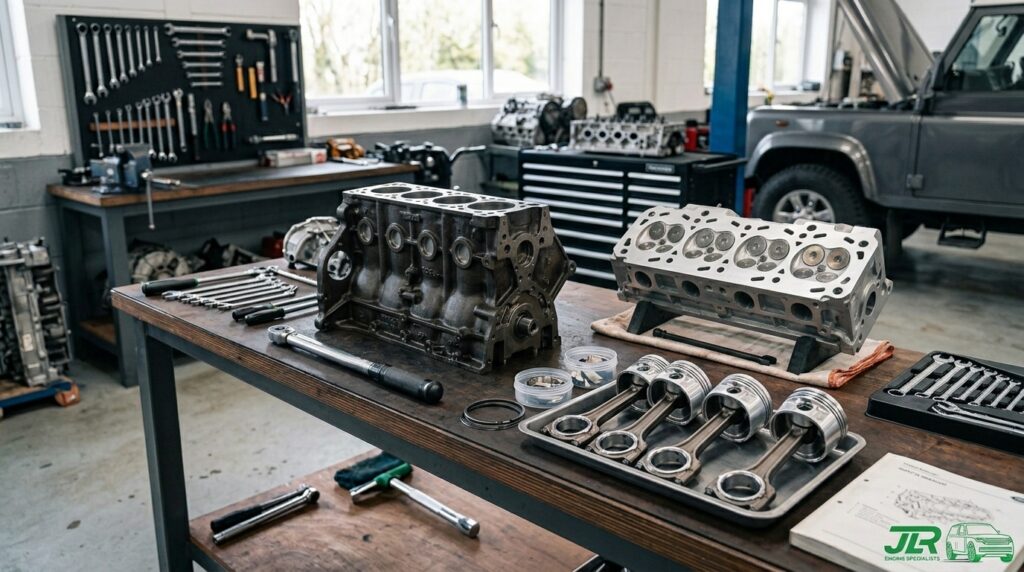
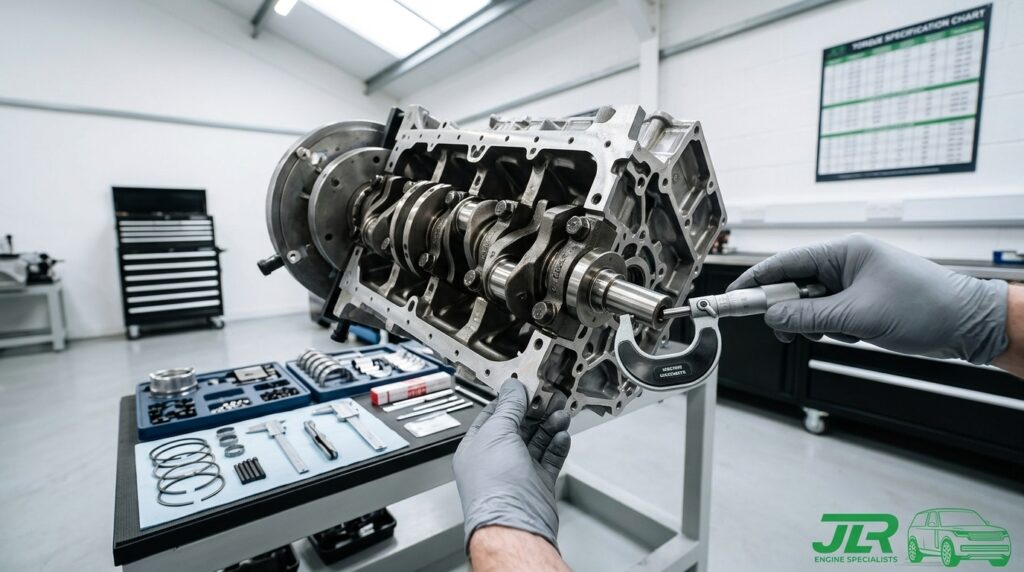
At JLR Engines, our approach is to recondition and rebuild your original engine wherever possible. Engine replacement is only recommended when the engine core is beyond economical repair, which represents a small minority of the work we carry out. A specialist engine rebuilding and reconditioning typically saves 40 to 50 percent compared to main dealer replacement costs while maintaining OEM-standard quality. For owners and prospective buyers, understanding how these specific engines age, fail, and require intervention is the only way to make an informed decision.
The Engineering Divide: L319 SDV6 vs L462 Ingenium
The Discovery 4 L319, particularly in its later 2010 to 2016 guise, is defined by the 3.0-litre SDV6 (306DT). This engine utilizes a compacted graphite iron block, making it exceptionally heavy but immensely strong. It features a sequential twin-turbo setup that provides a relentless wave of torque, ideal for moving the vehicle’s 2.7-tonne kerb weight.
However, this strength comes with packaging compromises. The timing chains are located at the rear of the engine, adjacent to the gearbox. This means any chain stretch or tensioner failure requires the entire powertrain to be removed from the vehicle for repair. Furthermore, the 306DT is highly sensitive to oil starvation and extended service intervals, which can lead to catastrophic crankshaft bearing failure.
The transition to the Discovery 5 L462 in 2017 brought a radical shift to Land Rover’s Premium Lightweight Architecture (PLA). The introduction of the 2.0-litre four-cylinder Ingenium diesel (204DTD) and petrol variants was driven by emissions regulations and the need to offset the weight of advanced hybrid systems. The Ingenium engines use aluminium blocks and a single, highly efficient turbocharger.
While they offer superior thermal efficiency and smoother refinement for daily commuting, they operate under much higher cylinder pressures relative to their displacement. In our workshop, we regularly see early 2.0 Ingenium diesels develop severe oil dilution from interrupted DPF regenerations, a problem that rarely afflicted the larger capacity SDV6 in the same way.
Because the Ingenium is a smaller displacement engine working harder in a heavy chassis, it relies entirely on perfect oil viscosity to protect its bearings. When urban driving interrupts the DPF cycle, raw diesel washes into the sump, thins the oil, and accelerates timing chain stretch and turbo bearing wear. Understanding this fundamental difference in how the engines handle stress is critical to predicting their long-term reliability.
Ownership Costs and Rebuild Risks
When evaluating the financial reality of keeping these vehicles on the road, the cost of intervention varies significantly based on the engine family and the chassis electronics.
For the Discovery 4 SDV6, the primary financial risks are the timing chain assembly and the crankshaft. If a 306DT is diagnosed early with a rattling chain, a specialist strip-down and OEM chain kit replacement typically falls between £2,800 and £3,800. However, if the chain jumps or the bearings fail due to oil starvation, a full engine rebuild involving crankshaft machining and block honing will generally range from £4,500 to £7,500. For a transparent look at how these variables affect final workshop invoices, please review our pricing disclaimer.
The Discovery 5 L462 presents a different cost matrix. While the 2.0 Ingenium is physically smaller and cheaper to machine, the surrounding chassis electronics, complex air suspension systems, and advanced AdBlue setups add significant non-engine running costs. An Ingenium timing chain replacement is similarly labour-intensive due to the rear-mounted design, typically costing between £2,500 and £3,500.
If oil dilution has destroyed the turbocharger and contaminated the intercooler, a comprehensive repair and flush can push the bill toward £5,000. This often necessitates professional turbo repair and replacement to ensure the induction system is fully restored.
It is vital to note that the later Discovery 5 models (2020 onwards) introduced the 3.0-litre inline-six Ingenium (MHEV). While exceptionally smooth, the addition of a 48-volt mild-hybrid system, an electric supercharger, and a complex belt-integrated starter generator (BISG) means that out-of-warranty repairs require highly specialised diagnostic equipment. For owners planning to keep these vehicles past 100,000 miles, the D4 offers a more predictable, purely mechanical repair bill, whereas the D5 requires a larger contingency fund for electronic and hybrid system faults.
Use-Case Suitability: Towing, Family, and Off-Road
Reliability is not just about what breaks; it is about how well an engine copes with the specific demands placed upon it.
For heavy towing, the Discovery 4 L319 remains the undisputed champion. The 3.0 SDV6’s low-end torque delivery, combined with the L319’s heavier chassis and longer wheelbase, provides exceptional stability when pulling a 3,500kg horsebox or caravan. The engine does not need to work as hard to maintain motorway speeds on an incline, which reduces thermal stress on the cooling system and the gearbox. If your primary use case involves regular heavy towing, the older SDV6 is the more reliable choice simply because it is operating well within its mechanical limits.
Conversely, for family duties, school runs, and motorway commuting, the Discovery 5 L462 is vastly superior. The aluminium chassis reduces unsprung mass, improving ride comfort and fuel economy. The cabin isolation is significantly better, and the infotainment and safety systems are generations ahead of the L319.
However, this comes with a caveat for urban dwellers. If your daily routine consists of short, stop-start journeys where the engine rarely reaches optimal operating temperature, the D5 Ingenium diesel will struggle with DPF blockages and EGR valve carbonisation. For this specific use case, a D5 petrol variant or a PHEV model is a far more reliable proposition than the diesel. You may also require periodic DPF, EGR, and AdBlue cleaning to maintain optimal performance.
Off-road reliability also favours the older generation for serious enthusiasts. While the Discovery 5’s Terrain Response 2 system is technologically brilliant, its reliance on complex air suspension and low-profile alloy wheels makes it vulnerable to damage on rough green lanes. The Discovery 4, particularly models equipped with heavy-duty steel springs or standard coil setups, offers a more robust, mechanical underpinning. It can withstand the physical impacts of serious off-road use without triggering a dashboard of electronic fault codes. For more information on preparing these vehicles for heavy-duty use, our specialist JLR services cover comprehensive mechanical preparation.
Common Buyer Mistakes Across Both Generations
The most frequent mistake we see when buyers transition between these generations is applying the maintenance expectations of one to the other.
Many owners purchase a late Discovery 4 SDV6 assuming that the manufacturer’s 20,000-mile or 24-month oil service interval is safe. In reality, the 306DT requires severe-service oil changes every 10,000 miles or 12 months to prevent the oil from degrading and losing its protective film strength. Ignoring this single maintenance item is the primary cause of the crankshaft failures that plague high-mileage examples. We have documented the severe consequences of this in our TDV6 crankshaft failure case study, which shares the same Lion V6 architecture.
For the Discovery 5, the critical buyer mistake is purchasing a 2.0-litre Ingenium diesel for a lifestyle that involves frequent short trips or heavy towing. Many owners only discover the D5 oil dilution issue when the engine begins to knock on cold starts. By that point, the main bearings have already suffered microscopic scoring. The Ingenium diesel is a brilliant engine for high-mileage motorway drivers who allow the DPF to regenerate fully, but it is fundamentally unsuited to the urban school-run demographic that often buys them based on badge prestige and fuel economy figures.
A third mistake, common to both the L319 and L462, is ignoring the ZF 8-speed automatic gearbox. Both generations rely heavily on the ZF 8HP series transmissions. While these gearboxes are engineering masterpieces, ZF’s claim that the fluid is “sealed for life” is a myth that leads to premature mechatronic sleeve wear and torque converter shudder. A preventative gearbox oil and filter change every 60,000 to 80,000 miles is essential for long-term reliability. Failing to budget for this maintenance often results in owners misdiagnosing harsh gear changes as internal engine or transfer case faults, highlighting the need for professional engine diagnostics.
Long-Term Maintenance Expectations
Owning a Discovery 4 past the 120,000-mile mark requires a proactive approach to the engine’s ancillary systems. Beyond the timing chains and oil services, owners must budget for:
- Turbocharger actuator rods: These can seize and cause over-boost faults.
- EGR coolers: Prone to internal leaking, which can introduce coolant into the intake manifold and lead to hydro-lock if not caught early.
- Coolant crossover pipes: The plastic pipes on the SDV6 become brittle with heat cycling and should be replaced with updated aluminium or reinforced alternatives during any major service. If you suspect cooling system issues, prompt coolant leak and overheating repair is essential to prevent catastrophic engine damage.
The Discovery 5 demands a different maintenance discipline. The Ingenium engines require strict adherence to the correct OEM-specification low-SAPS oil to protect the DPF and the delicate turbocharger bearings. The AdBlue system, including the injector and the tank heating element, is a known failure point as the vehicle ages and accumulates salt and road grime.
Additionally, the L462’s air suspension compressors are susceptible to moisture ingress if the desiccant is not refreshed, leading to burnt-out motors and a vehicle that drops to its bump stops overnight.
Ultimately, the reliability of either vehicle is entirely dependent on the owner’s willingness to intervene before a minor fault becomes a catastrophic failure. Neither the L319 nor the L462 is a vehicle that can be neglected and expected to perform flawlessly. Both require an owner who views preventative routine servicing as an investment in the vehicle’s mechanical integrity, rather than an optional expense. When maintained with mechanical sympathy, both generations are capable of covering immense distances, but they will quickly punish those who rely solely on the dashboard service reminder.
Frequently Asked Questions
Is the Discovery 4 3.0 SDV6 more reliable than the Discovery 5 2.0 Ingenium?
It is not strictly a matter of one being universally more reliable than the other; rather, they fail in different ways. The Discovery 4 SDV6 (306DT) is mechanically robust but suffers from crankshaft and timing chain issues if oil intervals are extended. The Discovery 5 Ingenium (204DTD) is highly refined but is extremely sensitive to oil dilution from interrupted DPF cycles and urban driving. The SDV6 is more reliable for heavy towing and high-mileage motorway use, while the Ingenium is better suited to lighter, long-distance commuting.
Which Discovery model is better for towing a heavy caravan?
The Discovery 4 L319 equipped with the 3.0 SDV6 is widely considered the superior tow car. Its heavier chassis provides better stability on the road, and the SDV6’s massive low-end torque allows it to pull heavy loads without operating at the absolute limit of its thermal capacity. While the Discovery 5 is legally capable of towing the same weights, the lighter aluminium chassis and the smaller displacement of the 2.0 Ingenium engine mean the powertrain is under significantly more stress when hauling near the 3,500kg limit.
Are the timing chain issues worse on the Discovery 4 or Discovery 5?
Both generations suffer from timing chain stretch, primarily because JLR located the chains at the rear of the engine block in both the 3.0 V6 and the 2.0 Ingenium. However, the Ingenium chains tend to stretch earlier in the vehicle’s life if the engine experiences oil dilution, as the thinned oil fails to protect the chain guides and tensioners. On the SDV6, chain stretch is usually a result of high mileage and normal wear, whereas on the Ingenium, it is often a secondary symptom of poor maintenance or urban driving patterns.
Should I avoid the Discovery 5 petrol engines for reliability?
The Ingenium petrol engines (such as the 2.0-litre P250 or P300) avoid the oil dilution and DPF issues that plague their diesel counterparts, making them highly reliable for urban and short-trip driving. However, they do utilise a complex exhaust manifold integrated into the cylinder head, which can lead to thermal stress and coolant leaks over time. They are an excellent choice for family buyers who do not cover the high annual mileage required to keep a modern diesel DPF healthy.
How does the ZF 8-speed gearbox affect long-term ownership costs?
The ZF 8HP gearbox is fitted to both the Discovery 4 and Discovery 5 and is generally excellent, but it is not immune to wear. The mechatronic sealing sleeves can degrade, causing fluid leaks and harsh shifting, while the torque converter can develop shudder if the fluid degrades. Budgeting for a preventative gearbox oil and filter change every 60,000 to 80,000 miles is essential to avoid a £3,000+ replacement bill later in the vehicle’s life.
Conclusion
Choosing between the Discovery 4 and the Discovery 5 is an exercise in matching the vehicle’s engineering philosophy to your specific lifestyle. The L319 SDV6 remains a masterpiece of heavy-duty mechanical engineering, offering unmatched towing stability and a transparent, predictable maintenance regime for those willing to adhere to severe-service oil intervals.
The L462 Ingenium represents the modern reality of premium SUVs: lighter, vastly more refined, and technologically advanced, but entirely unforgiving if subjected to the wrong driving cycles or neglected maintenance. Neither is inherently flawed; both simply demand an owner who understands their specific mechanical requirements.
Speak to a JLR engine specialist about your Discovery by calling +44 203 488 4649. National collection and delivery is available across the UK, or you can contact our Billericay workshop to get a quote for your specific requirements.