If you own a modern Jaguar or Land Rover equipped with a 2.0-litre Ingenium engine, you have likely spent time reading forums debating whether the petrol or diesel variant is the safer long-term bet. The shift towards Ultra Low Emission Zones (ULEZ) and Clean Air Zones (CAZ) across the UK has fundamentally altered the ownership calculus, pushing many buyers away from the 204DTD diesel and toward the AJ20P4 petrol.
However, swapping a diesel for a petrol Ingenium does not automatically guarantee a trouble-free ownership experience; it simply trades one set of mechanical vulnerabilities for another.
The 2.0 Ingenium petrol avoids the complex emissions hardware of the 204DTD diesel, but its high-pressure fuel system and thermal management demands mean that neglecting oil intervals will destroy either engine just as efficiently.
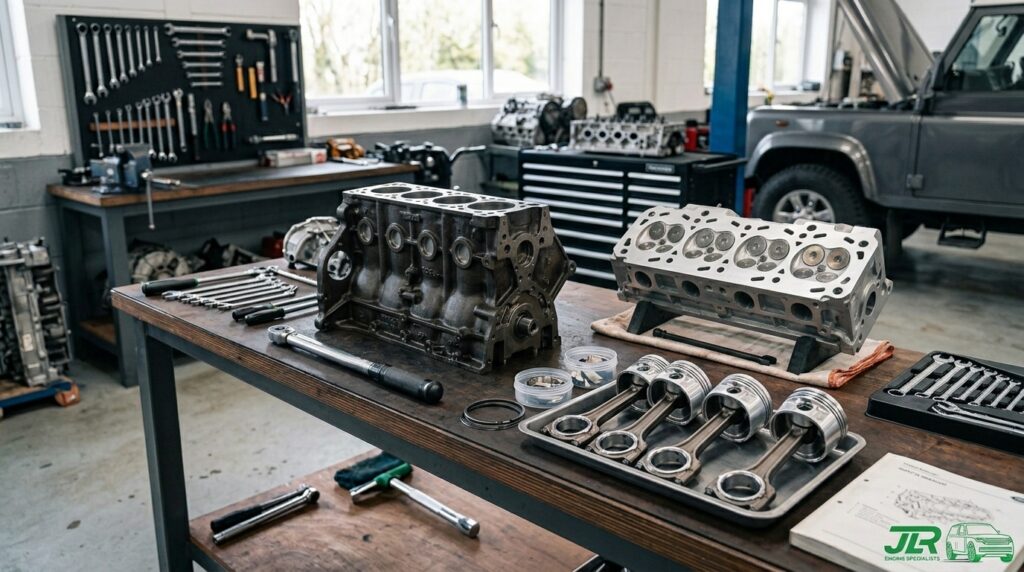
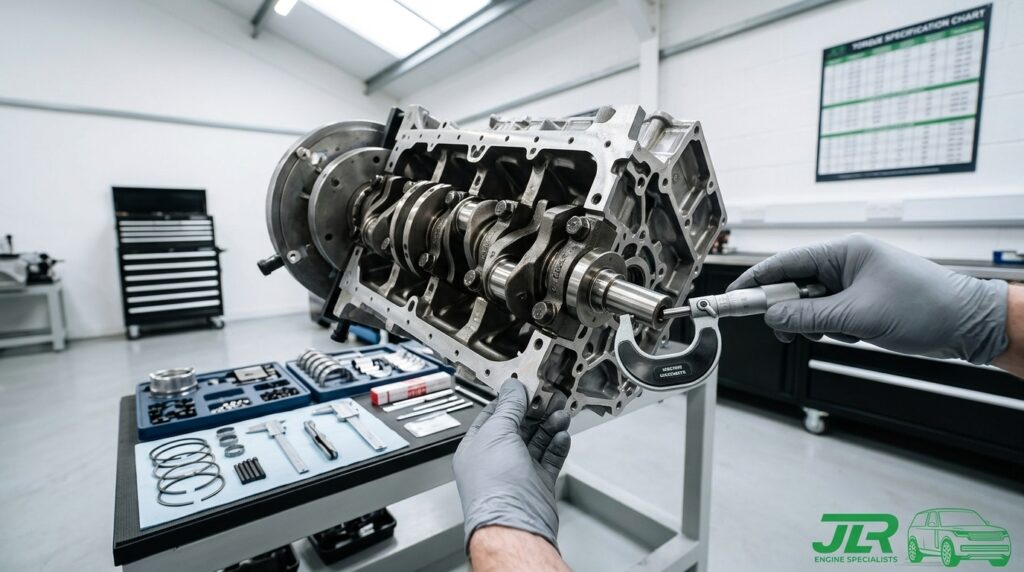
At JLR Engines, our approach is to recondition and rebuild your original engine wherever possible. Engine replacement is only recommended when the engine core is beyond economical repair, which represents a small minority of the work we carry out. This engine rebuilding and reconditioning approach typically saves 40–50% compared to main dealer replacement costs while maintaining OEM-standard quality.
Whether you are driving a Range Rover Evoque, a Discovery Sport, a Velar, or a Jaguar XE or XF, understanding the specific engineering trade-offs between the petrol and diesel Ingenium families is critical to protecting your investment and avoiding catastrophic repair bills.
The Engineering Divide: AJ20P4 Petrol vs 204DTD Diesel
To understand the reliability differences between the two engines, one must first look at their shared architecture and their divergent ancillary systems. Both the 2.0-litre petrol (commonly designated AJ20P4 or 204PT) and the 2.0-litre diesel (204DTD) belong to JLR’s modular Ingenium family. They share a similar deep-skirt aluminium block architecture, cast-iron cylinder liners, and a rear-mounted timing chain configuration. However, the similarities largely end at the block deck.
The 204DTD diesel is an engine defined by its emissions equipment. To meet Euro 6 standards, the diesel relies on a high-pressure common-rail injection system, a complex exhaust gas recirculation (EGR) circuit, a diesel particulate filter (DPF), and, in later models, an AdBlue selective catalytic reduction (SCR) system. While the core rotating assembly of the diesel is robust, these peripheral systems are highly sensitive to driving styles.
Short, low-speed journeys prevent the DPF from reaching regeneration temperatures, leading to soot accumulation, oil dilution, and eventual turbocharger failure. Addressing these issues often requires professional DPF, EGR, and AdBlue cleaning to restore proper system function.
Conversely, the AJ20P4 petrol engine strips away the DPF and AdBlue systems, relying instead on a gasoline particulate filter (GPF) in later models, which is far less prone to clogging. To achieve its varying power outputs (ranging from 200PS to 300PS), the petrol variant utilises a twin-scroll turbocharger, variable valve lift on the intake side, and direct fuel injection operating at immense pressures.
The petrol engine runs significantly hotter than the diesel and operates under higher peak cylinder pressures relative to its displacement. This thermal density places extraordinary stress on the cooling system and the engine oil, making the petrol less tolerant of deferred maintenance than its diesel counterpart.
Common Ingenium Petrol Faults in the Workshop
While the petrol Ingenium is generally free from the emissions-related strangulation that plagues the diesel, it presents a unique set of mechanical challenges that owners must monitor. In our assessment of engines presenting with cold-start rattle, rear timing chain stretch is the more common finding on the AJ20P4 – though a full strip-down is required to confirm VVT actuator health.
Rear-Mounted Timing Chain Wear
Like the diesel, the petrol Ingenium locates its primary timing chain at the rear of the engine, between the block and the gearbox. This design choice reduces engine length for better packaging but makes timing chain service a highly labour-intensive process requiring engine removal or significant subframe manipulation.
The petrol engine’s direct injection system and high-compression nature place severe loads on the chain. When owners adhere to the factory-recommended extended oil drain intervals, the oil degrades, losing its shear stability and its ability to protect the chain’s roller pins. This accelerates stretch, eventually causing the chain to jump a tooth or trigger camshaft correlation faults. A proactive timing chain replacement is essential to prevent catastrophic valvetrain damage.
Cooling System Degradation and Thermostat Failures
The AJ20P4 generates immense heat, particularly in the 250PS and 300PS variants found in the F-Pace and Velar. To manage this, JLR utilised complex plastic thermostat housings and integrated water pump assemblies. Over years of extreme thermal cycling, these plastic components become brittle and develop micro-fractures.
We frequently see coolant weeping from the thermostat housing directly onto the auxiliary drive belt, or worse, leaking internally and contaminating the engine oil. If coolant enters the oil, the lubrication properties are instantly destroyed, leading to rapid bearing wear and potential crankshaft scoring. Prompt coolant leak and overheating repair is critical to saving the engine block.
Carbon Buildup on Intake Valves
Because the AJ20P4 uses direct injection, fuel is sprayed directly into the combustion chamber rather than over the back of the intake valves. In older port-injected engines, this fuel flow helped clean carbon deposits from the valves.
Without this washing effect, oil vapour from the positive crankcase ventilation (PCV) system bakes onto the hot intake valves, forming hard carbon crusts. Over 60,000 to 80,000 miles, this buildup restricts airflow, causing rough idling, misfires, and a noticeable loss of throttle response.
Ownership Patterns: Which Engine Suits Your Reality?
Declaring one engine universally ‘better’ than the other ignores the reality of how these vehicles are actually driven. The reliability of an Ingenium engine is inextricably linked to its operating environment.
The Case for the 204DTD Diesel
The diesel Ingenium remains an exceptional powerplant for a specific type of owner: the high-mileage motorway driver. If you regularly cover 15,000 to 20,000+ miles a year, predominantly at sustained speeds of 60mph or more, the diesel is in its element.
These conditions allow the DPF to passively regenerate, the EGR valve to remain clear of heavy soot, and the turbocharger to operate at optimal temperatures without heat-soaking. For this owner, the diesel offers superior fuel economy and immense low-end torque, making it ideal for towing or loading a Discovery Sport or Range Rover Sport to its maximum capacity.
However, if this same vehicle is subjected to daily school runs and stop-start city traffic, the emissions hardware will inevitably fail, often taking the turbocharger with it due to oil dilution.
The Case for the AJ20P4 Petrol
The petrol Ingenium is the definitive choice for the modern urban and suburban owner. If your annual mileage sits below 12,000 miles, and your driving consists of mixed A-roads, city commuting, and ULEZ/CAZ compliance, the petrol engine eliminates the anxiety of DPF regeneration and AdBlue system faults.
The AJ20P4 warms up significantly faster than the diesel, meaning the cabin heater works sooner and the engine reaches its optimal operating temperature before the oil degrades. The trade-off is a slight penalty in fuel economy under heavy loads, and a stricter requirement to monitor the cooling system and engine oil condition.
Repair and Rebuild Cost Comparison
When comparing the financial implications of owning a petrol versus a diesel Ingenium, it is vital to distinguish between ancillary repairs and core engine rebuilds. All pricing below reflects current UK specialist labour rates and OEM-standard parts requirements. For a full breakdown of how these estimates are calculated, please review our pricing disclaimer.
Timing Chain and Ancillary Repairs
Because both engines share the rear-mounted timing chain architecture, the labour cost to replace a stretched chain is nearly identical. A full timing chain kit replacement, including guides, tensioners, and VVT actuators, typically ranges from £2,500 to £3,800 for both variants.
However, the diesel often incurs additional costs prior to this point due to EGR valve replacements (£600–£900) and DPF cleaning or replacement (£800–£1,800). The petrol avoids these emissions costs but may require periodic walnut blasting to remove intake valve carbon buildup (£400–£650).
Core Engine Rebuilds
When catastrophic failure occurs, the rebuild calculus shifts. A full reconditioning of the 204DTD diesel, often necessitated by crankshaft failure due to oil dilution or injector seizure, typically ranges from £5,000 to £7,500. This higher figure accounts for the cost of replacing the high-pressure fuel pump (HPFP), piezoelectric injectors, and the turbocharger, which is frequently contaminated by soot-laden oil.
By comparison, a full rebuild of the AJ20P4 petrol engine generally falls between £4,500 and £6,500. Petrol failures are more commonly linked to cooling system breaches or turbocharger bearing failure due to heat soak.
The lower end of the petrol rebuild scale assumes the cast-iron cylinder liners have not shifted and the aluminium block deck is undamaged. The upper end reflects the need for block sleeving, cylinder head skimming, and the replacement of the twin-scroll turbocharger. In both cases, utilising our specialist JLR services offers a vastly more economical route than main dealer crate engine replacement, which frequently exceeds £12,000 for either powerplant.
What JLR Engines Recommends for Long-Term Survival
Regardless of whether you choose the petrol or the diesel, the Ingenium family demands a severe-duty maintenance mindset to reach high mileage reliably. The factory-recommended service intervals are designed for fleet turnover, not for the second or third owner who intends to keep the vehicle for a decade.
For both the AJ20P4 and the 204DTD, we strongly advise abandoning the extended 16,000 or 20,000-mile oil drain intervals. Engine oil in these highly stressed, turbocharged units should be replaced every 8,000 to 10,000 miles, or annually, using the exact OEM-specified viscosity (typically 0W-20 or 0W-30 depending on the specific engine code and model year). Adhering to a strict routine servicing schedule preserves the timing chain tensioners, protects the turbocharger bearings, and prevents the sludge buildup that starves the oil pickup strainer.
For petrol owners, proactive cooling system maintenance is non-negotiable. If your vehicle is approaching 70,000 miles, consider replacing the plastic thermostat housing and water pump assembly before they fail. Not every engine with a minor coolant loss requires a full rebuild – in our assessment, replacing the degraded plastic thermostat housing and water pump resolves it in a meaningful proportion of cases before cylinder head damage occurs.
Finally, petrol owners should budget for an intake valve walnut blast every 60,000 miles to maintain optimal airflow and prevent misfires that can damage the catalytic converter. For a deeper dive into specific fault codes and symptoms across the range, our comprehensive engine diagnostics service covers the diagnostic pathways in detail.
Frequently Asked Questions
Is the 2.0 Ingenium petrol more reliable than the diesel?
The 2.0 Ingenium petrol (AJ20P4) is generally more reliable for modern, mixed-use driving because it lacks the complex DPF, EGR, and AdBlue systems that frequently fail on the 204DTD diesel during short journeys. However, the petrol engine runs hotter and relies heavily on strict oil maintenance to protect its timing chain and turbocharger. If maintained correctly, both engines are highly capable, but the petrol is far less likely to suffer from emissions-related limp-mode events in urban environments.
Do Ingenium petrol engines suffer from timing chain failure like the diesels?
Yes, the petrol Ingenium engines utilise the same rear-mounted timing chain architecture as the diesels, making them susceptible to stretch and guide wear if oil service intervals are extended. Because the chain is located at the gearbox end of the engine, replacing it requires significant labour, usually involving engine removal. Adhering to an 8,000-mile oil change interval using the correct OEM-specification oil is the most effective way to prevent premature timing chain failure on the petrol variants.
Which Ingenium engine is better for short city journeys and ULEZ zones?
The AJ20P4 petrol engine is vastly superior for short city journeys, stop-start traffic, and ULEZ compliance. Diesel engines require sustained high exhaust temperatures to regenerate the diesel particulate filter (DPF); short city trips prevent this, leading to soot clogging, oil dilution, and eventual turbo failure. The petrol engine warms up faster, does not suffer from DPF clogging, and handles the thermal demands of urban driving without destroying its emissions hardware.
How much does it cost to rebuild a 2.0 Ingenium petrol compared to the diesel?
A full specialist rebuild for the 2.0 Ingenium petrol typically ranges from £4,500 to £6,500, while the diesel variant generally costs between £5,000 and £7,500. The diesel rebuild is often more expensive due to the additional cost of replacing high-pressure fuel system components, piezoelectric injectors, and turbochargers that have been contaminated by soot-laden oil. Both rebuilds are significantly more cost-effective than purchasing a main dealer replacement engine.
Can I extend the oil service interval on my Ingenium petrol engine?
We strongly advise against extending the oil service interval on any Ingenium engine, petrol or diesel. The factory-recommended intervals of up to 20,000 miles are designed for fleet leasing cycles, not long-term ownership. Extended intervals cause the oil to lose its shear stability and detergent properties, which directly accelerates timing chain stretch, turbocharger bearing wear, and variable valve timing (VVT) solenoid blockages. Changing the oil every 8,000 to 10,000 miles is the single most effective way to ensure engine longevity.
Conclusion
The debate between the Ingenium petrol and diesel is no longer just about torque versus horsepower; it is about matching the engine’s engineering reality to your specific lifestyle. The 204DTD diesel remains a formidable, efficient choice for the high-mileage motorway driver who can keep its emissions systems healthy.
However, for the vast majority of UK owners navigating ULEZ zones, school runs, and mixed A-road commutes, the AJ20P4 petrol offers a more resilient, less anxiety-inducing ownership experience. By respecting the petrol engine’s thermal demands, adhering to strict oil intervals, and proactively managing the cooling system, owners can extract exceptional reliability and performance from the Ingenium family for well over 100,000 miles.
Not sure whether a rebuild is the right option for your engine? Contact our Billericay workshop on +44 203 488 4649 – a brief conversation with our team will give you a clearer picture without any obligation. You can also utilise our national collection and delivery service or get a quote online today. All our major rebuilds are backed by a comprehensive 12-month unlimited mileage warranty for complete peace of mind.